If you’ve ever walked through a pharmaceutical production facility, you know the cartoning machine is far more than a box-stuffer—it’s the final guardrail for product safety, compliance, and speed. Last month, I got a call from a mid-sized pharma plant manager who’d just had a near-miss: a new operator overloaded a carton with expired blister packs, leading to a $12,000 product recall and a two-day line shutdown. When I asked if his team had completed a formal training program for our cartoning machines, he paused and admitted they’d only done a 4-hour onboarding shadowing shift with a senior operator. That’s when it hit me: most facilities treat cartoning machine training as an afterthought, not a specialized skill that keeps their entire operation running. As a drug cartoning machine supplier, I’ve seen every training mistake in the book, and today I’m breaking down exactly what training operators, techs, and line supervisors need to not only operate these machines safely but also maximize their uptime and compliance. Drug Cartoning Machine
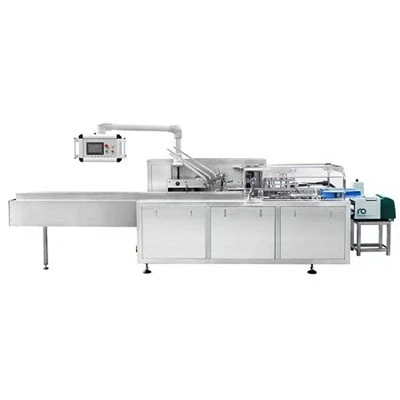
First, let’s cut through the hype: a drug cartoning machine isn’t the same as the candy-boxing machine you might see at a local factory. These units are precision-engineered to handle temperature-sensitive pharmaceuticals, counterfeit-proof packaging, and traceability requirements that the FDA, EMA, and other regulatory bodies enforce daily. A misaligned glue nozzle, a miscalibrated carton feed sensor, or even a skipped barcode scan can trigger an FDA warning letter, a product recall, or a line shutdown that costs upwards of $50,000 per hour for mid-sized operations. That’s why our training programs (designed alongside GMP consultants) are divided into three distinct, role-specific tracks—no one-size-fits-all sessions here. The core foundational training, required for all operators, is non-negotiable and must be hands-on, not just online modules.
Let’s start with the operator training, the entry-level role that’s on the line every shift. I’ve seen facilities try to train operators with 8 hours of video and a single trial run, but that’s like teaching someone to drive a semi-truck by watching a 2-hour documentary. Operators need 40 hours of structured, competency-based training split into three parts: pre-operation prep, in-run operation, and post-shift compliance checks. The pre-operation module covers more than just “turn on the machine”—it’s GMP-specific tasks that directly affect product safety. This includes validating incoming carton blanks for damage (tears, misprinted barcodes, or incorrect size), verifying glue consistency (a common pain point that leads to carton openings during shipping), and scanning product and carton serial numbers to match batch records. I once had a client who lost a 10,000-unit batch because an operator skipped a blank check and used cartons printed with the wrong drug name—costing them not just the batch but a 6-month audit delay. That’s why our operator training includes a module on blank validation with a mock set of misprinted cartons; by the end of the session, every trainee can spot a misaligned barcode or a tear in a folding flap in under 10 seconds.
The in-run operation portion of operator training is where hands-on practice is critical. Drug cartoning machines run at 100–300 cartons per minute, so even a small mistake escalates fast. Our trainees spend 16 hours on a fully functional demo machine, learning to adjust feed rates, clear jammed blisters (the #1 cause of line downtime), and respond to common error codes—like a missing carton or a misaligned leaflet. I always emphasize that clearing a jam isn’t just pausing the machine and pulling out stuck parts; operators must follow ISO 13482 safety standards, which require locking out/tagging out (LOTO) the machine before accessing any moving parts. We’ve had a few close calls with new operators who rushed to clear a jam while the machine was still running, so our training includes a hands-on LOTO practice session where trainees practice locking out the demo machine and identifying which components are safe to access during a jam.
Finally, the operator’s post-shift training module focuses on compliance, because GMP (Good Manufacturing Practices) requires every carton to be traceable. Operators learn to log batch numbers, machine downtime, and any discrepancies into the facility’s ERP system—no manual backtracking allowed. Our training includes a mock audit where trainees have to pull a batch record for a hypothetical product and explain how each step of cartoning aligns with regulatory requirements; this is the part that sticks, because it’s not just about checking boxes—it’s about avoiding fines.
Next up is the maintenance technician training, a role that’s often under-trained and leads to avoidable breakdowns. As a supplier, we’ve found that facilities often assign general maintenance techs to cartoning machines without specialized training, and that’s where uptime drops. Maintenance training for drug cartoning machines is 80 hours, split between mechanical repair, electrical troubleshooting, and predictive maintenance. The mechanical module covers the machine’s core components: the carton feed assembly, the glue station, and the leaflet inserter. Unlike generic packaging machines, drug cartoning machines have precision gears and sensors that need to be calibrated to within 0.1 mm—something a general tech might not know how to do. I remember a client whose carton feed assembly was misaligned, leading to 50 cartons being fed incorrectly every hour. Their general tech adjusted the gears with a wrench, but didn’t calibrate the sensor, leading to $8,000 in lost product. Our maintenance training includes hands-on calibration on our demo machines, using dial calipers and precision tools to get the alignment within the required tolerance.
The electrical troubleshooting module is another critical part of maintenance training. Modern drug cartoning machines are PLC (Programmable Logic Controller)-controlled, so a tech needs to be able to read error codes, test sensors, and replace faulty components without bringing down the line. We train our clients’ techs to use common diagnostic tools—multimeters, oscilloscopes, and PLC software—to identify issues like a faulty barcode scanner or a misaligned photoelectric sensor. We also cover predictive maintenance, a skill that’s becoming more important as facilities move towards Industry 4.0. Our maintenance trainees learn to monitor machine vibration, temperature, and performance metrics to catch small issues before they turn into major breakdowns. For example, a slight increase in glue temperature might signal a failing heating element, which if caught early can save a facility from a 4-hour shutdown.
The third track is line supervisor training, a role that bridges operators and techs and is responsible for overall line performance and compliance. Supervisor training is 24 hours, focused on quality control, team management, and regulatory compliance audits. Supervisors need to be able to troubleshoot complex line issues, adjust staffing during high-production runs, and lead the team through regulatory audits. One of the biggest gaps we see is supervisors not knowing how to interpret cartoning machine data to improve efficiency. For example, if a machine is experiencing 10% more jams on night shifts, a good supervisor will work with operators to identify if the issue is with sleep-deprived staff or a faulty component, instead of just blaming the team. Our training includes a case study of a client whose supervisor used cartoning machine data to reduce downtime by 22% by adjusting shift schedules and upgrading a worn part. We also cover audit preparation, including how to organize batch records, demonstrate machine calibration, and answer auditor questions about operator training.
But here’s the thing: even with role-specific training, it’s not a one-and-done session. Regulatory bodies like the FDA require ongoing refreshers, and new machine software updates or compliance rules mean training has to be iterative. As a supplier, we offer annual refreshers that cover new regulatory requirements, machine software updates, and best practices from other clients. We also recommend that facilities do a semi-annual audit of their own training program, testing operators’ ability to spot errors, techs’ calibration skills, and supervisors’ data analysis capabilities.
I often get asked: why not just use online training modules? The answer is simple: cartoning machines are hands-on, and compliance requires muscle memory. An operator can watch a video on clearing a jam, but they won’t know how to adjust the machine’s tension or avoid damaging a blister pack until they practice on a real (demo) machine. General knowledge is good, but specialized, hands-on training is what prevents mistakes.
Looking back at that plant manager I spoke with last month, we connected him with our customized training program: 40 hours of operator training, 80 hours for his maintenance tech, and 24 hours for his line supervisor. Two months later, he called me to say they’d had zero cartoning-related downtime during that period, and their most recent batch audit passed with zero findings related to cartoning. That’s the payoff of proper training.
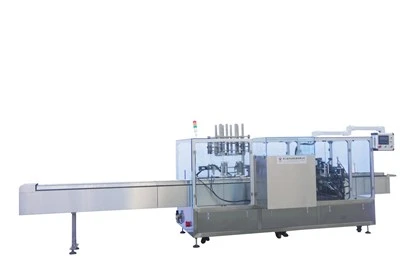
At the end of the day, drug cartoning machines are the final step in getting life-saving products to patients. A single mistake in operation isn’t just a financial loss—it’s a risk to patient safety, and that’s why training can’t be taken lightly. If you’re looking to upgrade your cartoning machine training or want to learn more about our customized programs for operators, techs, and supervisors, we’re here to help. No generic modules, no one-size-fits-all approaches, just practical, regulatory-aligned training that keeps your line running smoothly and your products compliant.
Food Bagging Machine Reference:
- FDA, 21 CFR Part 211: Current Good Manufacturing Practice for Finished Pharmaceuticals, U.S. Food and Drug Administration, 2023.
- International Organization for Standardization, ISO 13482: Safety of Machinery – Personal Care Robots, ISO, 2022.
- Pharmaceutical Processing and Packaging Machinery Association (PPMA), Training Standards for Pharmaceutical Cartoning Operations, PPMA, 2021.
- International Society of Pharmaceutical Engineers (ISPE), Good Practice Guide for Cartoning and Secondary Packaging, ISPE, 2020.
- Occupational Safety and Health Administration (OSHA), Lockout/Tagout (LOTO) Standard, OSHA, 2023.
Zhejiang Tuoyu Packaging Machinery Co., Ltd.
Zhejiang Tuoyu Packaging Machinery Co., Ltd. is one of the most professional drug cartoning machine manufacturers and suppliers in China. With abundant experience, we warmly welcome you to wholesale durable drug cartoning machine made in China here from our factory. Good service and quality products are available.
Address: Workshop No.12, No.11-19, Xinbin Road, Binhai New Area, Pingyang County, Wenzhou City
E-mail: lisa@tuoyupack.com
WebSite: https://www.tuoyupack.com/
