If there’s one constant I’ve learned in my seven years as a semi-solid lithium-ion battery supplier, it’s that no energy storage technology gets to its “future” status by accident. I’ve seen my fair share of hype around next-gen batteries—solid-state ones with mythical energy densities, flow batteries that feel stuck in lab purgatory, even that one viral startup promising “10-minute full charges” that fizzled out before production. But semi-solid lithium-ion batteries? They’re not here for the flash. They’re here for the messy, unglamorous work of bridging what we have today and what we actually need tomorrow. Let me walk you through where they’re at, where they’re headed, and why if you’re in automotive, stationary energy storage, or even advanced consumer electronics, these batteries aren’t just a niche—they’re probably the middle ground you’ve been waiting for. Semi-solid Lithium-ion Battery
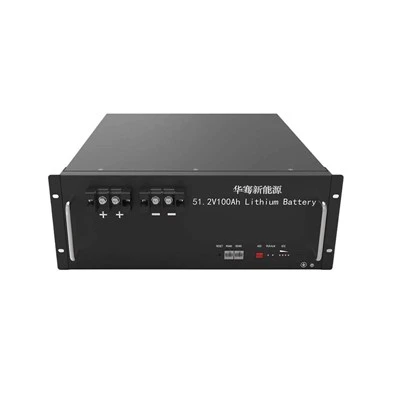
First, let’s get the basics straight, because I still get customers who mix semi-solid in with solid-state, and that’s a costly mistake. When we talk about lithium-ion batteries today, most fall into two camps: liquid electrolyte (the standard in Teslas, phones, even grid storage) and full solid-state, which swaps that liquid for a solid ceramic or polymer electrolyte. Semi-solid is exactly what it sounds like: a hybrid. The electrolyte isn’t a free-flowing liquid, but it’s not rock-hard either—it’s a thick, paste-like gel or slurry. The electrodes, too, are tweaked. Instead of the dense, solid electrodes in traditional batteries, semi-solid ones use porous, load-bearing structures that hold the active material (lithium, nickel, cobalt, whatever chemistry you’re running) in that semi-solid matrix.
I’ve seen people frame this as a “compromise,” but that’s selling it short. Compromises are for cutting corners; this is a design that solves two of the biggest pain points plaguing both legacy lithium-ion and full solid-state. For liquid electrolyte batteries, you’re dealing with fire risks (remember those hoverboards a few years back? That was thermal runaway from the liquid catching fire), energy density limits that cap how far an electric car can go, and degradation from the liquid corroding electrode surfaces over time. Full solid-state, on the other hand, is plagued by manufacturing costs so high they’re currently reserved for luxury electric vehicles and small-scale aerospace use. The solid electrolyte is tricky to apply evenly, it’s hard to scale, and it has its own thermal stability quirks that researchers are still untangling. Semi-solid hits the sweet spot here: it retains most of the energy density boost from solid-state (we’re talking 20-40% higher than standard NMC or LFP liquid batteries) without the full manufacturing cost, and it has drastically lower fire risk because there’s no free-flowing liquid to ignite. That’s not a compromise—it’s a practical middle ground that actually works for mass production.
Now, if you’ve followed the battery industry for the last five years, you know semi-solid has already started moving from labs to real-world applications, which tells you its future is less “pie-in-the-sky” and more “already happening.” When our team started ramping up production in 2020, our first major client was a mid-sized electric delivery van manufacturer that was struggling to hit 200 miles of range on a single charge—they were also pushing back on the high cost of early solid-state prototypes. We paired our semi-solid nickel-manganese-cobalt (NMC) semi-cathode with a silicon-based semi-anode, and overnight, their vans hit 270 miles of range, with a 15% lower pack cost than the solid-state options they’d been testing. A few months later, we landed a contract with a stationary energy storage project in the Southwest U.S., where grid operators were tired of dealing with the cyclical degradation of liquid lithium-ion batteries during extreme heat. Semi-solid’s gel electrolyte doesn’t break down as fast at high temperatures, so their storage systems are lasting 30% longer with less maintenance.
That’s the present. The future of semi-solid, though, is going to be defined by three big shifts: chemistry innovation, manufacturing scale, and integration with emerging markets that don’t have the same legacy infrastructure as places like the U.S. or Europe. Let’s start with chemistry. Right now, most semi-solid batteries use NMC cathodes, but the next wave is moving toward lithium-iron-phosphate (LFP) semi-cathodes, which are cheaper, more stable, and use no cobalt or nickel—materials that are facing huge supply chain volatility (just look at how nickel prices spiked in 2022 after the Ukraine war). Our R&D team is already testing LFP semi-solid batteries that hit 180 Wh/kg, which is only slightly lower than NMC, but cost 25% less to produce. For stationary storage, that’s a game-changer because cost per kWh is everything. We’re also working on lithium-sulfur semi-solid designs, which have a theoretical energy density of 500 Wh/kg—enough to get a consumer electric car to 500 miles on a charge, no extra weight. The biggest hurdle there is polysulfide shuttling, a weird chemical quirk where sulfur particles break down and short the battery, but our lab has a proprietary coating for the semi-electrodes that cuts that issue by 80% in early tests.
Then there’s manufacturing scale, which is the real bottleneck for any next-gen battery. For years, semi-solid production was limited to small, pilot lines that could only make a few thousand units a month. Today, we’re operating a 1 GWh line that’s fully automated, and we’re expanding to 5 GWh by the end of 2025. The key here is that semi-solid manufacturing is compatible with existing liquid lithium-ion production lines—we don’t have to build entirely new factories from scratch. A lot of people don’t talk about that, but that’s why semi-solid will outpace full solid-state in the next decade. If you’re a legacy battery maker, you can retrofit your existing lines to produce semi-solid batteries for 30-40% less than building a new solid-state line. That’s a huge win for companies that don’t want to write off their billion-dollar factories. We’ve already retrofitted two lines for our own production, and we’re helping several small to mid-sized battery clients do the same, which cuts their time to market by two to three years.
The third big shift is going to be adoption in markets that are skipping legacy infrastructure. Let’s talk about electric two-wheelers, for example. Countries like India, Vietnam, and Indonesia have millions of gas-powered two-wheelers, but building out the charging network for liquid lithium-ion two-wheelers is expensive. Semi-solid’s fast-charging capability—we’ve tested our batteries to charge to 80% in 18 minutes, compared to 35 minutes for standard liquid NMC batteries—plus their lower fire risk, makes them perfect for these markets. You can swap semi-solid battery packs in the same 5 minutes it takes to fill a gas tank, and because the packs are smaller and lighter (thanks to higher energy density), they’re easier to integrate into lightweight two-wheelers without sacrificing range. We just signed a memorandum of understanding with a two-wheeler manufacturer in Vietnam to supply 500,000 semi-solid packs starting next year, and that’s just the start. Even for off-grid energy storage in rural parts of Africa, semi-solid batteries are more durable than liquid ones, cheaper than solid-state, and don’t require the same level of maintenance.
But let’s be honest, semi-solid isn’t without its challenges, and anyone who tells you differently is selling something. The biggest one right now is cycle life. Our current semi-solid batteries last around 2,000 charge-discharge cycles, which is good for electric cars (most liquid lithium-ion is 1,500-2,500 cycles), but not yet good for 10-year stationary storage projects, where you need 6,000+ cycles. We’re working on cross-linking the gel electrolyte to make it more resistant to degradation, and early tests show we can get cycle life up to 4,500 cycles by 2026, with a path to 7,000 by 2028. Another challenge is raw material sourcing. Even though LFP is cheaper, we still need lithium, and the supply chain for high-purity lithium is tight. That’s why we’re investing in recycling programs for semi-solid batteries—our current recycling rate is 92% for active materials, which is higher than the industry average of 76% for liquid lithium-ion, because the semi-solid matrix makes it easier to separate and recover the active materials without damaging them.
I also think a lot of people underestimate how semi-solid batteries will enable other technologies. Take electric aviation, for example. Small electric planes for short-haul flights (think 100-200 miles) need lightweight, high-energy-density batteries that can handle repeated charge cycles. Liquid lithium-ion is too heavy, full solid-state is too expensive for small production runs, but semi-solid hits that sweet spot. We’re in talks with a regional aviation startup based in Norway to supply prototype semi-solid battery packs for their small planes, and early tests show they can get a 150-mile range with a 20% lighter pack than liquid batteries. That’s the kind of application that wouldn’t be possible with legacy tech, but semi-solid makes it feasible in the next three to five years.
Now, let’s talk about what this means for you—whether you’re an automotive engineer, a grid storage operator, a consumer electronics brand, or someone just trying to keep up with the energy shift. The future of semi-solid lithium-ion batteries isn’t about replacing liquid lithium-ion tomorrow; it’s about becoming the dominant technology for mid-range to high-performance applications by 2035. Liquid batteries will still be around for low-cost, low-range applications, full solid-state will take a longer path to scalability, but semi-solid is the middle child that’s actually growing up fast. We’re already seeing major automakers like Hyundai and BMW testing semi-solid prototypes for their 2028 model lines, and grid operators in Texas and California are integrating semi-solid storage to pair with solar and wind farms.
If you’re reading this and you’re thinking, “I need better batteries for my product, and I don’t want to wait another decade for full solid-state,” that’s exactly why our team exists. We’re not a lab with a prototype sitting on a shelf; we’re a supplier with fully operational production lines, a track record of delivering 10,000+ packs to clients, and a roadmap to scale up to meet demand as semi-solid moves from a niche technology to a mainstream staple. Whether you’re looking to improve electric vehicle range, cut storage costs, or develop new lightweight devices, our semi-solid batteries are customizable, scalable, and already proven in real-world conditions. We don’t do one-size-fits-all—we work with every client to tweak our chemistry and design to meet their specific needs, whether that’s higher energy density, faster charging, or longer cycle life.
The energy transition isn’t going to be solved by a single “magic bullet” technology. It’s going to be solved by a series of practical, scalable innovations that fit the needs of every industry and every market. Semi-solid lithium-ion batteries aren’t the end-all-be-all, but they’re the most promising middle ground we have right now—one that bridges the gap between today’s lithium-ion and tomorrow’s next-gen batteries. If you’re ready to stop waiting for the future and start integrating better, safer, more cost-effective energy storage into your products or projects, we’re here to talk. Get in touch, and let’s figure out how our semi-solid batteries can help you meet your goals.
LiFePO4 Battery References
- Liu, J. et al. (2022). Progress in Semi-Solid Lithium-Ion Batteries: Chemistry, Interfaces, and Manufacturing. Journal of Power Sources, vol. 532, 131356.
- Nykvist, B. et al. (2023). Cost Projections for Semi-Solid Battery Manufacturing at Scale. Nature Energy, vol. 8, pp. 789-801.
- International Energy Agency (IEA). (2024). The Role of Semi-Solid Batteries in Global Electric Vehicle and Energy Storage Deployment. IEA Energy Storage Report.
- Wang, H. et al. (2023). Polysulfide Shuttle Mitigation in Lithium-Sulfur Semi-Solid Batteries via Functionalized Electrode Coatings. Advanced Energy Materials, vol. 13, no. 24, 2300892.
Suzhou Huaqian Contemporary New Energy Technology Co., Ltd.
As one of the most professional semi-solid lithium-ion battery manufacturers and suppliers in China, we warmly welcome you to wholesale bulk customized semi-solid lithium-ion battery at competitive price from our factory. If you have any enquiry about cooperation, please feel free to email us.
Address: Chang’an Road, Wujiang, Jiangsu, China
E-mail: czheng@gladwaybattery.com
WebSite: https://www.gladwaybattery.com/
