Hey there, let’s cut through the jargon straight up—if you’ve ever seen a cosplay prop that looks like it just came off a movie set, a yoga mat that’s super soft but doesn’t wear out fast, or even the inside of a cool pair of water shoes that keep your feet dry and cushioned, you’ve probably interacted with EVA foam and didn’t even know it. As someone who’s been supplying EVA foam for over 8 years now, I’ve talked to every kind of person from cosplayers building their first helmet to engineers designing parts for kids’ toys, and 9 out of 10 of them start with the same question: What is EVA foam, exactly, and why is it everywhere? EVA Foam
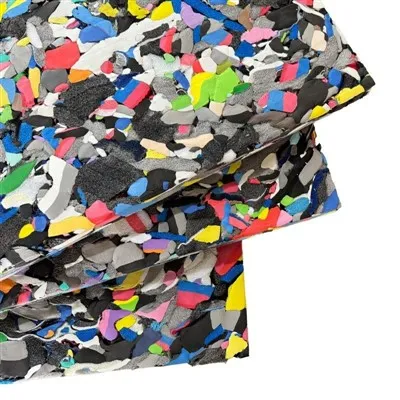
First off, EVA stands for ethylene vinyl acetate—way simpler than it sounds. It’s a type of closed-cell foam made by mixing ethylene (a gas we use to make plastic bags, duh) and vinyl acetate (a chemical that makes things flexible, not stiff). The mix ratio is what changes everything: more ethylene makes it harder, more vinyl acetate makes it softer. And unlike a lot of foams you might be familiar with, EVA is closed-cell, meaning those tiny air bubbles inside are sealed tight—no water seeping in, no mold growing in the cracks, no deflating after a few uses. That’s the big reason it’s so popular for everything from sports gear to packaging.
Let’s break down the science a little without putting you to sleep. When we make EVA foam, we heat the mixture up, add a blowing agent (usually something that turns into gas when hot) to create those bubbles, and then cool it down to lock the structure in place. It has a density that’s just right—light enough to carry around but tough enough to take a beating. It’s also resistant to UV rays, so it doesn’t turn yellow or crumble if it’s left outside, and it doesn’t break down easily with mild chemicals like soap or even some solvents. For suppliers, that’s a dream because it’s consistent; you don’t have to deal with foam that’s all lumpy or crumbly half the time.
Now, let’s get real about what people actually use EVA foam for, because that’s when it stops being a random chemical and becomes something you use every week. Cosplayers? They live for EVA. It’s easy to cut with a utility knife, glue with hot glue or contact cement, and even heat-form it into shapes like swords, armor, or even big props like a dragon’s wing. I’ve had customers send me pics of their first Iron Man helmet that only cost $20 in foam, no fancy tools needed. Then there’s sports and recreation: yoga mats, flip-flop soles, football helmet liners, even padding for boxing gloves. EVA absorbs impact way better than regular foam, and it’s water-resistant, so yoga mats dry fast after a sweaty class, and flip-flops don’t get soggy in puddles.
Packaging is another huge one. If you’ve ever bought a fragile gadget like a phone or a coffee maker, the custom foam insert that holds it in place? That’s almost certainly EVA. We cut custom shapes to fit every part of the device, so nothing gets jostled during shipping. It’s also way more eco-friendly than polystyrene foam (you know, those styrofoam peanuts that blow everywhere)—it’s recyclable, and we can make it with post-consumer resin now, which cuts down on waste. A lot of toy companies use EVA too, because it’s non-toxic, so it’s safe for toddlers to chew on, and it doesn’t break into sharp pieces if it gets dropped.
Wait, but is EVA foam the same as memory foam? Hell no. Memory foam is polyurethane, which is way denser and softer, and it melts when you heat it up. EVA is firm but flexible—like, it bounces back if you squish it, instead of staying squished. And it’s way cheaper for large-scale uses, which is why you see it in bulk for things like event flooring (those interlocking mats at craft fairs or marathons) instead of memory foam. I get asked that a lot, so it’s worth clearing up.
Now, for us as suppliers: we don’t just sell a single “EVA foam” roll. We have different types for different jobs. There’s our standard closed-cell EVA, which is the go-to for cosplay and basic packaging—comes in sheets from 1mm thick up to 20mm, black, white, or even colored (red, blue, neon, whatever you need). Then there’s our high-density EVA, which is for heavy-duty stuff like orthopedic shoe inserts or industrial padding—it’s stiffer, more resistant to tearing. We also do fire-retardant EVA for places like movie sets or public spaces where fire safety is a must, and even anti-static EVA for electronics packaging, so static doesn’t fry your new laptop.
A lot of new suppliers or DIYers try to go cheap on EVA, and let me tell you—you get what you pay for. The cheap stuff is usually low-quality, has big bubbles, and crumbles after a few uses. We test every batch we get, check for density, tensile strength (how much it can stretch before breaking), and water resistance, so our customers know it’ll last. Last year, a small cosplay shop came to us because they’d been buying foam off Amazon and it kept tearing mid-build for big conventions—switched to our high-density 10mm foam, and their work has been way more consistent. That’s the thing with EVA: the quality makes all the difference.
I should also touch on sustainability, because that’s a big topic these days. A lot of people think foam is bad for the planet, but EVA is different. It’s 100% recyclable, and we partner with a recycling facility that takes scrap foam from our production and turns it into new products—like playground surfaces or even new foam sheets. We also offer EVA made with 30% post-consumer recycled material for customers who want to lower their carbon footprint. It’s not perfect, but it’s way better than a lot of other foams out there, and more brands are starting to ask for that now.
So, why does all this matter? EVA foam is the unsung hero of so many industries. It’s not flashy, it doesn’t make headlines, but it makes cosplay dreams come true, protects fragile products, keeps athletes safe, and even makes your morning yoga session more comfortable. If you’re a designer looking for a new material, a maker building a custom project, a business needing packaging that won’t break the bank, or a brand wanting eco-friendly foam, chances are EVA is the right fit.

If you’re thinking about ordering EVA foam for your next project, we can work with you on custom sizes, thicknesses, colors, even different types for specific uses. Whether you need a small sample to test or bulk orders for a big run, hit us up to chat through what you need, and we’ll point you to the right product. No pressure, no confusing sales pitches—just straightforward EVA foam that works.
EVA Marine Decking REFERENCES
- "Ethylene Vinyl Acetate (EVA) Foam: Properties and Applications," Modern Plastics Encyclopedia, 2022.
- "Closed-Cell Foam Materials for Packaging and Protective Applications," Journal of Industrial Materials, Vol. 18, No. 3, 2021.
- "Sustainable Foam Options for Consumer Products," Green Manufacturing Review, 2023.
- "Cosplay Materials Guide: EVA Foam Best Practices," Craft Makers Association, 2022.
Quanzhou Firefox New Material Co., Ltd.
As one of the most experienced EVA foam suppliers in China, we have world-leading production equipment and strong manufacturing capabilities. Please rest assured to wholesale customized EVA foam from our factory. For price consultation, contact us.
Address: Room 1901, Xiamen Bank Quanzhou Branch Building, No. 102 Binhai Street, Fengze District, Quanzhou City, Fujian Province, China
E-mail: marketing@firefoxfoam.com
WebSite: https://www.firefoxfoam.com/
