What materials are used to make a Busbar Mold?
If you’ve ever wondered how the sleek, precise busbars that power everything from EV batteries to industrial switchgear get their clean, accurate shape, the answer starts with a mold. As a busbar mold supplier, I get asked this question all the time—usually by engineers figuring out their first run of custom parts, or buyers looking to upgrade a mold that’s slowing down their production. The truth is, a busbar mold isn’t just one material: it’s a combination of specific metals, coatings, and even engineered composites, each chosen for a super specific job. Let’s break down what actually goes into these molds, and why picking the right stuff matters way more than you might think. Busbar Mold
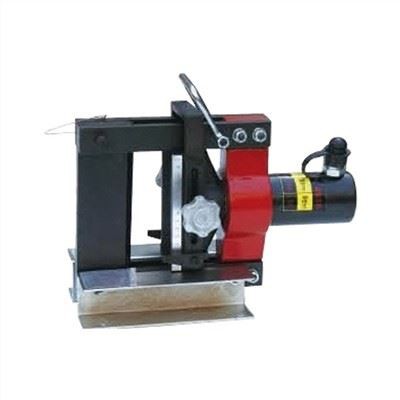
First, let’s get clear on what a busbar mold does. It’s the tool that presses, cuts, or shapes a flat metal busbar (usually copper or aluminum) into a custom part—think a bent piece for a battery pack, a slotted strip for a distribution box, or a perforated bar for high-current connections. Bad materials mean the mold wears out fast, the parts have rough edges or wrong dimensions, or you’re constantly repairing it mid-production. I’ve seen clients try to save a few bucks on lower-quality molds only to end up with scrap parts and downtime that costs way more than the initial savings. So material choice isn’t just a “engineering detail”—it’s the backbone of consistent, cost-effective production.
Let’s start with the core of the mold: the body. This is the part that holds all the shaping features, takes the brunt of the pressure during pressing or stamping, and needs to stay rigid for thousands (or even hundreds of thousands) of cycles. 9 times out of 10, we use tool steel here—not just any tool steel, mind you. The most common grade for busbar molds is P20. It’s a pre-hardened steel, meaning it comes out of the mill already heat-treated to around 30 HRC (that’s hardness scale, for the uninitiated) so we don’t have to harden it after machining, which warps the part. P20 is affordable, machinable, and rigid enough for most medium-volume runs—great for small to mid-sized shops that don’t need a mold that’ll last a million cycles.
But for high-volume stuff? Like a automotive EV busbar line that runs 24/7 stamping 10,000 parts a day? P20 doesn’t cut it. We switch to H13 tool steel. That’s a hot-work tool steel, made to handle heat and repeated stress without cracking. It’s heat-treatable up to 50 HRC, so it’s way more resistant to wear from the sharp edges of the busbar or the high pressure of forming thick 10mm copper bars. I had a client making busbars for Tesla’s new battery packs a couple years back—they were going through a new P20 mold every 2 weeks, until we swapped it to H13 and they went 6 months between overhauls. Game changer for their production schedule.
Wait, but what about the inserts? The parts of the mold that actually touch the busbar—like the sharp cutting edges, the bend radii, or the slots that need perfect precision. Those get way more abuse than the main mold body. A lot of suppliers just use the same tool steel for inserts, but that’s a mistake. For inserts, we go with D2 tool steel. It’s a high-carbon, high-chromium cold-work steel, super wear-resistant, holds a really sharp edge, and can be hardened up to 60 HRC. That’s exactly what you need for cutting clean slots in copper without burrs, or bending aluminum 10,000 times without the radius wearing down and making lopsided parts. We also use D2 for punch heads, by the way—those little pins that punch holes in the busbar for bolts. If you’ve ever seen a busbar with uneven holes, it’s probably because the punch was made from the wrong material and wore down.
Sometimes, though, for really specialized molds—like ones that work with soft, thin aluminum foils for consumer electronics batteries—we use a different insert material: beryllium copper. Wait, that’s a non-ferrous alloy, right? Yeah, it’s softer than tool steel (around 40 HRC) but it has way better thermal conductivity, and it doesn’t gall (stick) to soft aluminum or copper. If you use steel inserts on thin foils, the metal would press against the sharp edge and get stuck, ruining both the mold and the part. Beryllium copper slides right off, no gunk, no stuck parts. It’s a bit more expensive, but for that specific use case, it’s worth every penny. We only use it for thin-gauge materials, though—too soft for thick copper bars.
Now, what about coatings? Even the best steel won’t last forever if it’s not coated right. Once we machine the mold body and inserts, we apply a surface coating to boost wear resistance, prevent corrosion, and reduce friction. The most common one we use is nickel-chrome plating. It’s a hard, smooth coating that adds 5-10 HRC to the surface, so it’s way harder than plain steel. It also keeps the mold from rusting if we’re storing it for a while, which is a big deal for clients that run production in humid environments. For really high-wear areas, we use a harder coating: titanium nitride (TiN). TiN is golden, super wear-resistant, has a low coefficient of friction, so the busbar slides through the mold easier, which reduces strain on the press. I’ve seen TiN coatings add 2-3x the life of a D2 insert on a stamping mold. For even more extreme stuff, like molds that work with copper alloys that have high silicon content (which is super abrasive), we use diamond-like carbon (DLC) coatings. They’re smooth, wear-resistant, and even handle high temperatures better than TiN.
Wait, what about the mold’s backing plate and alignment pins? Those are the unsung parts of a busbar mold, right? No one pays attention to them until they mess up. The backing plate that holds the main mold body? We use carbon steel for that—it’s strong, cheap, and doesn’t need the same precision as the working parts. The alignment pins and bushings that make sure the two halves of the mold line up perfectly? Those need to be super precise, no play. For those, we use case-hardened steel. We take a low-carbon steel, carburize the surface so the outer layer is hard (60 HRC) and the core is tough, so it doesn’t snap if the press slams it a little off. Alignment is everything—if your mold is off by 0.1mm, your busbar holes won’t line up, and the whole part is useless. That’s why we never skimp on those parts.
Is there any non-metal material used in busbar molds? Sometimes, for molding processes that use resin or plastic-insulated busbars—like when you’re making a busbar that has a plastic coating for insulation. For the parts that shape the plastic, we use engineered epoxy composites, filled with glass fiber. They’re cheap, easy to machine, and don’t stick to molten plastic like steel does. We only use those for the insulation parts, though—never for the metal shaping, because they’re way too soft to handle the pressure from copper or aluminum.
Let me be real here: a lot of new mold makers cut corners on materials to undercut competitors. I’ve had clients come to me after paying half the price for a mold that broke down 100 cycles in, and it’s always because they used cheap, low-grade steel, skipped coatings, or used the wrong insert material. As a busbar mold supplier, I don’t do that. I don’t sell a “one size fits all” mold—we customize every part of the material based on what the client is making, how many parts they’re running, and the type of metal they’re using. If you’re stamping thin aluminum for a laptop battery, I’ll spec beryllium copper inserts. If you’re forming 12mm copper bars for a industrial switchyard, H13 steel with TiN coatings. If you’re a small shop doing low-volume custom parts, P20 with nickel-chrome plating is more than enough, and won’t break your budget.

At the end of the day, the material isn’t just a detail—it’s the reason your busbar parts are consistent, your production runs smoothly, and you don’t have to waste time repairing or replacing your mold every few weeks. If you’re looking to upgrade your current mold, or get a custom one made for a new product, don’t just go for the cheapest option. Hit us up to chat through what you need, and we’ll break down the best materials to make your mold last as long as possible.
Busbar Punching Machine References:
- Tool Steel Engineering Association. "Grade Selection for Stamping and Forming Molds." 2022.
- Journal of Manufacturing Processes. "Wear Resistance of Surface-Coated Tool Steels for Electrical Component Molds." Vol. 58, 2023.
- Copper Development Association. "Forming and Stamping Guidelines for Copper Busbars." 2021.
Jinan Deshang CNC Equipment Co., Ltd.
Jinan Deshang CNC Equipment Co., Ltd. is one of the leading busbar mold manufacturers and suppliers in China. We warmly welcome you to buy high-grade busbar mold for sale here from our factory. All OEM products are with high quality and competitive price. Contact us for more details.
Address: Room 409, Building 2, No. 59 Gongye South Road, High-tech Zone, Jinan City, Shandong Province
E-mail: lisa@busbarchina.com
WebSite: https://www.cncbusbar.com/
