If you’ve ever stood on a production floor or a warehouse loading dock where a PVC conveyor belt is running, you know how jarring it is when that belt starts drifting to one side. It’s not just an annoying visual—over time, misalignment causes uneven wear on the belt edges, premature cracking, and even production delays when parts get stuck under the frame. As someone who’s spent the last 12 years working with PVC conveyor belts as a supplier, I’ve fixed more misaligned belts in factories from small craft breweries to large automotive assembly lines than I can count. The key isn’t guessing at adjustments, it’s understanding how PVC belts work, what makes them drift, and how to make adjustments that last. PVC Conveyor Belt
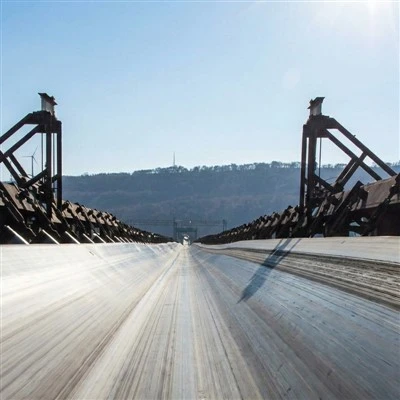
First, let’s get one thing straight: PVC conveyor belts don’t drift out of nowhere. Most issues stem from small, avoidable factors, not a “defective” belt right out of the box. I once had a customer call me in a panic, saying their new PVC belt was veering sharply to the left on their packaging line, and they thought they’d wasted $1,200 on a bad product. When I arrived, the first thing I checked was the belt’s tension—turns out the person who installed it had pulled the right adjustment bolt three full turns, and the left only one. That was all it took. A lot of installers and even maintenance teams skip the basics, and that’s where problems start.
Before I walk you through step-by-step adjustments, let’s cover the core science of why PVC belts behave the way they do. PVC is a rigid thermoplastic, but it’s flexible enough for conveyor use, which means it holds its shape once set, but it will stretch slightly under pressure. Unlike rubber belts, PVC has a more consistent surface texture, so it doesn’t grip the rollers and idlers the same way, making alignment more sensitive to small imbalances. The edge of a PVC belt is also more prone to damage if it rubs against frame parts, so even a minor drift can turn into a frayed edge that requires a full replacement sooner than expected. That’s why getting adjustments right the first time saves you money in the long run—no need to replace a $1,500 belt when a $10 adjustment will fix the issue.
Now, let’s talk about the tools you don’t need (and the ones you do). You don’t need fancy laser alignment gear for most standard PVC conveyor applications—though it’s great for heavy-duty lines, it’s overkill for warehouses and light manufacturing. The only tools you’ll need are a 10mm or 12mm wrench (depending on your conveyor), a felt-tip marker, a tape measure, and a helper to watch the belt run as you make small adjustments. I always bring a small notepad with me to mark how many turns I make on each bolt—consistency is everything here. I’ve seen too many people crank a bolt a full quarter turn and then wonder why the belt jumps the other way; small, incremental moves are the name of the game.
Before you touch any bolts, do a quick pre-adjustment check. This takes 5 minutes and eliminates 80% of misalignment issues. First, turn off the conveyor and lock it out so it can’t start while you’re working. Run your hand along the entire length of the belt’s edge—any nicks, debris, or leftover adhesive from splice work can catch on idlers and pull the belt off-center. I once found a small piece of cardboard stuck under a belt edge in a snack packaging plant, which was causing the drift. It sounds silly, but that happens all the time. Next, check the conveyor frame itself. If the frame is bent, rusted, or has uneven idlers, no amount of bolt adjustment will fix that. Run your tape measure from the center of the head pulley (the one at the end of the conveyor where the belt wraps around) to the center of the tail pulley (the drive end) at both the left and right sides. If there’s even a 1/8 inch difference, the frame is out of alignment and needs to be corrected before you touch the belt tension. I always tell my customers: “If the frame is crooked, the belt has nowhere to go but crooked.”
Okay, now we’re ready for the actual adjustment process. Let’s assume the belt is drifting to the right—reverse the directions if it’s drifting left, they’re identical. The first pulleys you want to adjust are the head and tail pulleys, because those are the ones that control the belt’s overall tracking. When you adjust a pulley, you’re tilting it slightly so it “pushes” the belt back to the center as it runs. If the belt is drifting to the right, you want the right side of the pulley to move forward relative to the left, or in other words, you’re moving the right adjustment bolt on that pulley’s stand a quarter to half turn. Wait—let me make that clearer for beginners. Most conveyor pulleys have two adjustment bolts, one on the left mounting bracket and one on the right, that let you shift the pulley’s position slightly. For a right drift, loosen the left bolt on the tail pulley and tighten the right bolt by a quarter turn. Then do the same on the head pulley: loosen the left bolt, tighten the right one a quarter turn. This tilts the pulleys so as they rotate, the belt will be guided back to the left, or center.
But here’s the trick that most people miss: don’t make full turns on these bolts. Start with 1/8 to 1/4 of a turn, then run the conveyor for 30 seconds to watch the belt’s movement. I once had a customer who turned each bolt a full half turn when their belt drifted right, and by the time I came back, the belt was drifting so far left it was off the conveyor entirely. Small increments let you course-correct without overcompensating. After adjusting the head and tail pulleys, move on to the transition idlers—these are the idlers that support the belt as it goes from the flat part of the conveyor onto the head pulley, usually the first two or three idlers before the end. If the belt is still drifting right after adjusting the pulleys, you’ll need to adjust the idlers closest to the drift side. For a right drift, tilt the right side of each of those idlers down slightly, so the belt rides higher on the right. Again, only adjust each idler’s bolt by a quarter turn at a time.
Once you’ve made these initial adjustments, let’s talk about tension, because that’s the silent culprit of most recurring PVC belt misalignment. PVC belts have a specific tension range—too tight, and they’ll stretch unevenly; too loose, and they’ll slip on the pulleys, causing them to rotate unevenly and pull the belt off-center. Most standard PVC conveyor belts have a tension rating of 3 to 5% elongation under load. To check this, measure the distance between two fixed points on the stationary belt, then run the conveyor for a full rotation and measure again. The difference should be no more than 5% of the original distance. If it’s less than 2%, the belt is too loose; more than 5%, it’s too tight. Adjust the tension bolts on the take-up frame (the part that pulls the tail pulley forward) evenly—never adjust one side more than the other, that’s just asking for drift. I always tell my customers to check tension after any adjustment, and to recheck it every month, because temperature changes can affect PVC’s stretch—hot days make PVC slightly softer, so it loosens; cold days make it stiffer, so it tightens.
Now, let’s cover common mistakes that make adjustments not last. First, never adjust the belt while it’s running fast. I’ve seen maintenance teams sprint alongside a moving conveyor, cranking bolts while the belt zips past at 100 feet per minute—this is dangerous and you’ll never make an accurate adjustment. Always make adjustments when the belt is at half speed or lower, and stop it frequently to check the belt’s position. Second, don’t ignore the carry-side and return-side of the belt. The carry-side is the top where products sit, the return-side is the bottom. Sometimes a drift on the carry-side is actually caused by an issue on the return-side idlers, which are harder to see. Flip the belt over every 6 months if your conveyor allows, to evenly wear out the surface, and check return-side idlers for debris or wear just like you do on the top. Third, avoid over-tightening the belt to fix drift. Tension is a tool, not a cure-all. I once had a customer who tightened their PVC belt so much it started creasing on the idlers, and by the end of the week, the belt had a permanent kink that required a full replacement. That cost them $2,000, and if they’d just adjusted the pulleys correctly the first time, they would have been fine.
If you’ve tried these steps and your PVC belt is still drifting, it’s time to check for other less obvious issues. Is the conveyor frame level? I once worked on a beer bottling line where the entire floor was sloped slightly, making the conveyor run downhill to one side. A quick frame level adjustment fixed that. Are the splices on the belt even? PVC belts are usually joined with a thermal splice, and if that splice is uneven or cut crookedly, it will pull the belt off-center as it passes around the pulleys. If you installed a new splice recently, that’s almost certainly the issue—simply re-cutting and re-splicing the belt evenly will fix it. And if all else fails, don’t hesitate to reach out to your supplier, because we deal with this exact issue every day.
As a PVC conveyor belt supplier, I’ve spent years refining this adjustment process because I care about my customers’ uptime. A misaligned belt doesn’t just mean downtime for you—it means lost productivity, wasted product, and extra repair costs. That’s why I offer free adjustment guides to all my clients, and I’ll even come on-site for small operations to walk through the process if they’re local. If you’re dealing with a persistent misalignment issue, or you need to replace your current PVC belt with one that’s built for consistent tracking, reach out to our team to discuss your specific application. We can help you pick the right belt thickness, surface texture, and splice type to minimize drift from the start, and walk you through any adjustments you need along the way.
Profiled Conveyor Belt Reference:
- International Association of Elevator Engineers. Conveyor Belt Alignment and Tension Standards for Thermoplastic Belts, 2021.
- Manufacturing Extension Partnership. Best Practices for PVC Conveyor Belt Maintenance and Adjustment, U.S. Department of Commerce, 2022.
- Society of Plastics Engineers. Performance Characteristics of PVC Conveyor Belts for Industrial Applications, 2020.
Alumina Technology (Qingdao) New Materials Co., Ltd.
As one of the most professional pvc conveyor belt manufacturers and suppliers in China, we also support customized service. With abundant experience, we warmly welcome you to buy pvc conveyor belt for sale here and get quotation from our factory. For price consultation, contact us.
Address: No.448, Jiangshan South Road, Huangdao District, Qingdao City, Shandong Province
E-mail: Gloria.zhang@contitech.cn
WebSite: https://www.altechconveyorbelt.com/
