Let me start by setting the scene from my perspective as someone who’s been working with catalysts for over a decade, the kind of hands-on story that comes from being on the floor of a production plant at 2 a.m. when a reactor’s efficiency drops, not just writing textbooks. I’ve seen firsthand how catalysts are the unsung heroes of modern manufacturing—they speed up reactions, reduce energy use, and cut waste, but they don’t just disappear when their activity fades. That’s where catalyst recovery comes in, and it’s not just a “nice-to-have” for our industry—it’s the backbone of sustainable chemical production today. Catalyst

Catalyst recovery, simply put, is the process of reclaiming, regenerating, and reusing active catalyst materials that would otherwise be discarded once their performance declines. But let’s be clear: this isn’t some makeshift fix. It’s a precise, science-driven practice that balances material science, process engineering, and environmental stewardship. For context, when a catalyst is used in reactions—say, in oil refining to make gasoline, or in pharmaceutical manufacturing to produce life-saving drugs, or even in the production of green hydrogen—it gradually deactivates. Deactivation can happen for a few key reasons: coking (carbon buildup clogging the catalyst’s pores), sintering (tiny metal particles fusing together, reducing surface area), or poisoning (contaminants like sulfur or nitrogen binding irreversibly to active sites). Instead of tossing the entire spent catalyst into a landfill or sending it off for disposal (which is not only costly but also wastes valuable metals like platinum, palladium, or nickel that are critical to catalyst function), recovery lets us pull those active metals back, restore their structure, and get them back to work in new or existing reactions.
Let me ground this in a real example I lived through last year. We had a client in the petrochemical sector who was sending 12 tons of spent hydroprocessing catalyst to a waste management firm every quarter. They were paying both for disposal and for new catalyst purchases, adding up to over $2 million a year in combined costs. We worked with them to collect their spent catalyst, run a thorough characterization test to identify the type and level of deactivation, and then ran our proprietary regeneration process. The result? We recovered 92% of the active precious metals, restored the catalyst’s activity to 95% of its original performance, and delivered it back to the client at 60% the cost of new catalyst. They’ve cut their waste hauling by 90% and saved over $1.5 million annually. That’s the impact catalyst recovery has, and it’s why it’s no longer an optional service for catalyst suppliers like us—it’s a core part of our value proposition.
Now, let’s break down how catalyst recovery actually works, because it’s not one-size-fits-all. First, there’s spent catalyst characterization, which is non-negotiable. You can’t fix what you don’t diagnose. Our lab team uses a mix of X-ray diffraction (XRD) to map crystal structures, X-ray fluorescence (XRF) to quantify metal content, and Brunauer-Emmett-Teller (BET) surface area analysis to check for pore clogging. If a catalyst’s deactivated by coking, the first step is usually thermal treatment—controlled burning of the carbon at temperatures just high enough to eliminate the carbon without damaging the metal active sites. If it’s sintered, we might use a wet chemical process to redisperse the fused metal particles, restoring their surface area. For poisoned catalysts, we use selective leaching to remove the contaminants without leaching out the valuable active metals. And for catalysts that are too far gone to regenerate, we go into full recovery mode: we leach all the active metals from the support material, purify them through solvent extraction or electrochemical processes, and then refine them into pure metal salts or metal powders that can be used to manufacture brand new catalyst.
This is where my role as a catalyst supplier comes into play. Too many companies think that when a catalyst is spent, their responsibility ends at disposal. But that’s a missed opportunity. As a supplier, we don’t just sell catalyst materials—we partner with our clients throughout the entire catalyst lifecycle, from initial formulation to end-of-life recovery. We offer tailored recovery solutions because every client’s process is different. For a pharmaceutical manufacturer that uses a specialized palladium-based catalyst for a drug intermediate, we don’t use the same regeneration process we’d use for a refinery’s nickel-based catalyst. We work closely with our clients to develop a custom recovery plan that aligns with their production schedules, regulatory requirements, and sustainability goals.
The rise in catalyst recovery isn’t just driven by cost savings—though that’s a huge factor. It’s also driven by global regulations and the push for a circular economy. Governments around the world are implementing stricter rules on industrial waste, especially for materials that contain precious metals or hazardous components. In the EU, for example, the Waste Framework Directive requires companies to prioritize recycling over disposal for non-hazardous waste, and for hazardous waste like spent catalysts, there are even tighter traceability rules. In the U.S., the Environmental Protection Agency (EPA) has guidelines for the management of spent catalyst materials, and many states offer tax incentives for companies that implement material recycling programs. For our clients, compliance isn’t optional—fines for improper catalyst disposal can run into hundreds of thousands of dollars, so having a reliable catalyst recovery partner is a key part of staying on the right side of the law.
Beyond regulation, there’s the growing demand for sustainable manufacturing. Consumers, investors, and regulators are all pushing companies to reduce their carbon footprint, and catalyst recovery is a powerful tool to do that. Let’s do the math: producing 1 ton of new platinum for catalysts generates roughly 50 tons of CO₂, according to the International Platinum Group Metals Association. Recovering 1 ton of platinum from spent catalyst uses about 10% of that energy, cutting CO₂ emissions by 45 tons. For a company that uses 10 tons of platinum catalyst a year, that’s 450 tons of CO₂ kept out of the atmosphere—equivalent to taking 98 cars off the road for a year, according to EPA vehicle emissions data. That’s the kind of tangible, measurable sustainability impact that matters to businesses now, and catalyst recovery is a big part of that.
Of course, catalyst recovery isn’t without its challenges. The biggest one is variability in spent catalyst composition. Even two batches of the same catalyst from the same client can have different levels of deactivation depending on process conditions, run time, and the quality of feedstock. That’s why we invest so heavily in our in-house lab and process engineering team—we can quickly adapt our recovery processes to handle whatever spent catalyst comes our way. Another challenge is regulatory complexity: different regions have different rules for transporting spent catalyst, treating it, and reintroducing recovered materials into new products. We handle all that for our clients, so they don’t have to navigate complex customs or environmental compliance on their own. We also invest in quality control—every batch of recovered catalyst goes through the same rigorous testing as new catalyst to ensure it meets performance specifications, so our clients never have to worry about downtime from underperforming recovered material.
Looking ahead, the future of catalyst recovery is even more exciting. As we transition to a net-zero economy, catalysts will play an even bigger role in green technologies: catalysts for green hydrogen production, carbon capture and utilization, and electric vehicle batteries. These new catalysts will have their own end-of-life challenges, but catalyst recovery will be essential to scaling these technologies affordably and sustainably. We’re already working on developing next-generation recovery processes for these emerging catalyst types, using advanced materials science like metal organic frameworks (MOFs) to more efficiently separate and recover active metals.
At the end of the day, catalyst recovery is about more than just recycling materials—it’s about maximizing value throughout a product’s lifecycle, reducing waste, and building a more sustainable chemical and manufacturing industry. As a catalyst supplier, I’ve seen firsthand how this practice transforms businesses: not only do they save money and stay compliant, but they also build a reputation as responsible stewards of resources, which drives customer loyalty and opens up new market opportunities.
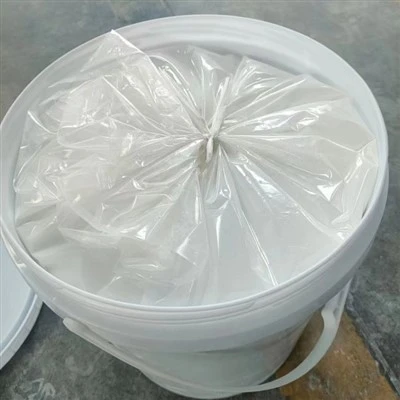
If your business uses catalysts in any part of your production process, I invite you to reach out to our team to discuss how catalyst recovery can work for you. We offer free spent catalyst assessments, custom recovery plans, and end-to-end support from collection to delivery of regenerated or fully recovered materials. Whether you’re looking to cut waste, reduce costs, or meet your sustainability goals, we have the expertise to help. Don’t let your spent catalyst go to waste—turn it into a valuable asset with our catalyst recovery solutions.
Antifouling Raw Materials References
- International Platinum Group Metals Association. (2022). Life Cycle Assessment of Platinum Group Metal Production.
- U.S. Environmental Protection Agency. (2021). Industrial Waste Management Guidelines for Spent Catalysts.
- European Commission. (2020). Waste Framework Directive: Updated Rules for Circular Economy Implementation.
- Brunauer, S., Emmett, P. H., & Teller, E. (1938). Adsorption of Gases in Multimolecular Layers. Journal of the American Chemical Society, 60(2), 309-319.
Wuxi Honor Shine Chemical Co., Ltd.
As one of the most professional catalyst manufacturers and suppliers in China, we’re featured by quality products and good service. Please rest assured to wholesale bulk high-grade catalyst made in China here from our factory. For free sample, contact us now.
Address: Building 1, Zone D, No.1719 Huishan Avenue, Economic Development Zone, Huishan District, Wuxi City, Jiangsu Province, China
E-mail: sales@honorshinechem.com
WebSite: https://www.marine-antifouling.com/
