Alright, let’s dive into something that’s probably flying under most HVAC techs’ radars but makes a huge difference in keeping buildings comfy and efficient: panel meters for HVAC. I’m gonna keep this real—no stuffy jargon, just what I’ve learned from being a panel meters supplier for over a decade, working side-by-side with HVAC guys who’re out in the field every day. Panel Meters
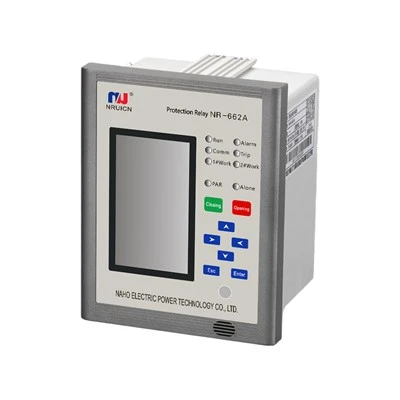
First off, let’s break down what these things actually are. If you’ve ever stared at the control panel of a big rooftop unit (RTU), a chiller, or a commercial air handler, that little digital or analog screen showing numbers like voltage, current, air flow rate, or even refrigerant pressure? That’s a panel meter. But wait—they’re not just any meter. These are built specifically for HVAC systems, which means they’re rugged, designed to handle the grind of dusty basements, sweltering rooftop units, and constant vibration. Regular lab meters can’t cut it here—they’d burn out in a week. That’s where our work comes in.
Let’s start with why you’d even need one. HVAC isn’t just about blowing air around; it’s a delicate balance of energy use, temperature, and fluid pressures. A lot of people think thermostats do all the heavy lifting, but nah—thermostats track air temp at the register, but they don’t tell you if the compressor’s drawing too much power, or if the evaporator coil’s got a refrigerant leak killing efficiency. That’s the panel meter’s job.
Take, say, a rooftop RTU on a 90-degree day. It’s working overtime to keep a mall cool. If the current draw meter on the unit’s display shows 20 amps instead of the normal 15, that’s a red flag. Maybe the fan motor’s going bad, or the capacitor’s failing. Catch that early with a panel meter and you avoid a breakdown that costs the mall manager a weekend of lost sales. I’ve seen techs skip this step before—they’d just replace the filter, crank the temp, and move on. Then the compressor locks up at 2 a.m., and we’re fielding a panic call at 7 a.m. to replace a $3k part. Panel meters save everyone time and cash.
Now, what do HVAC panel meters actually measure? Let’s run through the common ones, no boring terms:
- Electrical parameters: Voltage, current, power factor. This is for the “guts” of the system—the compressors, fans, pumps. If the voltage’s too low, the motor’s gonna struggle and use way more energy. A panel meter tracks this 24/7, so you can see if the building’s electrical service is acting up, not just the HVAC unit.
- Fluid pressure (refrigerant, water): Like, high-side and low-side pressure for AC systems, or water pressure for hydronic heating. Too high a refrigerant pressure means the condenser’s dirty, so it can’t dump heat. Too low? You’re low on refrigerant, which hurts efficiency and can damage the compressor. No need to hook up a fancy manifold gauge every time—your panel meter’s already showing this live.
- Air flow rate: For air handlers, this is how much air’s moving through the ducts. If the flow’s off, the rooms are either too hot or too cold, and you’re wasting energy. Some advanced panel meters will even show static pressure, which tells you if the filter’s clogged (another thing techs often miss until it’s obvious).
Here’s the thing about HVAC-specific panel meters vs. generic ones: we build ours to handle the environment. Rooftop units get hit with rain, dust, extreme temps (-20°F to 120°F, basically). So our panel meters have sealed enclosures, are NEMA 4X rated (that means they’re water-tight and corrosion-resistant), and have shock protection so they don’t break when the unit’s vibrating from the fan. I can’t tell you how many times a tech has called us because a cheap meter they bought online died in a year—probably because it was made for a office desk, not a rooftop.
Now, how do HVAC pros actually use these? Let’s get into real-world scenarios. A tech doing a preventive maintenance (PM) check on a 10-story office building: they’ll walk each floor’s air handler, check the panel meter to make sure the fan motor current is within spec, peek at the refrigerant pressure meter on the chiller, and verify the water flow rate for the heating loop. If something’s off, they adjust it right there instead of waiting for a complaint. That’s what PM is supposed to be, not just changing filters.
Another scenario: a building owner notices their energy bill jumped 30% in the summer. The HVAC team pulls up the panel meter data from the RTUs and sees the power factor is way lower than it should be. Turns out an old motor’s pulling reactive power, so they replace it with an efficient one, and the bill drops back to normal. Without the panel meter, they’d have guessed it was just higher temps or bad insulation—wasting time and money on the wrong fixes.
Wait, but what about analog vs. digital? Old-school analog meters (the needle ones) are still used in some places, but digital is way more common now. Digital panel meters are easier to read from across a noisy equipment room, can store data so you can track trends over time, and even connect to building management systems (BMS) so the owner can see the data on their phone. I talk to a lot of techs who say they prefer digital because you don’t have to squint at a needle and guess the number—you just read the digital display, which is way faster.
But here’s a common misconception: some folks think panel meters are just for big commercial systems. No way! We make small panel meters for residential mini-splits too, and even for small commercial units like those in a coffee shop or dentist’s office. Sure, they’re simpler, but they still do the same job—alert you to issues before they turn into breakdowns. A coffee shop can’t afford to lose their AC during a busy Saturday, so a $50 panel meter is a no-brainer.
Now, let’s get into why we care so much as a supplier. I didn’t start this business selling random meters—I started because I worked as an HVAC tech for 15 years. I saw first-hand how guys would skip using good panel meters because they thought they were too expensive or too complicated. So we built our business around making high-quality, affordable panel meters that are actually easy to install. No crazy wiring, no confusing programming—just something a tech can pop into a control panel in 10 minutes, and it works right away.
We also offer custom stuff. A lot of HVAC manufacturers want panel meters that match their unit’s control panel, so we can print custom labels, change the display to show exactly what they need, and make sure it fits their specific panel cutout. That’s the stuff that matters—when you’re building a unit for 1000-seat theater, every part has to work together seamlessly.
Wait, what about common mistakes people make with panel meters? Let’s list a few. First, buying the wrong type for the environment. A meter rated for indoor use won’t last on a rooftop. Second, not calibrating them regularly. Even the best meters drift a little over time, so a quick calibration once a year keeps the numbers accurate. Third, ignoring the alarms. A lot of our meters have adjustable alarms—if current gets too high, it beeps or sends a signal to the BMS. Techs will sometimes turn the alarms off because they “don’t want to be bothered,” but that’s a mistake. The alarm is there to tell you something’s wrong before it’s a big problem.
Let me throw in a quick story to drive this home. A few months back, a tech called us panicking—he had a 20-year-old chiller at a hospital that was acting up, and the old panel meter was so faded he couldn’t read the pressure numbers. He’d just swapped in one of our replacement meters, and within an hour, he saw the low-side pressure was dropping fast. Turns out there was a tiny leak in the evaporator coil—something he would’ve missed without a clear panel meter. He fixed the leak before the compressor failed, which would’ve shut down the hospital’s HVAC in the middle of flu season. That’s the real win here—saving people from stress, and in this case, saving a critical facility from a breakdown.
Now, if you’re an HVAC tech, a building owner, or someone who spec’ing parts for an HVAC system—you might be wondering: how do I pick the right panel meter? Let’s make it simple. First, figure out what you need to measure (current, pressure, flow?). Second, where is it going to live? Indoors, outdoors, rooftop, wet location? Third, do you need digital or analog? Digital is better for data tracking, analog for quick, at-a-glance checks if that’s your thing. Fourth, make sure it’s compatible with your system’s voltage and wiring.
And that’s where we come in. We don’t just sell a box and disappear. We have a team of HVAC-savvy people who can help you pick the right meter, answer questions about installation, and if something goes wrong, we’re here to fix it fast. We know HVAC systems—we don’t just work with electricity or sensors, we get how RTUs and chillers and air handlers work day in and day out.
So, to wrap this up: a panel meter for HVAC isn’t just a random screen on a control panel. It’s a tool that keeps systems running efficiently, prevents costly breakdowns, saves energy, and even keeps critical facilities like hospitals and grocery stores up and running. It’s the unsung hero of HVAC maintenance.
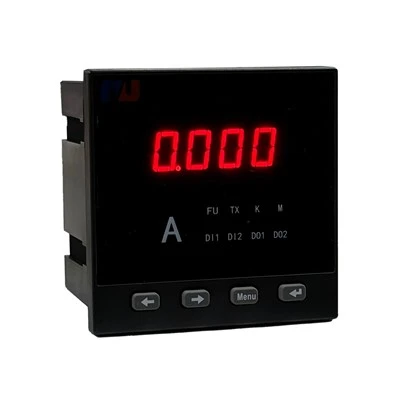
If you’re an HVAC tech looking to upgrade your system’s monitoring, a building owner tired of sky-high energy bills and unexpected repairs, or a manufacturer needing custom panel meters for your units—we’d love to chat. Whether you need a single meter for a rooftop unit or bulk orders for a new construction project, we can help you find exactly what you need. Just reach out to us to start the conversation about what your HVAC system requires.
Transformer Protection Relays References:
- ASHRAE Handbook: HVAC Systems and Equipment, 2023
- NEMA Standards Publication 250, Enclosures for Electrical Equipment (1000 Volts Maximum), 2021
- HVACR Technical Training Alliance (HTTA): Preventive Maintenance Best Practices for Commercial HVAC Systems, 2022
- International Code Council (ICC): International Mechanical Code (IMC), Chapter 12: HVAC Systems, 2021
NAHO Electric Power Technology Co., Ltd.
NAHO Electric Power Technology Co., Ltd. is one of the most experienced panel meters manufacturers and suppliers in China, also supports customized service and OEM&ODM service. Welcome to wholesale CE approved panel meters in stock here and get quotation from our factory. Quality products and reasonable price are available.
Address: No.15 Zhengtai Road, Xinguang Industrial Zone, Liushi Town, Yueqing City, Zhejiang Province, P.R.China
E-mail: Dr502963156@gmail.com
WebSite: https://www.nahopower.com/
