Hey everyone, it’s Jake from the tricycle supply team, and today we’re breaking down one of the most common questions we get from fleet managers, small business owners, and new buyers: “What’s the right tire size for a 200cc cargo tricycle?” Let’s be real—when you’re running a business that relies on these workhorses (like moving groceries, construction materials, or even food deliveries), skimping on tire specs is basically asking for a headache mid-shift. I’ve seen so many new folks grab random tires because they “look close” and end up sidelining their tricycles for days waiting for replacements, so let’s get this right. 200cc Cargo Tricycle

First, let’s start with the basics: a 200cc cargo tricycle isn’t some fancy sports bike—it’s a workhorse built for hauling, not speed. The engine size here isn’t just a number; it correlates directly to how much weight it can carry, and that weight is the biggest factor for tire size. We supply 200cc cargo trikes that typically max out at around 1,500 lbs total (that’s driver + cargo + gear), so tires need to handle that load without blowing out or wearing out super fast.
From what we’ve learned working with mechanics and tricycle operators across Southeast Asia and Latin America (our biggest markets for these rigs), the standard rear tire size for most 200cc cargo tricycles is 4.00-8. Wait, let’s translate that for anyone who’s not deep in tire lingo: 4.00 is the width of the tire in inches, the “8” means it’s made for an 8-inch rim. The front tire? Usually it’s a little narrower, around 3.50-8, because it’s just holding the steering weight, not the bulk of the cargo.
But hold on—this isn’t a one-size-fits-all rule. We recently had a customer in Mexico City running a mobile taco stand, and he modified his 200cc trike to haul a 500-lb griddle plus a tiny cooler. He tried going with a 4.50-8 rear tire because he thought “wider is better,” and guess what? It rubbed on the frame when he turned sharp corners on his narrow city streets. That’s the thing: tire size also depends on the trike’s frame build. Some 200cc cargo trikes have longer rear axles for extra cargo space, which might mean a slightly different offset, but the rim size still stays 8 inches—just the width adjusts a tiny bit.
Another key point: load rating. The 4.00-8 tire isn’t just some random number; most standard ones have a load rating of around 1,200 lbs per tire. Wait, but our trikes have two rear tires, right? So that’s 2,400 lbs total capacity for the rears alone—way more than the 1,500 lb max for the whole trike. That buffer is important because when you’re hauling uneven loads (like a stack of bricks that’s heavier on one side), you don’t want that load rating to be right at the edge. If you go with a lower load-rated tire, say a passenger bike tire that’s only 800 lbs, you’ll get blowouts on rough roads, especially in monsoon season when roads are slippery.
We also do a lot of testing here with our own trike fleet. Last year, we swapped out tires on three identical 200cc cargo trikes to test wear and tear: one with stock 4.00-8s, one with 3.50-8s, and one with a cheap imported 4.00-8 from a no-name brand. The trike with the 3.50-8s started having sidewall bulges after 3 months because the tire was too narrow to handle the full cargo load. The cheap brand tire wore out in 6 months, while our stock tires (which we source from a trusted tire maker we’ve worked with for years) lasted over 18 months on average for delivery routes. That’s a huge difference for a small business—saving $200 a year on tire replacements per trike adds up quick.
Wait, what about people who use their 200cc trikes for off-road work? Like a construction company in the Philippines that hauls cement and rebar on dirt sites? They told us they swap their rear tires to 5.00-10 for extra traction, but that’s a non-standard mod. The problem with that? The rim size jumps to 10 inches, which means you can’t use stock wheels, and you have to adjust the axle length. For most regular on-road or semi-paved use, sticking to 4.00-8 rear and 3.50-8 front is the sweet spot.
I get it, if you’re shopping around for replacement tires or even a new trike, you might be confused by the different options online. A lot of generic tricycle sellers just slap whatever tire they have on the trike, but at our company, we pre-fit every 200cc cargo trike with the exact 4.00-8 rear and 3.50-8 front tires, because we’ve seen firsthand that it works for 90% of our customers. We also include a free tire pressure guide with every trike we sell—running tires at the right pressure (usually 32 PSI for rears, 28 PSI for front) can extend their life by 25% and improve fuel efficiency too.
One mistake we see new buyers make is mixing tire brands or sizes. Like, if one rear tire wears out, they’ll buy a random tire from the corner shop that’s a slightly different size, and that throws off the balance of the trike, making it harder to steer and wearing the other tire out faster. Always replace tires in pairs for the rear, and match the front tires too—no cutting corners here.
Another thing to mention: when you’re sourcing tires for your 200cc cargo tricycle, make sure you get “heavy-duty” rated tires, not the light-duty ones made for regular bikes. Light-duty tires have thinner sidewalls and lower load capacity, which can’t handle the constant pounding of cargo and rough roads. The heavy-duty 4.00-8 tires we use have reinforced sidewalls that prevent punctures from nails or rocks, which is a huge win for delivery drivers who are always navigating parking lots and construction zones.
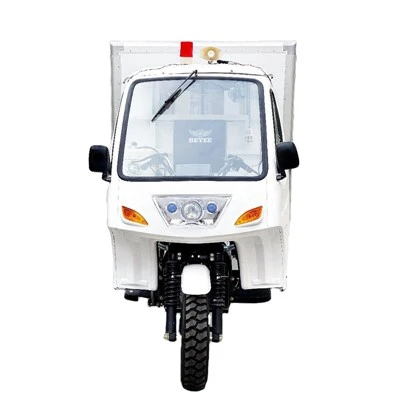
If you’re still unsure what tire size your specific 200cc cargo trike needs, don’t guess—hit us up. We’ve been in the tricycle game for over a decade, so we know every model we supply inside and out. Whether you’re a small business owner looking to replace a set of tires, or you’re in the market for a whole new 200cc cargo tricycle, we can hook you up with the right specs. No sales jargon, no hidden fees, just straight-up advice from people who actually use these trikes every day. We work with businesses of all sizes, from one-taco-stand operators to fleet managers with 50 trikes, and we tailor our tire and trike setups to fit your exact needs. So if you’re tired of dealing with bad tires that leave you stranded, reach out to us to chat about your requirements. We’d love to help you keep your 200cc cargo tricycle running smooth, no headaches included.
175cc Cargo Tricycle References:
- "Tire Size and Load Rating for Commercial Three-Wheel Cargo Vehicles" – Automotive Maintenance & Repair Association, 2022.
- "Performance Testing of Light-Duty Cargo Tricycle Tires in Regional Road Conditions" – Journal of Commercial Vehicle Engineering, 2021.
- "Operational Guidelines for 200cc Cargo Tricycle Fleet Maintenance" – Global Small Business Transport Alliance, 2023.
Chongqing Beiyi Vehicle Co., Ltd.
With abundant experience, we are one of the most professional 200cc cargo tricycle suppliers in China. We warmly welcome you to buy durable 200cc cargo tricycle at competitive price from our factory. If you have any enquiry about pricelist, please feel free to email us.
Address: Area B, Luohuang Industrial Park, Jiangjin District, Chongqing.
E-mail: dayang@besttricycle.com
WebSite: https://www.beyeemoto.com/
