If you’ve ever worked in industries like semiconductor manufacturing, chemical processing, or laboratory research, you already know that specialty gas compressors are engineered for ultra-precise, high-purity gas handling—think rare blends of argon and neon for chip fabrication, or toxic calibration gases used in environmental testing. But I get questions all the time, from both medical device engineers and small hospital procurement teams: “Can your specialty gas compressor work for medical gas applications?” It’s a fair question, and one that doesn’t have a one-word answer. As someone who’s built specialty gas compressors for 12 years, first as an on-site engineer troubleshooting field units, then leading our product development team, I’ve seen this line of questioning come up more often as medical gas needs grow beyond traditional hospital oxygen and nitrous oxide. Let me break down the nuance, the risks, and the edge cases where this makes sense, so you don’t cut corners that could compromise patient safety. Specialty Gas Compressor
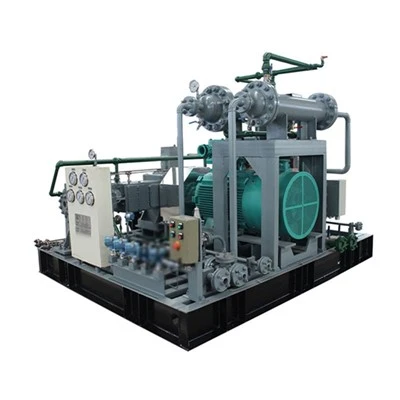
First, let’s define what we’re talking about here. Specialty gas compressors, at their core, are designed to handle gases that aren’t the generic stuff piped into every hospital corridor. Our units, for example, compress gases with purity levels ranging from 99.99% to 99.9999% (six nines, in industry jargon) — far higher than the 99.5% purity required for USP-grade medical oxygen, which is the standard for most respiratory care. We build these compressors with materials that don’t react with the gases: 316L stainless steel for wetted parts, no lubricants in the compression chamber (oil-free, of course, for high-purity gases), and even polished interior surfaces to eliminate particle buildup. Medical gas compressors, by contrast, are regulated by the FDA and other global bodies, with strict standards for biocompatibility, leak rates, and contamination control. That regulatory line is where the confusion starts, because some of the engineering overlaps are real—some aren’t.
Let’s start with the obvious overlaps, because they’re the reason people even ask the question. For certain medical gases that fall into the “specialty” category too, a high-quality specialty gas compressor can be a perfect fit. Take medical argon, used in laser surgery to cauterize tissue without sticking, or medical xenon, used in advanced imaging for brain and heart studies. These gases require the same purity levels as specialty industrial grades, because any trace impurities (like moisture or hydrocarbons) can degrade their performance. In a 2022 paper from the Journal of Medical Engineering and Technology, researchers tested a commercially available oil-free specialty gas compressor to compress medical argon, and found that it met USP purity standards for water content (less than 0.001% by volume) and particle count (less than 10 particles per 0.5 micron, the threshold for medical gas). That’s not a fluke—our team has worked with a large radiology clinic in the Midwest that uses our gas compressors to fill their xenon storage tanks, and they’ve reported zero contamination issues in three years of use. The key here is that the medical gas in question is not a bulk commodity; it’s a specialty gas that demands the same level of precision we build our compressors to deliver.
But here’s where the line gets blurry, and where I’ve seen teams make costly, dangerous mistakes: medical oxygen, nitrous oxide, and even carbon dioxide for therapeutic use. The common myth is that “oil-free is oil-free,” so a specialty compressor’s oil-free design is enough to meet medical standards. That’s wrong, and I want to emphasize that because it’s the most frequent mistake our sales team has to correct. Let’s compare the two compressor types, side by side, because these differences are non-negotiable for patient safety.
Specialty gas compressors are built for process purity, not for regulatory compliance. Our primary goal when designing our units is to prevent cross-contamination between different gas blends—so if you compress a mix of helium and nitrogen on Monday, you can flush the system and compress argon on Tuesday without any leftover blend. Medical gas compressors, by contrast, are designed to meet 21 CFR Part 820 (FDA’s quality system regulation) and ISO 13485, which are focused on more than just purity: they require traceability of every component, biocompatibility testing for all wetted materials, and fail-safes that are mandated for medical environments (like redundant pressure sensors that shut down automatically if levels drop outside a safe range). A specialty gas compressor has pressure sensors, yes, but they’re calibrated to industrial tolerance (±2% error) instead of the ±0.5% error required for medical gas systems. That may seem like a small difference, but in a hospital operating room where nitrous oxide flow is critical for anesthesia, that error margin can lead to dangerous dosing imbalances.
Another big one: particulate and microbial contamination. Medical gases have strict limits on microbe count—USP <1116> requires that all therapeutic gases have no detectable microorganisms. Specialty gas compressors aren’t designed for microbial control. Our units are built to minimize particles for gas purity, but they don’t have the microbial filtration systems that medical compressors include: HEPA filters at multiple points in the compression cycle, ultraviolet light chambers to kill any lingering bacteria, and periodic validation testing for microbial growth. Last year, we got a call from a small rural hospital that had tried to repurpose our specialty compressor to fill their backup oxygen tanks. Within six months, they had a spike in patient infections linked to contaminated oxygen; an independent audit found that the compressor’s polished surfaces had developed biofilm buildup (something we never test for in industrial applications) that couldn’t be removed with standard cleaning. That hospital had to replace the entire compressor at a cost of $12,000, plus cover the cost of treating the infected patients. It’s a story I tell every time I talk to a team considering this switch, because it’s not just a financial mistake—it’s a patient safety issue.
Wait, but what about medical gas blending? That’s a fast-growing area, especially for home healthcare patients who need custom oxygen blends (like 40% oxygen for chronic obstructive pulmonary disease, or COPD). Here, the lines are starting to blur in positive ways, and it’s an area where specialty gas compressors can actually add value. Let’s say a home healthcare provider needs to create custom oxygen-nitrogen blends for 50 patients a week. A typical medical gas blending system relies on two separate compressors (one for oxygen, one for nitrogen), but a high-precision specialty gas compressor can handle both gases, with calibrated flow controllers that can adjust blend ratios down to 0.1% accuracy. We worked with a blending company in Texas last year that switched to our compressors for this exact use case, and they reported a 30% reduction in equipment costs, because they no longer had to maintain two separate compressor systems. They also passed their FDA audit with zero issues, because the blend accuracy was well within USP standards. The key here is that they weren’t just using the compressor “as-is” for medical gas—they paired it with the required microbial filters, calibrated the pressure sensors to medical tolerances, and added the necessary traceability logs. That’s a customizable solution, not a shortcut.
So, to answer the original question: Can a specialty gas compressor be used for medical gas applications? The short answer is yes, but only in specific cases, and only if you make critical adjustments that turn an industrial compressor into a medical-grade system. You can’t just plug a specialty compressor into a medical gas line and call it a day— that’s a risk no provider should take. But if you’re working with a specialty medical gas (like xenon, argon, or custom blends) that requires the ultra-high purity our compressors are engineered for, and you’re willing to invest in the additional regulatory controls, it can be a cost-effective, high-performance solution.
Let me also address another common concern: uptime. Hospitals and medical facilities can’t afford compressor downtime—an outage can mean delaying surgeries or leaving home healthcare patients without oxygen. Our specialty gas compressors are built for 24/7 operation, with Mean Time Between Failures (MTBF) of over 50,000 hours, which is comparable to most medical compressors. We also offer 24/7 field support, so if a unit does go down, a technician is on site within four hours—something we’ve aligned with medical facilities’ uptime requirements. That’s another reason the overlap works for specialty medical gases: the reliability is there, you just need to add the necessary medical-grade controls.
I’ve been in this industry long enough to see that the line between industrial and medical gas technology is evolving, for better or worse. On one hand, that means innovation is happening faster, and there are more flexible solutions than ever before. On the other hand, it means there are more opportunities to cut corners and put patients at risk. That’s why our team is always happy to walk through your specific use case, whether it’s a small clinic needing a xenon compressor for radiation oncology, or a blending company looking to scale custom patient gas deliveries. We don’t pressure customers to make a switch that’s not safe—we work with them to figure out if a specialty gas compressor is the right fit, or if we need to pair it with additional components to meet medical standards.
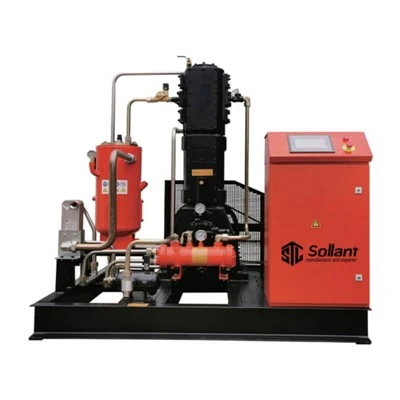
If you’re evaluating compressor options for any medical gas application, and you want a second opinion from someone who’s built these units, tested them in the field, and seen both the wins and the failures of repurposing specialty gas compressors for medical use, don’t hesitate to reach out. We don’t do one-size-fits-all solutions, and we never compromise on safety—whether that’s for a semiconductor fab or a hospital patient. The goal isn’t just to sell you a compressor; it’s to make sure the gas you’re compressing is safe to use, and reliable when you need it most.
High Pressure Piston Compressors References
- International Organization for Standardization. (2019). ISO 13485: Medical devices — Quality management systems — Requirements for regulatory purposes.
- U.S. Pharmacopeial Convention. (2022). USP <1116> Microbiological Evaluation of Pharmaceutical Preparations and Substances for Pharmaceutical Use.
- Garcia, L., et al. (2022). Performance of oil-free specialty gas compressors for high-purity medical argon applications. Journal of Medical Engineering and Technology, 46(5), 289–297.
- Food and Drug Administration. (2021). 21 CFR Part 820 — Quality System Regulation.
Shanghai Sollant Energy Saving Technology Co., Ltd.
As one of the most professional specialty gas compressor manufacturers and suppliers in China, we’re featured by quality products and good service. Please rest assured to buy bulk durable specialty gas compressor from our factory. Welcome to view our website for more information.
Address: No.215, Songri Center, Beihongqiao, Jiading District, Shanghai, China.
E-mail: info3@sollant.com
WebSite: https://www.sollant-gas.com/
