If you’ve ever stood in a lab, watching a batch of facial moisturizer shift from a messy, gritty blend of oil and water to a silky, uniform cream, you’ve witnessed agitation doing the heavy lifting. For a cosmetic emulsification supplier, this isn’t just a cool science trick—it’s the core of every product we deliver. Too often, people outside our industry think emulsification is just “mixing stuff together,” but agitation is the unsung hero that turns two immiscible liquids into the gentle, stable formulas your customers love. Let’s break down what agitation actually does in cosmetic emulsification, why it’s non-negotiable, and how we refine that step to make formulas that perform as well as they feel. Cosmetic Emulsification
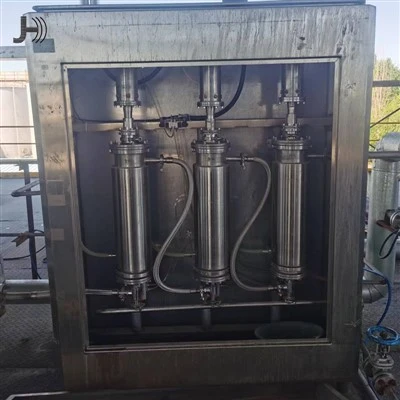
First, let’s ground this in basic science. Cosmetic emulsions are mixtures of oil and water, right? Think of a basic day cream, a serum, or a body lotion. Oil and water naturally separate—oil floats, water sinks, like when you pour salad dressing and let it sit for a minute. To make an emulsion, you need more than just a bottle shaker; you need an emulsifier (something like lecithin, cetearyl alcohol, or a silicone-based emulsifier) that acts as a bridge between oil and water molecules, but that emulsifier only works if it’s spread evenly. That’s where agitation comes in. Agitation is the mechanical force that breaks one liquid into tiny, dispersed droplets inside the other. For cosmetics, we’re talking about droplet sizes—smaller droplets mean a more stable emulsion, and stability is everything. If your droplets are too big, they’ll rise to the top (that’s called creaming) or separate entirely in the bottle, leaving your customers with a lumpy, unusable product.
I remember my first time troubleshooting a batch of soothing aloe vera lotion early in my career. We had all the right ingredients: apricot kernel oil, glycerin, xanthan gum, and a gentle nonionic emulsifier. But when we ran it through our standard mix, the lotion went to a streaky, watery mess within 24 hours. Our lab lead, Maria, grabbed a different impeller—she switched from a low-shear paddle to a high-shear rotor-stator head—and cranked the speed just enough, not too much. Within minutes, that messy blend smoothed out into a perfect cream that stayed stable for weeks. That’s when I realized agitation isn’t just speed; it’s how you apply force, where you apply it, and how you control it through the entire emulsification cycle.
Let’s get specific about the types of agitation used in cosmetic emulsification, because not all mixers are created equal. There are three main categories, and each serves a different purpose in the process. The first is low-shear agitation, usually from anchor or paddle impellers. These are gentle, designed to mix larger volumes of oil and water phases together before the emulsifier is added. You wouldn’t use high-shear force on the oil phase before adding emulsifiers, because that would create uneven droplets right off the bat, or even shear-sensitive ingredients like essential oils or plant extracts. Low-shear is also used during the cool-down phase, after the emulsion is formed, to prevent bubbles from getting trapped in the cream—bubbles can make a lotion feel gritty or cause it to spoil faster, since air allows bacteria to grow.
Next comes medium-shear agitation, often from turbine impellers. This is the middle ground, used when you need to evenly disperse thickeners like xanthan gum or carbomers. Thickeners clump up if they’re added to high-shear agitation, so medium shear is perfect for breaking those clumps apart without overworking the emulsion. Too much shear on thickeners can also make a formula too runny or too sticky, so it’s all about precision here. Our team tests every medium-shear setting with a viscometer—this tool measures the thickness of the mix in real time, so we can adjust agitation speed and duration to hit the exact viscosity our clients need, whether that’s a lightweight serum or a rich body butter.
Then there’s high-shear agitation, the workhorse of actual emulsion formation. This uses rotor-stator heads, colloidal mills, or high-pressure homogenizers to tear one phase into micro-droplets. Rotor-stator heads work by spinning a sharp rotor at thousands of RPM inside a fixed stator, creating a vortex that pulls the oil phase into tiny droplets as small as 1 micrometer (that’s way smaller than a grain of sand). The emulsifier wraps around each of these tiny droplets, preventing them from recombining. If the droplets are only 10 micrometers, they’ll separate quickly, but at 1 micrometer, they stay suspended for months. High-shear agitation is why a luxury facial cream feels silky instead of gritty, and why a sunscreen doesn’t leave white streaks on the skin—smaller droplets distribute more evenly and absorb better.
But here’s the thing that most people don’t talk about: agitation doesn’t stop when the droplets are formed. It’s a step-by-step process, and timing is everything. Let’s walk through a typical cosmetic emulsification batch to make this concrete. First, we load the water phase—purified water, glycerin, humectants—into a jacketed mix tank, and heat it to 75-80°C, since emulsifiers dissolve better at warmer temperatures. Then we add the emulsifier, and run low-shear agitation for 5 minutes to make sure the emulsifier is fully dissolved and no clumps remain. Next, we add the oil phase—oils, waxes, preservatives, active ingredients like vitamin C or hyaluronic acid—at the same temperature. This is where medium-shear agitation kicks in for 10 minutes, mixing the two phases evenly. Then we crank up the high-shear agitation for another 5-10 minutes to break the oil into tiny droplets. Once the emulsion is formed, we turn on the cooling jacket to bring the mix down to 40°C, and switch back to low-shear agitation to avoid bubbles and incorporate any heat-sensitive ingredients like essential oils or peptides, which would break down at higher temperatures. Each of these steps relies on agitation settings that we tweak for every single formula—what works for a lip balm won’t work for a lightweight facial serum, so we never use a one-size-fits-all approach.
For our clients, this level of attention to agitation makes all the difference in the final product. I’ve had brands come to us with a formula they developed in their own lab, only to find that their mixers couldn’t get the droplet size small enough, so their product separated within a month. One indie skincare brand reached out to us last year; they’d been making a natural eye cream in small batches with a hand mixer, and their customers complained it was sticky and went bad in a week. We walked them through adjusting their agitation steps: we used high-shear rotor-stator mixing for the emulsion phase, added a cooling step with gentle low-shear, and swapped their emulsifier for one that worked better with our agitation settings. Their new batch had a 0.8 micrometer droplet size, stayed stable for 6 months, and their sales jumped because customers loved the light, non-sticky feel. That’s the power of getting agitation right—it’s not just mixing, it’s building a product that works for both the brand and the user.
Another common myth is that more agitation is better. I can’t tell you how many times a client has asked us to run a batch at 20% higher speed, thinking it will make the emulsion smoother. But too much high-shear agitation can actually damage ingredients. For example, vitamin C is a notoriously active ingredient, and too much mechanical force can oxidize it, making it less effective and turning the cream yellow. Or when you have tiny particles of zinc oxide in a sunscreen, excessive agitation can break those particles into smaller sizes that are more likely to irritate sensitive skin, or even cause them to clump in a bad way. We’ve also seen batches where over-agitation created too many tiny air bubbles, leading to a cream that deflates in the bottle or grows bacteria faster. So it’s not just about power—it’s about matching the agitation intensity, timing, and type to the specific formula’s ingredients and purpose.
What’s even more interesting is how agitation ties into newer cosmetic trends. Clean beauty is huge right now, and brands are switching to natural emulsifiers like beeswax, candelilla wax, or lecithin, which are less effective synthetics. We’ve had to adjust our agitation settings to work with these ingredients, because they don’t spread as evenly with standard mixing. For example, when working with lecithin, we found that a slower ramp-up of high-shear agitation, instead of jumping straight to full speed, helps the lecithin wrap around oil droplets better, resulting in a stable emulsion without adding harsh preservatives. We also work with brands making silicone-free formulas, which often require more precise agitation to avoid separation, since silicone emulsifiers are more forgiving than natural ones.
For our team, agitation is a blend of science and art. We use lab tools—viscometers, particle size analyzers, stability testers—to measure exactly how our agitation settings impact the emulsion, but we also rely on hands-on experience. When we’re running a pilot batch, we watch the mix change as we turn the agitator up or down, adjusting on the fly to avoid mistakes. We keep detailed records of every batch—what impeller we used, how fast, how long, what the droplet size was, how stable the product was for 3 months. That data helps us refine our processes for every new client, so we don’t have to guess when we scale up their formula from small lab batches to full production runs.

If you’re a brand looking to launch a new cosmetic emulsion, or if you’re struggling with an existing formula that separates, feels wrong, or doesn’t last, the first place to look isn’t the ingredients—it’s how you’re mixing them. Agitation is the step that turns a good set of ingredients into a great product that customers come back to. We’ve been refining emulsification agitation for years, and we work with brands of all sizes, from indie startups to established lines, to tailor our mixing processes to their exact needs. If you’re ready to turn your formula into a stable, high-performing emulsion, reach out to us to discuss your project details.
Ultrasonic Extractor References
McClements, D. J. (2015). Food Emulsions: Principles, Practice, and Technology (3rd ed.). CRC Press.
Karra, M., et al. (2020). Emulsification Technology for Cosmetic Formulations. International Journal of Cosmetic Science, 42(3), 221-232.
Liew, S. L., et al. (2018). The Role of Agitation in Emulsion Stability. Journal of Dispersion Science and Technology, 39(10), 1421-1429.
Wei, Y., et al. (2019). Shear Effects on Cosmetic Emulsions Containing Active Ingredients. Cosmetics, 6(4), 52.
Hangzhou Precision Machinery Co., Ltd.
Hangzhou Precision Machinery Co., Ltd. is one of the most reliable manufacturers and suppliers of cosmetic emulsification machinery in China, also supports custom service. With abundant experience, we warmly welcome you to buy advanced cosmetic emulsification machinery from our factory.
Address: NO.1, 10th Rd. Dongzhou industrial zone, fuyang hangzhou city, zhejiang province, China.
E-mail: abby@jh-ultrasonic.com
WebSite: https://www.jh-ultrasonic.com/
