If you’ve ever stepped inside a stone quarry—whether for granite, limestone, marble, or sandstone—you know it’s not just men and dynamite anymore. As a supplier of stone quarry machines, I’ve spent the last decade on job sites across the U.S. and Canada, troubleshooting breakdowns, tweaking performance specs for small family operations, and negotiating with plant managers at large aggregates producers. The question I get most often, though, isn’t about how a machine works—it’s about which machine works better. Performance is a vague word, right? It means different things depending on what you’re quarrying, how much you need to produce, and whether you care more about uptime or operational costs. Let’s break this down like I do when I’m sitting across a table from a client who’s trying to upgrade their equipment on a tight budget. Stone Quarry Machine
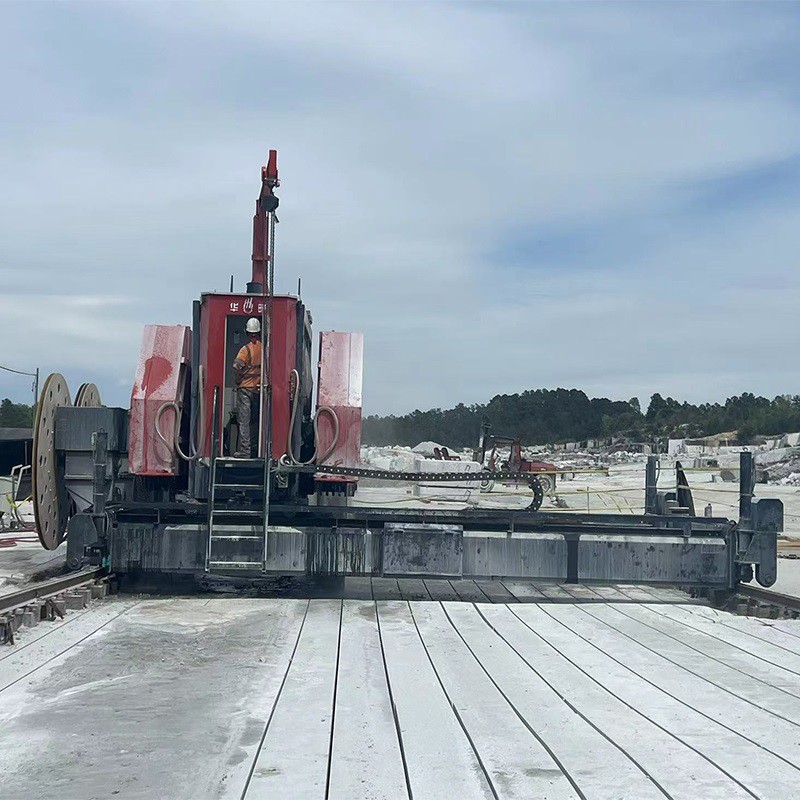
First, let’s define “performance” for quarries, because it’s not the same as a car’s 0-to-60 time. For a small to mid-sized quarry (producing 50 to 200 tons of finished stone per hour), performance might mean how easily the machine digs up bedrock without jamming, and how little maintenance you have to do between shifts. For a large-scale operation (cranking out 500+ tons per hour for road construction or commercial building materials), it’s about consistent output over 12-hour shifts, fuel efficiency, and how well it handles abrasive rock like granite, which eats through less durable parts fast. The biggest mistake I see new operators make is comparing machines based on horsepower alone, as if more power automatically equals better performance. That’s like judging a microwave by its wattage—sure, a higher wattage might heat food faster, but if it’s the wrong size for your plate, it’s useless.
Let’s start with the heavy hitters: jaw crushers. These are the workhorses of almost every quarry, used to take raw, oversized rock from the blast and break it down into smaller chunks that secondary crushers can handle. There are two main types: Blake and Dodge jaw crushers. I know a lot of guys who can’t tell them apart, so let’s cut the jargon. A Blake jaw crusher has a fixed jaw plate and a moving jaw plate that pivots at the top of the chamber. That means the feed opening at the top is wide, so it can take huge boulders (up to 4 feet across) and squeeze them down as they move toward the discharge opening at the bottom. What’s its performance sweet spot? Blake crushers are built for high-volume primary crushing—think a quarry that’s blasting 1,000 tons of rock a day. Their downside is that the material is squeezed evenly, but if you feed them too much mud or soft rock, the moving jaw gets bogged down, and you lose 20% of your output in downtime.
Now the Dodge jaw crusher has a moving jaw plate that pivots at the bottom of the chamber. That might sound minor, but it changes everything. The feed opening is smaller, so it can’t handle rock bigger than 2 feet across, but the crushing action is more aggressive, and it produces a more uniform final product right from the primary stage. That’s a big deal if you’re quarrying dimensional stone—like marble or granite for countertops—where you can’t have big, uneven chunks. I once worked with a small dimensional stone quarry in Vermont that switched from a Blake to a Dodge jaw crusher, and they cut their secondary crushing time by 30% because they didn’t have to reprocess uneven pieces. But for a gravel quarry that just needs to break rock for road base, the Blake is cheaper to run and easier to maintain, so its performance is actually better for that specific use case.
Next up: impact crushers, which are the go-to for secondary crushing after the jaw crusher, or for making smaller, more finely graded stone. There are two types here too: horizontal shaft impactors (HSI) and vertical shaft impactors (VSI). Again, I see operators mix these up all the time. Let’s start with HSIs. An HSI uses a series of blow bars on a rotating rotor to hit rock and hurl it against a hard, rigid anvil inside the crusher chamber, breaking it apart. What’s their performance trait? They’re fast—they can process up to 500 tons per hour, and they’re great at crushing softer rock like limestone or sandstone. The downside is that the blow bars wear out really fast, especially when you’re crushing abrasive granite. I had a client in Texas who was running an HSI on granite, and they had to replace blow bars every 40 hours of operation. That added $12,000 a month in parts costs, which wiped out any savings from faster output. HSIs also tend to produce more flat, irregular pieces, which is fine for road base but not for concrete aggregate, where you need rounded particles that hold concrete together better.
Now a VSI, or vertical shaft impactor, works completely differently. It feeds rock into the center of a spinning rotor, which flings the rock outward at high speed so it hits other pieces of rock (called “rock-on-rock crushing”) instead of a metal anvil or blow bar. That’s a game-changer for performance. The wear parts—those are the rotors and liners inside—last 10 times longer than HSI blow bars, even on abrasive granite. And the final product is more uniform, with cubical particles that are perfect for concrete, asphalt, or even landscaping stone. A big aggregate producer in Ohio switched from an HSI to a VSI two years ago, and they cut their annual parts costs by $140,000, while their output actually went up because they didn’t have to shut down every 40 hours to replace parts. The catch? VSIs can’t handle big, oversized rock as well as HSIs—they need material that’s already under 6 inches, so you still need a jaw crusher before a VSI. If your operation only processes soft rock like limestone and you need to make large volumes quickly, an HSI is the better performance pick. If you’re dealing with hard rock and need consistent, high-quality finished product, the VSI is the way to go.
Then there are cone crushers, which are used for tertiary crushing—taking the 2-inch chunks from the secondary crusher and breaking them down into sand or very fine aggregate. There are three main types here: standard, short-head, and medium-head cone crushers. Let’s break these down by performance. A standard cone crusher has a wide, large crushing chamber, designed to handle medium-sized rock, and it runs at a moderate speed. Its performance is best for producing large-to-medium sized aggregate, like 1-inch or 2-inch stone for road base. It’s durable, runs with relatively low maintenance, and can handle up to 300 tons per hour. A short-head cone crusher, on the other hand, has a narrower, shallower chamber, runs faster, and is built for fine crushing—making sand or ½-inch aggregate. I use short-heads with a lot of my clients who produce concrete aggregate, because they produce a more consistent fine product than an HSI or VSI can, with less dust. The trade-off? Short-heads wear out faster because they’re running at higher speeds, and they can’t handle big chunks at all. A medium-head cone crusher is a middle ground, good for both medium and fine crushing, but it doesn’t excel at either. I almost never recommend medium-heads to clients unless they’re running a very flexible operation that needs to switch between large and fine aggregate often.
Now let’s talk about a machine that’s often overlooked: vibrating screens. You might think a screen is just something that separates big stone from small, but its performance can make or break your whole operation. There are two main types of vibrating screens: circular motion and linear motion screens. Circular motion screens spin in a circular pattern, which is great for separating wet, sticky material like mud-covered limestone. The circular motion helps shake the mud off, so the screen doesn’t clog. That’s a huge performance win for quarries in areas with a lot of rain, because clogging screens mean downtime. Linear motion screens move in a straight line, which is better for separating dry, abrasive material like granite, because the straight motion helps the rock move along the screen instead of bouncing, so you get more accurate sizing. I had a client in Georgia who switched from circular to linear screens for their dry granite operation, and they reduced the amount of undersized rock (which is worthless to them) by 18%, so their usable output went up that much. Again, it comes down to what you’re working with: wet material = circular motion, dry = linear.
Wait, let’s not forget mobile crushers, because more and more quarries are going mobile now, instead of running fixed plants. Mobile crushers are either wheel-mounted or tracked, and their performance is all about mobility and adaptability, not just crushing power. A wheel-mounted mobile crusher is cheaper to buy, easier to move on public roads (you don’t need special permits for oversize loads), but it’s slower off-road, so it’s better for quarries that are relatively flat and don’t need to move the crusher far from the primary blast site. A tracked mobile crusher is more expensive, requires permits to move on roads, but it can drive over rough terrain, so it’s ideal for quarries that blast in different spots and need to move the crusher daily to stay close to the rock face. I know a quarry in Montana that uses a tracked mobile jaw crusher, so they don’t have to transport huge boulders 5 miles to a fixed crusher—they crush right at the blast site, cutting their transport costs by 40% a year. That’s a performance metric most suppliers don’t talk about: total operating cost, not just machine cost.
Now, let’s address a common misconception: “specialized” machines for dimensional stone vs. aggregate stone. Dimensional stone (marble, granite for countertops) needs to be cut into precise shapes, so quarries here use wire saws and diamond blade saws, not impact or cone crushers. Performance here is about precision and minimal waste, not tons per hour. A diamond wire saw uses a steel cable embedded with diamond beads to cut through stone, and its performance depends on the grade of diamonds—higher grade diamonds cut faster, last longer, but are more expensive. A lot of small dimensional stone quarries try to skimp on diamond beads to save money, but they end up with slower cutting and more broken stone, which is a total waste. I had a client in Italy who switched from a mid-grade diamond wire to a high-grade one, and their cutting time per slab dropped from 2 hours to 45 minutes, and their stone waste went down by 12%. That’s a perfect example of performance not being just speed, but value over time.
So how do you translate all this into a decision? Let’s recap the key performance factors that matter, based on your operation: First, what type of rock are you crushing? Soft limestone vs. hard granite vs. marble—each requires different wear parts, so a machine that works for one will fail for another. Second, what’s your production goal? High-volume aggregate for roads (focus on speed and low part costs) vs. precision dimensional stone (focus on precision and minimal waste). Third, how much can you afford for downtime? If you’re running a 24-hour operation, downtime for part replacement costs more upfront, so a machine with longer wear life is better than a cheaper machine that breaks down every shift.
I’ve seen too many clients buy the “cheapest” machine and end up paying 2-3 times more in repairs and lost production within a year. Last year, a small quarry in Ohio bought a cheap HSI from a supplier who didn’t specify that it was only for soft rock, so they ran it on granite. Within 6 months, they’d spent $18,000 on blow bar replacements, and their output was 25% lower than they projected. When they reached out to us, we helped them swap to a VSI and adjust their operation, and in 8 months, they’d recouped the upgrade cost. That’s why performance isn’t just about the machine itself—it’s about matching the machine to your specific needs, not what’s popular or cheap.

If you’re currently troubleshooting a machine that’s underperforming, or looking to upgrade your quarry equipment but don’t know which type is right for your operation, I’m here to help. I work with quarries of all sizes, from 1-man operations in rural areas to large multi-plant aggregates producers, so I can walk you through performance specs, maintenance schedules, and total operating costs without the sales jargon. Reach out to me to discuss your needs, and we can work together to find the machine that will actually work for your quarry, not against it.
Stone Cutting Machine References:
- Smith, J. (2021). Quarry Equipment Performance Metrics: A Guide for Aggregate Producers. Industrial Mining Journal.
- Lee, M. (2019). Wear Part Lifespan in Stone Crushing Machinery: Hard Rock vs. Soft Rock. Journal of Quarry Engineering.
- Carter, R. (2022). Mobile Crusher Mobility and Operating Cost Analysis. North American Quarry Association Report.
- Rossi, L. (2020). Dimensional Stone Cutting: Precision vs. Production Speed. International Stone Industry Review.
Fujian Province Hualong Machinery Co., Ltd.
Fujian Province Hualong Machinery Co., Ltd. is one of the most professional stone quarry machine manufacturers and suppliers in China, featured by quality products and good price. Please rest assured to buy high-grade stone quarry machine for sale here from our factory.
Address: Huangshi Industrial Zone, Putian City, Fujian Province, China
E-mail: jenkin@hualongm.com
WebSite: https://www.stonecuttingmachine.com/
