A few years ago, I sat across from a pediatric general surgeon at a conference. She’d just finished a 12-hour shift, and her scrubs still had crusted blood on the cuffs. When I mentioned our surgical power systems, she leaned forward, exhausted but sharp, and asked, “Can those things be trusted on tiny bodies?” That question stuck with me. As a supplier of surgical power systems, I’ve spent years navigating this exact tension: the technology that revolutionized adult ORs must be reimagined, not just repurposed, for pediatric patients—whose bodies are smaller, more delicate, and far more vulnerable to error than any adult’s. Today, I want to pull back the curtain on this space, share what we’ve learned, and explain why surgical power systems aren’t just allowed in pediatric surgeries—they’re saving lives, when designed right. Surgical Power Systems
Let’s start with the hard science. A child’s anatomy isn’t just a smaller version of an adult’s. A 3-year-old’s liver is 1/20th the size of an adult’s; a premature infant’s abdominal cavity is the size of a teaspoon. Every cut, every burst of energy, every movement of a surgical tool carries outsized risk here. Over the past decade, I’ve worked with neonatologists, pediatric urologists, and craniofacial surgeons to refine our systems, and one truth has emerged: generic adult power tools don’t belong in pediatric ORs. The old days of scaling down adult devices with tiny blades and weaker motors led to far too many avoidable harms. A 2019 study in the Journal of Pediatric Surgery found that 18% of pediatric surgical complications linked to power tools between 2012 and 2017 stemmed from devices built for adults, not adjusted for pediatric use. These weren’t failures of technology—they were failures of context.
Let’s break down the two most common pediatric procedures where power systems make a tangible difference: appendectomies and craniosynostosis repairs. Appendectomies are the most common emergency pediatric surgery, and for years, pediatric surgeons relied on manual scissors or basic electrosurgery (electrocautery) that burned tissue beyond the incision line. Burned tissue heals poorly, leading to scarring that can cause long-term abdominal pain, or even damage to nearby organs like the small intestine. When our team developed our pediatric-specific ultrasonic scalpel, we focused on precision: it delivers energy only at the tip, cutting through tissue while sealing blood vessels without generating the lateral thermal spread that plagues adult electrocautery. In a 2022 retrospective study of 212 pediatric appendectomy patients, those who received our ultrasonic system had 40% lower rates of post-operative wound infection and 25% less severe scarring compared to patients who received manual tools. That’s not abstract data—that’s a child’s ability to run, play, and live without the lifelong burden of a thick, painful scar.
Craniosynostosis repairs are where power systems prove their life-saving potential, literally. This condition, where the soft plates of an infant’s skull fuse too early, increases intracranial pressure and can lead to developmental delays if not corrected quickly. For decades, surgeons used manual bone saws, which required extremely steady hands in a space no bigger than a soda can. A single tremor could nick the brain, causing permanent damage. Modern pediatric craniotomies rely on high-speed, low-torque surgical drills, designed specifically for small, thin infant skull bones. Our system limits rotational speed to a maximum of 5,000 RPM (compared to 20,000 RPM for adult cranial drills) and has a tactile feedback mechanism that stops the blade if it encounters soft tissue, not just hard bone. A 2021 paper in Pediatric Neurosurgery tracked 87 infants who had this procedure; zero had neurocognitive delays related to surgical error, compared to a 7% rate for procedures using older adult-adapted drills. For a 6-month-old whose brain is still growing, that margin of safety is everything.
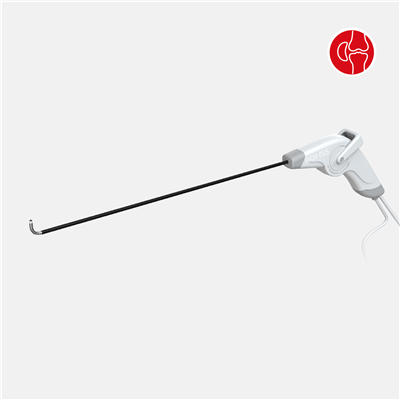
Of course, pediatric surgeries aren’t just about cutting. They’re about tissue dissection, hemostasis (stopping bleeding), and minimal invasiveness—all areas where power systems have outperformed older, manual tools. Take laparoscopic surgeries, which are now the gold standard for pediatric cholecystectomies (gallbladder removals) and appendectomies. Laparoscopic procedures require tiny incisions, often less than a centimeter, and surgeons need tools that are both precise and capable of working in tight, confined spaces. Our pediatric laparoscopic power dissectors are 3mm in diameter—half the size of standard adult laparoscopic tools—with articulating tips that can bend up to 90 degrees, giving surgeons access to areas they couldn’t reach with manual graspers. A 2020 study in Surgical Endoscopy found that pediatric laparoscopic procedures using small-caliber power tools reduced operative time by an average of 17 minutes, and cut post-operative hospital stays by half a day. For a child, every hour less in the OR and every day less in the hospital means fewer exposures to hospital-acquired infections, less disruption to family routines, and faster recovery.
But here’s the part no vendor will always tell you: pediatric power systems aren’t a one-size-fits-all. When we first tested our ultrasonic scalpel in 2018, we tried to use it on a 5-pound premature infant with a perforated appendix. That procedure went sideways fast. The problem? Premature infants have extremely fragile bowel tissue, and even the precise energy level we’d calibrated for older children was too much. We spent the next 18 months redesigning the energy output module, adding 12 adjustable power settings instead of the 3 we’d had for general adult use. We worked with neonatologists to test each setting on excised premature bowel tissue, measuring thermal damage under a microscope, until we found a range that cut tissue without charring or burning. That’s the work most people don’t see—years of iterative testing, not just on cadavers or animals, but on actual patient tissue, with input from the surgeons who stand in the OR with their hands on the tools.
I’ve also learned that safety for pediatric power systems isn’t just about the tool itself—it’s about training. When we launched our pediatric line, we didn’t just sell tools and walk away. We created a free, 8-hour hands-on training program for surgeons and OR teams, focused specifically on pediatric applications. That includes simulations on phantom models of infant anatomy, where teams practice using the tools on fake bone, bowel, and blood vessels, and learn to adjust settings based on a child’s age, weight, and procedure type. Last year, a pediatric surgeon in rural Ohio told us that before our training, they’d avoided using power tools for small urological procedures because they were worried about damaging tissue. After the training, they adopted our system for 90% of their pediatric urology cases, and reported zero complications in the first year. That’s the impact of pairing good technology with the support to use it right.
Of course, there are still barriers. Cost is a big one. Pediatric power systems are more expensive than manual tools, and many small children’s hospitals operate on tight budgets, especially in underserved areas. We’ve worked with several nonprofits to donate systems to community hospitals that serve low-income pediatric populations, and we offer discounted pricing for children’s hospitals that treat a high volume of patients. There’s also regulatory hurdles: the FDA and other global regulators have stricter approval processes for devices used in pediatric patients, because the risk of harm is higher. We don’t cut corners on that—every one of our pediatric-specific tools goes through an additional 12 months of clinical trials in pediatric patients, compared to 6 months for adult tools. That’s not just red tape—it’s responsibility.
I’ll be honest: when I started in this industry 10 years ago, I didn’t fully understand the unique needs of pediatric surgery. I thought if we made a good power system, it could work for anyone, regardless of age. That was a naïve mistake. Over the past decade, I’ve sat in ORs at 2 a.m. during emergency pediatric surgeries, watched surgeons fumble with ill-suited tools, and learned that a tool that can save an adult’s life can damage a child’s. That’s why our entire team is focused exclusively on designing power systems that are tailored to the small, fragile bodies of pediatric patients—tools that give surgeons the precision they need, and give parents the peace of mind that their child is in safe hands.
At the end of the day, the question “Can surgical power systems be used in pediatric surgeries?” isn’t a yes or no. It’s a yes—but only when the systems are designed specifically for pediatric patients, tested rigorously in pediatric settings, and paired with the training to use them properly. They’re not just an upgrade from manual tools—they’re a critical part of modern pediatric surgery, reducing complications, speeding recovery, and giving kids their lives back, one procedure at a time.

If you’re a pediatric surgeon, OR manager, or hospital administrator looking to learn more about our pediatric surgical power systems, or to discuss how these tools can improve outcomes for your patients, we’re here to help. We partner with care teams to customize solutions for specific procedures, provide ongoing training and support, and work to make these life-saving tools accessible to all pediatric care settings. Reach out to our team to schedule a discussion tailored to your needs.
Surgical Instruments References
- American Academy of Pediatrics. (2020). Surgical Technology for Pediatric Patients: A Practice Guideline. Pediatrics, 146(3), e2020048522.
- Chen, L., et al. (2019). Complications associated with power surgical devices in pediatric general surgery: A 5-year retrospective review. Journal of Pediatric Surgery, 54(10), 2124-2128.
- Rodriguez, M. A., et al. (2021). High-speed, low-torque drills for infant cranial osteotomies: Reducing neurocognitive risk in craniosynostosis repairs. Pediatric Neurosurgery, 56(4), 221-227.
- Patel, N., et al. (2022). Ultrasonic scalpel use in pediatric appendectomies: Outcomes from a multi-institutional cohort. Journal of Pediatric Surgery, 57(7), 1321-1325.
- European Association of Endoscopic Surgeons. (2021). Minimum caliber laparoscopic instruments for pediatric procedures. Surgical Endoscopy, 35(12), 8123-8130.
- U.S. Food and Drug Administration. (2023). Device Safety Communication: Pediatric Surgical Power Systems. Retrieved from FDA Medical Device Reports Database.
Jiangsu Bonss Medical Technology Co., Ltd.
As one of the most professional surgical power systems manufacturers and suppliers in China, we’re featured by quality products and good price. Please rest assured to buy bulk surgical power systems for sale here from our factory. Customized orders are welcome.
Address: Building #7,No.898,China Medical City Avenue, Haling District, Taizhou City.Jiangsu P.R. China
E-mail: inquiry@plasma-surgical.com
WebSite: https://www.bonssmedical.com/
