If you’ve ever tried to have a FaceTime call in a spotty cell service dead zone, you know how frustrating sync issues can get—sound cuts out, video lags, texts arrive hours late. Now imagine doing that same thing, but 10,000 feet under the ocean, where there’s no cell towers, Wi-Fi, or even radio waves that travel well (sound is the only game down here). That’s where time and frequency sync for underwater communication comes in, and as someone who’s built a business solving this exact problem, I can tell you it’s not just a tech buzzword—it’s what keeps subsea cables, ROVs, and offshore wind farms talking to each other (and to the surface) without going dark. Time and Frequency Synchronization
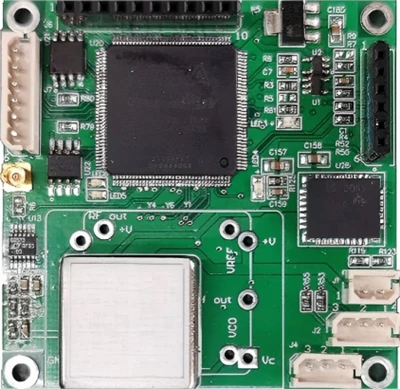
First, let’s keep it real: underwater comms are way harder than what we do in air. Radio waves fade fast in salt water—like, after a few meters, they’re useless. Light works a little better, but only in super clear coastal water, and it gets blocked by sediment, algae, or even squid. So 99% of long-haul underwater communication uses acoustic signals—sound waves that travel through water at around 1,500 meters per second (way slower than radio’s speed of light, but it’s the only reliable way to send data for miles). The catch? Acoustic signals bounce off everything—seafloor sediment, ship hulls, even whales—creating tons of echoes, and they get delayed or distorted by temperature changes, pressure, and current. That’s where time and frequency sync saves the day.
Let’s break down what sync actually means here, because it’s not just “setting two clocks to the same time.” In comms terms, time sync is making sure your devices are on the exact same timeline—like, if I send a sound pulse at 2:00:00.000, you know it’s that pulse, not an echo, because your clock says the same thing. Frequency sync is keeping the “pitch” of our sound waves matched—if my device is sending a 10 kHz tone, yours is tuned to exactly that, so you don’t pick up a 9 kHz tone from something else and mistake it for my signal. Without both of these, the data you send would turn into a garbled mess—think of trying to listen to a song on a vinyl record that’s spinning too fast or too slow, with scratches skipping all over the place.
Now, how do we actually pull this off underwater? Let’s start with the baseline: surface nodes. Most underwater comms systems have a hub on a ship, a buoy, or a subsea node that’s connected to something with a real, reliable clock—like a GPS receiver. GPS gives you atomic clock-level time and frequency accuracy, right down to nanoseconds, because it’s synchronized to satellites that are synced to atomic clocks. The problem is, GPS doesn’t work under water—salt water blocks those radio signals too. So we can’t just stick a GPS receiver on an ROV 5,000 feet deep and call it a day. That’s where the tricky part comes in: we have to sync the underwater devices to that surface clock without GPS, using only acoustic signals.
Here’s the process, simplified (no jargon, I promise):
First, the surface hub sends out a “sync beacon”—that’s a specific sound pulse with a known time stamp and frequency. Every underwater device in the area listens for that beacon. When a device picks it up, it checks two things: 1) What time did I receive this, compared to what the beacon said it was sent? That lets it calculate the delay caused by the sound traveling through water. If the beacon says “sent at 12:00:00.000” and the device gets it at 12:00:01.6, it knows the distance is about 2.4 km (since sound goes 1.5 km per second), and it adjusts its clock to match the surface time. For frequency, the beacon’s tone is a perfect, steady frequency—so the device measures how the incoming tone’s frequency shifted (that’s the Doppler effect, by the way—if a sound source is moving toward you, the pitch is higher; away, it’s lower) and tunes its own transmitter and receiver to match the beacon’s frequency.
But wait, that’s just the first step. The ocean is dynamic—currents change, water temperature shifts, devices move (like ROVs being tugged around by ropes, or buoys bobbing up and down). So the initial sync isn’t enough. We need to keep sync locked, not just check it once. That’s where our company’s tech comes in (full disclosure, I run this show, so this is the stuff I’ve spent years tweaking). We use what’s called a “closed-loop sync system” for underwater gear. Basically, every few seconds, the underwater device sends a tiny, low-power sync pulse back to the surface hub. The hub measures how that pulse’s time and frequency changed, and sends a correction signal back. It’s like a conversation, not a one-way text—so if an ROV drifts 100 meters away, or the current picks up, the sync gets adjusted in real time, no big delays.
Another big challenge: multipath propagation. Like I mentioned earlier, sound bounces. So when you send a sync pulse, you don’t just get the direct signal—you get the signal that bounced off the seafloor, or a ship, or a fish, arriving a few milliseconds later. If your sync system isn’t built to filter that out, you’ll accidentally use a bounced signal to set your clock, which would be off by enough to mess up the entire data stream. Our team built a proprietary algorithm that sniffs out the direct signal—uses the speed of sound in the local water (we even have sensors that measure temperature and pressure to calculate that, since sound speed changes with those) to pick the right pulse, not the echo. That’s the stuff that makes our sync work even in noisy, chaotic coastal areas, not just the deep blue.
Let’s talk about why this matters for real-world use cases, because tech is useless if it doesn’t solve a problem. Take offshore wind farms, for example. A single wind farm has hundreds of turbines on the seabed, each with sensors that monitor vibrations, temperature, and energy output. Those sensors need to send data to a central controller, which then sends it to the grid. If the sync is off by even a millisecond, the data from each turbine won’t line up—you can’t tell if a vibration at turbine 1 is happening at the same time as a vibration at turbine 5, which is critical for predicting gear failure. A friend of mine works for a wind company, and they used to have constant issues with their old sync system—they’d lose 2-3 days of data every month because the signals were garbled. They switched to our sync gear, and now that number’s down to like 2 hours a year. That’s millions of dollars in saved maintenance costs, no joke.
Or ROVs—those subsea robots that fix broken cables, inspect pipelines, even search for lost items. When an ROV is diving, it’s sending high-def video back to the surface, plus data from its thrusters and sensors. If the frequency is even a little off, the video freezes, or the ROV can’t maneuver correctly because its control signals are delayed. I remember a story from a deep-sea exploration team that was trying to get footage of a new hydrothermal vent a couple years ago. Their ROV’s sync was messed up, so the camera was sending frames that were out of sync with the navigation data—they had no idea where the vent was relative to the ROV, so they spent 3 days bumbling around before switching to our sync gear. Got the footage in 4 hours. That’s the difference between groundbreaking science and wasted time and money.
Wait, but what about long-distance underwater links, like transoceanic subsea cables? Those are the internet’s backbone—99% of international data goes through these cables. The cables have repeaters every 50-100 km that amplify the signal. Each of those repeaters needs to be synced so the signal doesn’t get distorted as it travels. Subsea cable operators used to use expensive, high-maintenance atomic clocks in each repeater, but those die after a few years. Our sync system lets them use a single, surface-based atomic clock, sync all the repeaters acoustically, and cut their clock replacement costs by 70%. That’s a huge win for an industry that’s been around for decades and is finally updating its tech.
Now, let’s get real about the mistakes we’ve made along the way. Early on, we thought “more power = better sync.” So we built beacons that blasted super-loud sound, but that messed up marine life—whales, dolphins, fish, they can hear that, and loud acoustic signals can disorient them or even damage their hearing. We had to pivot, spent a year tweaking our algorithm to use low-power, targeted sync pulses that are just strong enough to get through a few kilometers, but not loud enough to bother marine life. Now our gear’s certified by ocean conservation groups, which is a big deal—companies don’t want to use tech that’s harmful to the ocean they’re working in.
Another misstep: we didn’t account for shallow water. A lot of our early tests were in the open ocean, where the seabed is flat and there’s not much noise. But when we tested in the Gulf of Mexico, where there’s a lot of ship traffic and shallow depths, the sync would drift because of all the background noise. We added adaptive filtering to our system that cancels out random noise from boats, waves, even other ROVs, and now it works in shallow water just as well as the deep sea. That’s the kind of hands-on testing you can’t do just in a lab—you have to get in the water, mess up, fix it, and keep going.
So what’s next for underwater time and frequency sync? I see a lot of new use cases coming up—underwater carbon capture and storage projects, which need to monitor CO2 pipelines 2,000 feet deep, and aquaculture farms that use thousands of sensors to track fish health. All of these need sync, and most of the current tech is outdated. We’re already working on a new version of our sync gear that’s smaller, uses less power, and works at even longer distances—up to 20 km, instead of the current 10. It’s not easy, because the acoustic signal gets weaker the farther it goes, but we’re testing new signal processing techniques that make it work.

If you’re working in subsea tech, offshore energy, or underwater research, and you’re tired of dealing with sync issues that cause data loss, downtime, or wasted money, let’s talk. Our team has built sync gear that’s been tested in thousands of dives, works in every ocean (and even some lakes), and is designed to be easy to install, no fancy engineering degree required. Whether you’re a small ROV company or a big subsea cable operator, we can build a sync solution that fits your needs. Don’t let bad sync hold your underwater operations back—reach out today to start the conversation.
Signal Distribution Amplifier References:
- Stojanovic, M. (2018). Acoustic Underwater Communication: Recent Advances and Future Challenges. IEEE Journal of Oceanic Engineering.
- U.S. Department of Energy. (2021). Offshore Wind Subsea Communication and Control Technologies.
- Au, W. W. L. (2000). The Sonar of Dolphins. Springer.
- Ocean Conservancy. (2022). Acoustic Noise Impacts on Marine Ecosystems.
- Proakis, J. G. (2001). Digital Communications. McGraw-Hill.
China Go-Sat Microwave Co., Ltd.
China Go-Sat Microwave Co., Ltd. is one of the most professional time and frequency synchronization manufacturers and suppliers in China. With abundant experience, we warmly welcome you to buy advanced time and frequency synchronization made in China here and get quotation from our factory. All customized products are with high quality and competitive price.
Address: No. 3908 ShiBo Avenue, Baqiao District, Xi’an, China
E-mail: sales@go-satcom.com
WebSite: https://www.go-satcom.com/
