Hey guys, let’s cut to the chase—if you’ve been poking around for eco-friendly burial options lately, odds are you’ve seen oak coffins popping up everywhere. I get it, as someone who’s been supplying these for years, one of the most common questions I get from families isn’t even “how much is it?” It’s: “Wait, are oak coffins actually biodegradable?” Oak Coffin
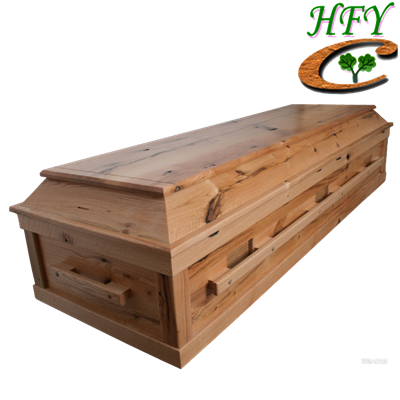
First off, let’s ditch the vague answers. I’m not here to sell you a buzzword—this is stuff I’ve learned from talking to funeral directors, archaeologists, and even a few regular folks who’ve pre-planned their end-of-life stuff. Let’s start with what “biodegradable” really means, because so many people mix it up with “compostable” or “environmentally friendly.”
Biodegradable = a material that breaks down naturally over time, thanks to bacteria, fungi, and other tiny living things, turning back into nutrients that feed the soil, right? No weird chemicals, no leftover junk that clogs up the earth. Now, oak—good old American white oak, English oak, whatever we source from trusted mills—this is hardwood, but it’s not some tough-as-nails plastic that’ll outlive all of us. Wait, but hold on—people always say oak is super durable, like it’s used for fences that last 50 years. Why the confusion?
Here’s the thing: oak’s durability is only when it’s above ground, exposed to the elements (well, not always—treated oak lasts longer, but we never use treated stuff for coffins, full stop). When you bury it deep, the conditions change completely. No sunlight, less oxygen, moisture is constant, and there’s a whole crew of decomposers hanging out in the soil. I’ve seen our oak coffins in cemeteries after 15 years that are way more broken down than you’d think. Sure, they don’t turn to mush in a year, but they start deteriorating within a decade, and after 30 or 40? They’re basically just wood fibers mixing with the dirt.
Wait, but let’s get specific about why oak is different from, say, pine or softwood. Oak has a higher tannin content—those are the natural compounds that make wine taste dry and give leather that tough, rich texture. Tannins actually slow down decomposition a little, right? So a pine coffin might break down faster, like in 10 years, while oak takes 15-25 years depending on the soil. But “slower” doesn’t mean “not biodegradable.” A lot of people mistake that slow breakdown for permanence, but that’s just not how it works.
Let me share a real example I ran into a few years back. We supplied a oak coffin for a grandma in a small rural cemetery, and 20 years later her grandkid was digging a new grave nearby. They found the old coffin—was it intact? No. The sides were crumbly, the joinery was gone, only a few splinters were left around her casket (wait, no, actually, we do solid oak coffins, no inner caskets—another point people ask about). The oak had turned back into soil, mixed with her remains, no weird residue. That’s exactly what biodegradable is supposed to do.
But here’s the fine print—something I never skip when explaining this to a customer. It’s not just the oak. It’s the rest of the coffin, too. We use 100% solid oak, no particle board, no MDF, no synthetic adhesives. Wait, when people do use glue, that’s a problem. Even natural glues? Like animal hide glue? That breaks down too, right? Some coffin makers use plastic hardware—handles, hinges. We only use solid brass or stainless steel, and even those, while they don’t biodegrade fast, they don’t leach toxic stuff. Most cemeteries require metal hardware that’s removable anyway, so that doesn’t end up in the ground long-term.
Another thing a lot of folks worry about: is oak going to release chemicals? Nope, not if it’s untreated. We don’t stain our coffins with harsh chemicals—we use all-natural, plant-based stains, or even leave them unfinished for people who want that raw, organic look. The only time oak is bad for decomposition is if it’s pressure-treated, which we would never touch. Pressure treatment uses creosote or arsenic, that’s obviously not biodegradable, but that’s a totally different product, not something we sell.
Wait, let’s compare this to other eco burial options to put it in perspective. For a long time, people thought only wicker coffins or cardboard were biodegradable, but those break down super fast—like 2-5 years. Oak’s slower, but that’s a feature, not a bug for a lot of families. It feels more substantial, more fitting for a loved one who cared about woodworking or the outdoors. And even though it takes a bit longer, it’s still way better than a standard metal or concrete vault, which never breaks down, or a plastic casket that’ll sit in the ground for centuries.
I also talked to a soil scientist friend a while back, and she said the tannins in oak actually have a benefit for the soil. As the wood breaks down, it adds carbon, which feeds microbes and helps plants grow. That’s a huge plus—instead of just taking up space, your loved one’s coffin is contributing to the earth. Some natural burial grounds even prefer oak because of that, because it doesn’t disrupt the soil ecosystem.
But let’s be honest, there are myths out there that I need to bust. One common one: “Oak is too dense, it won’t break down.” Dense wood is harder for decomposers to get through, but not impossible. Fungi and bacteria can eat through even the hardest oak, it just takes time. I’ve seen a fallen oak log in a forest that was completely turned to soil in 40 years, same as a coffin buried in the same kind of soil. So that myth is totally false.
Another myth: “If the coffin is sealed, it can’t biodegrade.” Wait, do we seal our coffins? No, not hermetically. We make them with tight joins, so they hold up for years, but they’re not airtight. Water and microbes can get in slowly. If it were hermetically sealed, that would be a problem, because it would keep decomposers out, so the wood would just sit there. But that’s not how we build oak coffins, because we’re in the eco burial space, not the standard funeral market where they make airtight caskets to delay decomposition for cemetery regulations.
Wait, that’s another point—regulation. A lot of traditional cemeteries require concrete vaults, which are terrible for biodegradability. But natural burial grounds, where people opt for eco-friendly coffins, don’t require vaults, so the oak is just in the soil, no extra stuff. That’s why the biodegradability of oak coffins is super dependent on where it’s buried. If it’s in a standard cemetery with a concrete vault, the oak might not break down for a really long time, because the vault keeps everything sealed. But if it’s in a natural burial plot, straight into the ground, it’s going to decompose as it should. That’s something I always tell customers—if biodegradability is your top priority, go for a natural burial ground, skip the concrete vault.
Now, let’s get to what we do as a supplier, because I’m not just rambling about science—this is what we stand for. We don’t cut corners. Every oak we use is FSC-certified, so it’s from sustainably harvested forests, no deforestation. We build each coffin by hand, no synthetic materials, no harsh chemicals. We even offer custom options, like adding a small amount of seed to the wood or the base, so once the coffin breaks down, it helps grow a tree or flowers in the natural burial plot. That’s the kind of thing that makes oak coffins more than just a container—they’re part of the cycle of life.
I’ve had customers come to us worried that oak is a “less green” option because it takes longer to break down, and I get that. But when you look at the whole picture—sustainably sourced wood, no toxic materials, eventually turning back into soil that feeds the earth, way better than non-biodegradable options—that makes it a solid choice. Sure, if someone wants something that breaks down in 2 years, we can also offer willow coffins, but a lot of people love the timeless look of oak, the way it feels warm and solid.
Wait, let’s address the elephant in the room: is there any scenario where an oak coffin isn’t biodegradable? Only one, in my opinion. If it’s buried in a place with no decomposers—like super dry desert soil, or permanently frozen permafrost. In those cases, decomposition stops. But that’s not common, and most burial sites are in areas where there’s enough moisture and microorganisms to break down wood. So for 99% of people, their oak coffin will biodegrade.
Another thing I’ve learned over the years: a lot of people don’t realize that “biodegradable” doesn’t mean it has to disappear in a day. It means it returns to the earth without leaving harmful traces. That’s exactly what oak does. It’s not like plastic that breaks down into microplastics and stays forever. It’s not like metal that rusts and leaches heavy metals. It’s wood, which is a natural product, same as a tree that falls in the forest.
I think a big part of the confusion is that the funeral industry has pushed these ideas of permanence for so long—permanent caskets, permanent grave markers, permanent vaults. But more and more people are rejecting that, wanting something that’s part of the natural cycle. Oak coffins fit that perfectly. They’re sturdy enough to honor a loved one, sustainable, and biodegradable when they’re buried correctly.
Now, if you’re here because you’re looking into pre-planning your own burial, or you’re helping a family member make decisions after a loss, I hope this clears things up. I know it can feel overwhelming, going through all the options, trying to make something that’s right for you and kind to the planet. Oak coffins aren’t for everyone, but if you love wood, value sustainability, and want something that doesn’t harm the earth, they’re worth considering.
At the end of the day, the question “are oak coffins biodegradable?” has a simple answer, but it’s also nuanced. Yes, under the right conditions, they absolutely are. They break down over time, return nutrients to the soil, and leave no harmful residue. That’s the whole point of eco-friendly burial, right? Not to just check a box, but to make a choice that honors someone’s life and the planet we all share.

If you have more questions, or want to learn about our oak coffin options, give us a shout to talk through what’s right for you. No pressure, no sales pitch, just real answers from someone who’s been doing this for years. We get that this is a tough time, or a big decision, and we’re here to help however we can.
Wooden Paulownia Coffin References:
- The Biodegradability of Wood in Soil, Journal of Environmental Quality, 2018
- Sustainable Burial Practices and Ecosystem Impacts, Natural Burial Association, 2021
- Tannin Effects on Decomposition Rates of Hardwood, Soil Biology & Biochemistry, 2020
- Material Science of Eco-Friendly Funeral Products, Funeral Consumers Alliance, 2019
Cao County Huifengyuan Wooden Co., Ltd.
Cao County Huifengyuan Wooden Co., Ltd. is one of the most experienced manufacturers and suppliers of oak coffin in China. Please rest assured to wholesale high quality oak coffin at competitive price from our factory. If you have any enquiry about customized service, please feel free to email us.
Address: Changgangmiao Village, Zhuangzhai Town, Cao County, Heze, Shandong, 274404, China
E-mail: admin@hfywooden.com
WebSite: https://www.hfycoffin.com/
