If you’ve ever stood in a shipping yard watching a container get hoisted onto a cargo ship, or unloaded a package at a warehouse marked “sealed for transit,” you’ve seen the small, tamper-proof seals that keep those goods secure. For decades, most of those seals were applied by hand—slow, inconsistent, and easy to bypass. That’s where a threading wire seal machine comes in, and as someone who’s spent the last 12 years supplying these machines to logistics, manufacturing, and security teams across North America, I can tell you this isn’t just another piece of industrial equipment. It’s the backbone of securing high-value assets when every second and every point of access matters. Threading Wire Seal Machine
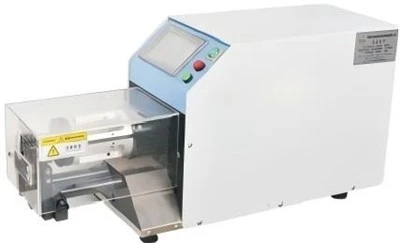
Let me start with what I see day in and day out: most people confuse threading wire seal machines with generic seal applicators. A generic tool might crimp a basic plastic seal, but a threading wire seal machine is purpose-built for metal wire seals—those thin, tempered steel loops that you see on cargo container doors, truck trailer doors, railcar access points, and even bank deposit bags. Unlike plastic seals, which can be cut with a pair of scissors or snapped with enough force, metal wire seals are designed to break only when cut with bolt cutters, and their unique threading mechanism means you can’t reuse or reposition them without leaving clear, irreversible damage. That’s the core of what makes the machine indispensable, and it all ties back to the jobs no one wants to mess up.
First, let’s break down the primary use cases, because this machine isn’t a one-size-fits-all solution—it’s tailored to specific industries where tampering can lead to catastrophic losses. Let’s start with intermodal shipping and container logistics, which is the biggest market for our machines right now. When a shipping container leaves a port in Shanghai, it passes through at least four different handoffs before it reaches a retail store in Chicago: the loader in China, the cross-dock worker in Los Angeles, the long-haul driver, and the warehouse receiver. Each handoff is a gap where someone could access the contents, whether that’s a carton of electronics, a pallet of pharmaceuticals, or even high-volume cash in transit. A threading wire seal machine lets a loader crimp a unique serial-numbered wire seal onto the container’s two doors in 10 seconds flat. By the time the container gets to the next handoff, anyone can glance at that seal and confirm two things: it’s the exact same one that was applied at the origin, and it hasn’t been tampered with. If the seal is broken, the entire shipment is flagged for inspection immediately. Before these machines became standard, logistics teams relied on paper seals that could be altered, or plastic seals that could be reattached, leading to millions in stolen goods each year. I remember one client in Houston who told us their theft rate dropped 82% in six months after they switched from hand-applied plastic seals to our threading wire seal machines. That’s not a stat—That’s money back in their pocket, and that’s why shipping companies keep coming back.
Next, there’s rail and trucking security. Railcars transport everything from grain to dangerous chemicals, and each railcar has at least two access points on the ends. Trying to apply a wire seal by hand to a railcar is a nightmare—you have to thread the wire through the seal’s locking mechanism, pull it tight enough so it won’t slip, and then crimp it evenly so it doesn’t come loose during transit. A threading wire seal machine eliminates all that guesswork. It’s designed to clamp the wire, thread it through the seal, pull it to a consistent tension (usually around 250 pounds, which is the industry standard for unbreakable tension), and crimp the seal in one smooth motion. For trucking fleets, this is even more useful. A long-haul driver might have to secure 10 or more trailers in a single day. Applying a seal by hand takes 45 seconds per trailer; our machine does it in 10. That cuts down on loading time, reduces human error, and gives fleet managers a clear, tamper-proof record of when each trailer was secured. We also supply these machines to armored car companies, which use wire seals on cash bags, safe doors, and vehicle compartments. If a seal on a cash bag is broken, the police can trace the serial number back to the exact time and location the seal was applied, which is critical for fraud investigations.
Another less talked about but equally important use case is manufacturing and supply chain traceability. A lot of people don’t realize that wire seals with unique serial numbers are a key part of ISO-compliant supply chain tracking. If a company is producing medical devices, for example, every batch of devices that leaves the factory needs a verifiable record of its journey. A threading wire seal machine lets manufacturers seal crates of finished devices with a unique serial number, and each time the crate changes hands, the seal is checked against a digital log. This not only prevents theft but also ensures accountability in case of a product recall. If a faulty device is found, a company can trace back through every seal number to see exactly which container it came from, instead of searching through thousands of unmarked crates. I’ve worked with medical device makers in the Midwest who told us that before our machines, they had to conduct full inventory checks every time a recall was issued, which cost them an average of $120,000 per recall. Since they started using our threading wire seal machines, those checks are done in 48 hours, with almost no labor costs. That’s the kind of impact this equipment has beyond just security—it streamlines operations and cuts waste.
Now, let’s talk about how the machine works, because this isn’t some black box tech that only engineers can operate. A threading wire seal machine has three core components: a wire spool holder, a seal feeder, and a crimping mechanism. The operator loads a spool of tempered steel wire (we sell 1000-foot spools that work with every machine we supply) and stacks a batch of numbered wire seals (each is unique, so no two have the same ID). When the machine is activated, it feeds a length of wire through a seal, clamps the wire tight to a set tension, and crimps the locking sleeve of the seal to hold it in place. Some of our more advanced models even print the seal’s serial number directly onto the crimped end, so you don’t have to worry about reading a tiny number on a tight seal. The best part? Most of our machines are handheld, so operators can move them from container to trailer to railcar without having to set up a stationary tool. We also have semi-automatic and fully automatic models for high-volume facilities that apply thousands of seals a day. The fully automatic machines can crank out a seal every 2 seconds, which is perfect for ports or large distribution centers.
But here’s something I emphasize to every client: the threading wire seal machine isn’t just about the tool itself—it’s about the seals you use with it. A machine can only be as good as the seals it applies. We test every seal we supply for tensile strength, durability, and tamper resistance. A bad seal can break during transit, which defeats the whole purpose, or it can be cut and reattached without leaving a mark, which is a security risk. That’s why we don’t sell generic seals; we work with our clients to match the right seal to their industry—whether that’s a small 1mm wire for cash bags or a thicker 2mm wire for shipping containers that carry heavy cargo.
I get a lot of questions from new clients who ask, “Can’t I just use a generic crimping tool for wire seals?” The short answer is no. A generic crimping tool doesn’t control the tension of the wire, so you end up with seals that are too loose and slip open during transit, or too tight and break when you’re trying to apply them. It also doesn’t thread the seal evenly, so the locking mechanism can be bypassed with a simple pick. We’ve had clients come to us after buying cheap generic tools from online marketplaces, and they’ve lost hundreds of dollars in cargo because the seals came loose. A proper threading wire seal machine is built with precision gears and a calibrated crimping head, so every seal is applied exactly the same way, every time. That consistency is what makes it reliable.
Another common question is about maintenance. I make sure every client knows that our machines are designed to run for years with minimal upkeep. You just need to keep the wire spool loaded, lubricate the crimping head every 6 months, and replace the wire guides once a year. We also offer on-site training and 24/7 technical support, because I know that if a machine breaks down at a shipping yard at 2 a.m., you can’t wait for a part that takes 3 days to arrive. That’s part of the service we provide—we don’t just sell a machine; we make sure it works for you.
Let me wrap this up with something that always sticks with me from a client in Miami who handles high-value luxury goods. They told me that before using our threading wire seal machines, they had two containers of high-end watches stolen from their yard in 2021. The thieves had cut plastic seals off the containers, swapped the watches, and reattached the seals so no one noticed. After they switched to our machines and tamper-proof wire seals, they haven’t had a single theft in the two years since. That’s the real value of this equipment: it’s not just a tool—it’s a way to protect people’s livelihoods, whether that’s a logistics team trying to hit their monthly targets, a pharmaceutical company trying to get life-saving drugs to market, or a retail business trying to keep their inventory safe.

If you’re tired of dealing with flimsy seals, slow application times, or the risk of tampering that keeps you up at night, a threading wire seal machine is the solution you’ve been looking for. We’ve helped hundreds of companies across industries upgrade their security and streamline their operations, and we’re ready to help you too. We can walk you through the different models, help you pick the right seals for your needs, and get you set up with training so your team is using the machine correctly right away. Whether you’re a small trucking fleet or a major port operation, we have a machine that fits your volume and your budget. Don’t wait until another shipment is tampered with or stolen—reach out today to start the conversation about upgrading your security with a threading wire seal machine.
Intelligent Wire Processing Machine References
- International Organization for Standardization. (2020). Security seals for intermodal road, rail, and maritime containers: Requirements and testing. ISO 17712:2019.
- Bureau of Transportation Statistics. (2022). Cargo theft in U.S. intermodal shipping: Trends and mitigation strategies. U.S. Department of Transportation.
- National Cargo Bureau. (2021). Tamper-evident seals and supply chain traceability for freight transportation. National Cargo Bureau Technical Bulletin.
- World Customs Organization. (2020). Guidelines for secure supply chain management and container security. WCO Framework of Standards to Secure and Facilitate Global Trade.
Suzhou Keweisi Automation Co., Ltd.
We are one of the most professional threading wire seal machine manufacturers and suppliers in China. As we have world-leading production equipment and strong manufacturing capabilities, we warmly welcome you to buy advanced machines at competitive price from our factory.
Address: Block C, No.211, Yunchuang Road, Wujiang District, Suzhou, Jiangsu Province, P.R China.
E-mail: sales@szkowas.com
WebSite: https://www.szkowas.com/
