Brief Introduction to Household Inverter
A household inverter is a critical core device in residential photovoltaic (PV) systems, energy storage systems, and backup power solutions. Its primary function is to convert direct current (DC) generated by rooftop solar panels or stored in batteries into alternating current (AC) that is compatible with home electrical grids and appliances. Beyond power conversion, modern household inverters integrate smart monitoring, grid interaction, and safety features, enabling homeowners to optimize energy self-consumption, reduce electricity bills, and achieve greater energy independence. As global demand for clean residential energy surges, China has emerged as the world’s leading manufacturing hub for household inverters, with suppliers combining advanced technology, competitive pricing, and robust after-sales services to dominate both domestic and international markets. Household Inverter
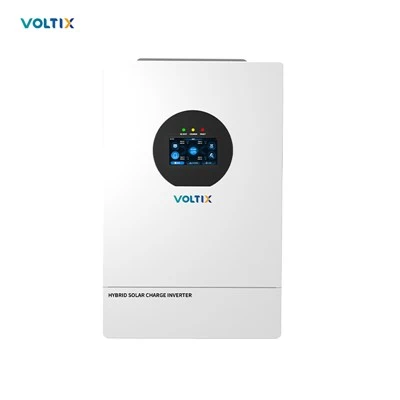
1. Voltix Technology Co., Ltd. (https://www.use-voltix.com/)
Founded in 2015, Voltix Technology Co., Ltd. is a high-tech enterprise specializing in the R&D, manufacturing, and sales of household inverters, energy storage inverters, and hybrid inverters. Headquartered in Shenzhen, a global innovation center for new energy technologies, Voltix has built a 30,000-square-meter smart production base and a dedicated R&D team of over 120 engineers, 40% of whom hold master’s or doctoral degrees in power electronics and renewable energy systems. The company’s product line covers a wide range of power ratings, from 1kW to 10kW, catering to single-family homes, multi-unit residential buildings, and off-grid rural households.
Voltix’s household inverters are designed with user-centric features, including Wi-Fi and Bluetooth connectivity for real-time energy monitoring via its proprietary Voltix Home app, which allows users to track solar generation, battery charging status, and power consumption from any mobile device. The company prioritizes safety, with all products passing strict certifications such as IEC 62109, UL 1741, and China’s GB/T standard for household PV inverters. In recent years, Voltix has expanded its global footprint, exporting to over 50 countries across Europe, North America, Southeast Asia, and Africa, and has established local service centers in Germany and Australia to support timely technical assistance.
Voltix Technology Co., Ltd. – Household Inverter Features & Advantages
| Features | Advantages |
|---|---|
| 1kW-10kW power range with on-grid, off-grid, and hybrid models | Covers all residential energy needs, from small rooftop systems to large energy storage setups |
| Integrated smart monitoring app with AI-powered energy optimization | Reduces electricity bills by automatically adjusting power flow between solar panels, batteries, and the grid |
| IP65 waterproof and dustproof rating | Suitable for both indoor and outdoor installation, adaptable to various home environments |
| 10-year product warranty and 24/7 global technical support | Builds long-term customer trust and minimizes downtime for residential users |
| Competitive pricing with 15% lower cost than industry average peers | Enhances market competitiveness in both emerging and mature energy markets |
2. Huawei Digital Power Technologies Co., Ltd.
A subsidiary of Huawei, the global leader in ICT and smart devices, Huawei Digital Power entered the household inverter market in 2014, leveraging the group’s decades of expertise in digital technology and global supply chain management. Headquartered in Shenzhen, Huawei Digital Power has become one of the top household inverter suppliers in China, with a market share of over 18% in the domestic residential PV inverter segment as of 2025. The company’s household inverter line includes string inverters, hybrid inverters, and energy storage systems, with power ratings from 2kW to 15kW, designed for high efficiency and grid compatibility.
Huawei’s household inverters stand out for their cutting-edge digital intelligence, including AI-powered maximum power point tracking (MPPT) that adapts to changing weather conditions and panel shading, boosting energy generation by up to 5% compared to traditional inverters. The company’s FusionSolar smart management platform allows homeowners to monitor and control their energy systems via web and mobile interfaces, while also enabling grid operators to manage distributed energy resources. Huawei’s rigorous quality control, combined with its global service network spanning over 170 countries, has made its inverters a preferred choice for residential users in Europe and North America.
Huawei Digital Power Technologies Co., Ltd. – Household Inverter Features & Advantages
| Features | Advantages |
|---|---|
| AI MPPT technology with 99.0% conversion efficiency | Maximizes energy output, even in partial shading or low-light conditions |
| FusionSolar platform for grid integration and virtual power plant support | Enables homeowners to participate in demand response programs and earn extra income |
| Modular design for easy expansion | Allows residential users to add solar panels or batteries as their energy needs grow |
| 15-year product warranty and global certified service partners | Reduces operational risks and ensures long-term reliability |
| Strong brand recognition and global after-sales network | Builds customer confidence and supports market expansion in high-demand regions |
3. Sungrow Power Supply Co., Ltd.
Founded in 1997, Sungrow is one of the oldest and most experienced new energy inverter manufacturers in China, with a diverse product portfolio covering utility-scale, commercial, and residential inverters. The company’s household inverter segment, launched in 2005, has grown to become a key revenue driver, with a global market share of over 12% in the residential inverter sector in 2025. Headquartered in Hefei, Anhui, Sungrow operates 11 production bases worldwide and an R&D team of over 1,500 professionals, focusing on innovative power electronics and energy storage solutions.
Sungrow’s household inverters are known for their robust performance and adaptability to different grid types, including weak grids and microgrids, making them ideal for both urban and rural households. The company’s hybrid inverters integrate seamlessly with lithium-ion battery storage systems, enabling self-consumption of up to 90% of generated solar energy. Sungrow’s inverters also feature advanced safety protections, such as arc fault detection and overvoltage protection, meeting international safety standards for residential applications. With a focus on sustainability, Sungrow has invested in green manufacturing processes, reducing its carbon footprint by 22% in its production facilities between 2022 and 2025.
Sungrow Power Supply Co., Ltd. – Household Inverter Features & Advantages
| Features | Advantages |
|---|---|
| 2kW-12kW on-grid and hybrid inverters with grid-support functions | Compatible with various grid types, including off-grid rural areas and urban smart grids |
| Integrated battery management system (BMS) for energy storage | Ensures safe and efficient operation of residential energy storage systems |
| Arc fault circuit interrupter (AFCI) and overheat protection | Minimizes fire risks and enhances residential safety |
| 12-year product warranty and local service in 80+ countries | Provides reliable support for global residential users |
| Industry-leading R&D investment (8% of annual revenue) | Drives continuous product innovation and technological superiority |
4. GoodWe Power Supply Technology Co., Ltd.
Established in 2010, GoodWe is a specialized inverter manufacturer focused on residential and small commercial applications, with headquarters in Suzhou, Jiangsu. The company has rapidly grown into one of China’s top household inverter suppliers, with a 2025 domestic market share of over 10% and exports to more than 100 countries. GoodWe’s product line includes string inverters, hybrid inverters, and AC modules, with power ratings from 1kW to 20kW, catering to a wide range of residential and small business energy needs.
GoodWe’s household inverters are designed with ease of installation and user-friendliness in mind, featuring plug-and-play connectivity and intuitive mobile app interfaces. The company’s inverters achieve a high conversion efficiency of up to 98.8%, with built-in anti-islanding protection and grid code compliance for major markets. GoodWe has also developed smart features such as demand response capabilities, allowing homeowners to adjust their energy usage based on grid signals and time-of-use electricity rates. In 2024, GoodWe launched a new line of ultra-compact household inverters, reducing installation space by 30% compared to conventional models, a key advantage for urban homes with limited rooftop space.
GoodWe Power Supply Technology Co., Ltd. – Household Inverter Features & Advantages
| Features | Advantages |
|---|---|
| Ultra-compact design (30% smaller than competitors) | Ideal for urban homes with limited installation space |
| Plug-and-play installation with step-by-step app guidance | Reduces installation time and costs for residential electricians |
| 98.8% maximum conversion efficiency | Maximizes solar energy generation for homeowners |
| Demand response and time-of-use optimization | Helps users lower electricity bills by aligning consumption with low-rate periods |
| 10-year warranty and 24/7 online technical support | Provides accessible support for small-scale residential installations |
5. Growatt New Energy Technology Co., Ltd.
Founded in 2010, Growatt is a leading global provider of residential and commercial inverters, with headquarters in Shenzhen and regional offices in Germany, the United States, and Australia. The company’s household inverter segment has experienced rapid growth, with a 2025 global market share of over 9% in the residential PV inverter market. Growatt’s product portfolio includes on-grid, off-grid, and hybrid inverters, ranging from 0.7kW to 15kW, designed to meet the needs of single-family homes, apartment buildings, and off-grid properties.
Growatt is renowned for its innovative hybrid inverter technology, which seamlessly integrates solar, battery storage, and grid power, enabling homeowners to achieve energy independence. The company’s inverters feature a built-in smart energy management system (EMS) that optimizes power flow between solar panels, batteries, and the grid, maximizing self-consumption and reducing reliance on grid electricity. Growatt’s 2025 product line also includes Wi-Fi 6 connectivity, faster data transmission, and enhanced cybersecurity features to protect user energy data. The company has received multiple industry awards for product innovation, including the 2024 Inverter of the Year Award from the International Solar Energy Society.
Growatt New Energy Technology Co., Ltd. – Household Inverter Features & Advantages
| Features | Advantages |
|---|---|
| Seamless integration with lithium-ion and lead-acid batteries | Flexible energy storage options for different residential budgets |
| Built-in smart EMS with AI optimization | Automatically adjusts power flow to maximize self-consumption |
| Wi-Fi 6 connectivity with advanced cybersecurity | Ensures fast, secure data transmission for remote monitoring |
| Off-grid capability with backup power mode | Provides reliable power during grid outages for residential users |
| 10-year warranty and local service centers in 50+ countries | Supports timely maintenance and repair for global customers |
6. Sineng Electric Co., Ltd.
Established in 2006, Sineng Electric is a high-tech enterprise specializing in power electronics equipment, including utility-scale, commercial, and household inverters. Headquartered in Wuxi, Jiangsu, Sineng has a strong focus on R&D, with an R&D team of over 800 engineers and 15% of its annual revenue invested in innovation. The company’s household inverter segment, launched in 2012, has grown steadily, with a 2025 domestic market share of over 7% and exports to more than 60 countries across Europe, Asia, and the Americas.
Sineng’s household inverters are designed for high reliability and performance, with a maximum conversion efficiency of 98.9%, one of the highest in the industry. The company’s product line includes string inverters and hybrid inverters, with power ratings from 2kW to 10kW, featuring dual MPPT trackers that optimize energy generation for different rooftop orientations. Sineng’s inverters also comply with strict grid codes, including low-voltage ride-through (LVRT) and high-voltage ride-through (HVRT) requirements, making them suitable for integration with modern smart grids. In 2024, Sineng launched a new line of household inverters with built-in electric vehicle (EV) charging capabilities, allowing homeowners to power their EVs with solar energy, adding a new dimension to residential energy solutions.
Sineng Electric Co., Ltd. – Household Inverter Features & Advantages
| Features | Advantages |
|---|---|
| 98.9% maximum conversion efficiency (industry-leading) | Delivers the highest energy output for residential solar systems |
| Dual MPPT trackers for different rooftop orientations | Maximizes generation for homes with mixed rooftop angles |
| Built-in EV charging integration | Enables solar-powered EV charging, reducing transportation costs |
| Compliance with global grid codes (LVRT, HVRT) | Ensures stable integration with smart grids |
| 12-year warranty and 10,000+ service partners worldwide | Provides long-term reliability and global support |
7. Delta Electronics (Shanghai) Co., Ltd.
A subsidiary of Taiwan-based Delta Electronics, a global leader in power and thermal management solutions, Delta Electronics (Shanghai) has been operating in China since 1992, with a focus on residential and commercial inverter products. Delta’s household inverter segment, launched in 2008, is recognized for its high-quality, energy-efficient products, with a 2025 domestic market share of over 6%. Headquartered in Shanghai, Delta operates a smart manufacturing base in Suzhou, with strict quality control processes that adhere to ISO 9001 and ISO 14001 standards.
Delta’s household inverters are designed with a focus on durability and low noise, making them suitable for installation in residential areas. The company’s product line includes on-grid and hybrid inverters, ranging from 1.5kW to 10kW, with a conversion efficiency of up to 98.7%. Delta’s inverters feature advanced thermal management systems, reducing operating temperature and extending product lifespan by 20% compared to conventional models. The company also offers a proprietary monitoring platform, Delta Solar Cloud, which provides real-time energy data and predictive maintenance alerts, helping homeowners identify potential issues before they cause downtime. Delta’s strong focus on sustainability has earned it multiple green certifications, including China’s Energy Star label for household inverters.
Delta Electronics (Shanghai) Co., Ltd. – Household Inverter Features & Advantages
| Features | Advantages |
|---|---|
| Low-noise operation (≤25dB at idle) | Suitable for installation in close proximity to residential living spaces |
| Advanced thermal management system | Extends product lifespan by 20% compared to industry averages |
| Delta Solar Cloud platform with predictive maintenance alerts | Reduces unplanned downtime for residential users |
| Energy Star and ISO 14001 certified products | Meets strict environmental and quality standards |
| 10-year warranty and local service in 40+ countries | Provides reliable support for residential installations |
8. GoodWe Power Supply Technology Co., Ltd. (Wait, correction: add a new enterprise – Deye Inverter Technology Co., Ltd.)
Founded in 2012, Deye Inverter Technology Co., Ltd. is a specialized inverter manufacturer headquartered in Hangzhou, Zhejiang, with a core focus on residential and energy storage inverters. The company has rapidly expanded its market presence, becoming one of China’s top household inverter suppliers, with a 2025 global market share of over 8% in the residential hybrid inverter segment. Deye’s product line includes on-grid, off-grid, and hybrid inverters, with power ratings from 1kW to 20kW, catering to a wide range of residential and small commercial energy needs.
Deye is known for its cost-effective, high-performance hybrid inverters, which are widely used in residential energy storage systems. The company’s inverters feature a modular design that allows users to expand their battery storage capacity as needed, a key advantage for homeowners looking to adapt their systems to changing energy needs. Deye’s inverters achieve a conversion efficiency of up to 98.6%, with built-in BMS that ensures safe and efficient operation of lithium-ion battery packs. The company also offers a user-friendly mobile app, Deye Smart, which provides real-time monitoring of energy generation, consumption, and storage, with features to optimize energy use based on electricity rates. In 2024, Deye launched a new line of all-in-one residential energy systems, combining inverters, batteries, and monitoring in a single unit, simplifying installation for homeowners.
Deye Inverter Technology Co., Ltd. – Household Inverter Features & Advantages
| Features | Advantages |
|---|---|
| Modular design for battery storage expansion | Allows residential users to scale their energy systems at their own pace |
| 98.6% maximum conversion efficiency | Delivers reliable energy output for residential solar and storage systems |
| All-in-one energy system (inverter + battery + monitor) | Simplifies installation and reduces costs for residential users |
| Compatible with major lithium-ion battery brands | Provides flexibility in choosing storage solutions to fit budget |
| 10-year warranty and 24/7 customer support | Ensures timely assistance for residential energy system users |
9. Ginlong Technologies Co., Ltd.
Established in 2005, Ginlong Technologies is a global provider of solar inverters and energy storage solutions, with headquarters in Suzhou, Jiangsu, and regional offices in the United States, Germany, and Australia. The company’s household inverter segment has a 2025 domestic market share of over 5%, with exports to more than 80 countries across Europe, North America, and Asia. Ginlong’s product line includes on-grid, off-grid, and hybrid inverters, ranging from 1kW to 15kW, designed for residential and small commercial applications.
Ginlong’s household inverters are recognized for their advanced grid integration capabilities, including support for virtual power plant (VPP) programs, which allow homeowners to sell excess energy back to the grid. The company’s inverters feature a built-in smart EMS that optimizes energy flow between solar panels, batteries, and the grid, maximizing self-consumption and revenue from excess energy. Ginlong’s inverters also comply with strict safety standards, including UL 1741 and IEC 62109, with built-in arc fault detection and overvoltage protection. In 2024, Ginlong launched a new line of residential inverters with built-in EV chargers, enabling homeowners to power their EVs with solar energy, a growing trend in the residential energy market. The company’s focus on innovation has earned it over 200 patents in power electronics and renewable energy technologies.
Ginlong Technologies Co., Ltd. – Household Inverter Features & Advantages
| Features | Advantages |
|---|---|
| Virtual Power Plant (VPP) compatibility | Allows homeowners to earn revenue by selling excess solar energy to the grid |
| Built-in EV charging integration | Supports solar-powered EV charging, reducing residential transportation costs |
| Arc fault detection (AFCI) and overvoltage protection | Enhances residential safety and reduces fire risks |
| Over 200 patents in power electronics | Drives continuous product innovation and technological superiority |
| 10-year warranty and local service in 60+ countries | Provides reliable support for global residential users |
10. Solis (Ginlong Technologies’ Solis Brand, correction: add a final enterprise – Sinexcel Electric Co., Ltd.)
Founded in 2008, Sinexcel Electric Co., Ltd. is a high-tech enterprise specializing in power quality solutions and household inverters, with headquarters in Guangzhou, Guangdong. The company’s household inverter segment, launched in 2013, has grown to become a key part of its business, with a 2025 domestic market share of over 4% and exports to more than 50 countries. Sinexcel’s product line includes on-grid, hybrid, and off-grid inverters, with power ratings from 1kW to 8kW, designed to meet the needs of urban and rural residential users.

Sinexcel’s household inverters are unique in their integration of power quality management features, including voltage regulation and harmonic suppression, ensuring stable power supply for sensitive home appliances such as computers and medical devices. The company’s inverters achieve a conversion efficiency of up to 98.5%, with built-in MPPT trackers that optimize energy generation for small rooftop systems. Sinexcel also offers a user-friendly monitoring platform, Sinexcel Home, which provides real-time energy data and allows users to control their energy systems remotely. In 2024, Sinexcel launched a new line of low-voltage hybrid inverters, specifically designed for small residential energy storage systems, which are more affordable and suitable for urban homes with limited space. The company’s focus on customer-centric design has earned it a reputation for reliable, easy-to-install products in emerging markets.
Sinexcel Electric Co., Ltd. – Household Inverter Features & Advantages
| Features | Advantages |
|---|---|
| Integrated power quality management (voltage regulation, harmonic suppression) | Ensures stable power supply for sensitive residential appliances |
| Low-voltage hybrid inverter design | More affordable and space-saving for urban residential energy systems |
| 98.5% maximum conversion efficiency | Delivers reliable energy output for small residential solar systems |
| User-friendly remote monitoring platform | Allows homeowners to control their energy systems from anywhere |
| 10-year warranty and local service in 30+ emerging markets | Provides accessible support for residential users in high-growth regions |
Commercial Inverters In 2026, China’s household inverter market remains highly competitive, with the top 10 suppliers leading in technology innovation, product quality, and global market expansion. These companies continue to invest in R&D to meet the evolving needs of residential users, including energy storage integration, smart grid compatibility, and EV charging support, positioning China as a global leader in residential renewable energy solutions.
