Hey there,
If you’ve ever shopped for jeans lately, you’ve probably spotted ribbed denim everywhere — from TikTok hauls to your local mall’s denim section. As someone who’s been supplying ribbed denim to brands and small boutiques for years, one question pops up way more than any other: “Does this stuff fade like regular old denim?” It’s a total fair question, honestly, because fading is half the fun of denim, right? You don’t want a pair that looks brand new for 10 wears — you want that lived-in, custom look that makes jeans feel like yours. Ribbed Denim
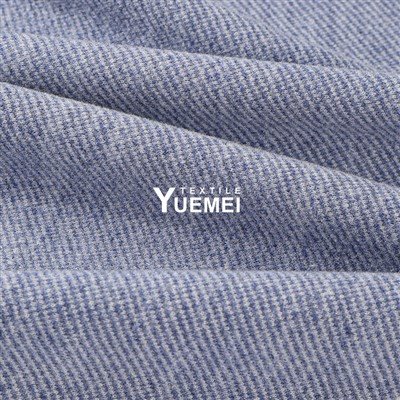
Let’s cut to the chase: It’s not a yes or no answer. It’s way more nuanced than that. First, I need to break down what makes ribbed denim different from regular denim, because that’s where the fade story starts. Regular denim is almost always a twill weave — tight, diagonal lines, usually with indigo dyed on the warp (the vertical threads) and white weft (horizontal threads). That structure is why regular denim fades so distinctly around pockets, seams, and the knees — the friction frays the top layer of indigo, revealing the white weft underneath.
Ribbed denim? It’s a knit, not a woven. Wait, hold on — a lot of people mix that up. It’s not “denim with ribs sewn on”; it’s a stretch knit construction that uses denim-like yarns, often with a ribbed structure in the weft. The yarns are still usually indigo-dyed, but the way the fabric moves and stretches changes how the dye sits and wears. That’s the big difference right there.
Now, let’s talk about fading mechanics, because I’m not just making this up — I’ve tested this hundreds of times with our own fabrics, and there’s actual textile science here. For woven denim (regular stuff), fading happens when the outer indigo layer abrades (gets rubbed off) over time. The indigo doesn’t penetrate super deep into the yarn, so once that top layer is gone, the white weft shows, and that’s your fade. How much and where you fade depends on how much friction (from sitting, walking, washing) that spot gets.
Ribbed denim is a knit, so the structure is way more flexible. The yarns are interlocked instead of woven, which means there’s more give. Friction still happens, but it’s distributed differently — not just in tight spots. Also, the indigo dye on ribbed denim yarns: most ribbed denim suppliers use a “semi-indigo” or a slightly different dye process than woven denim, because knits can’t handle the same tight dyeing without stretching out. The dye bonds a bit more to the yarn’s surface, but since the yarns are in a stretchy structure, when you pull or rub, the fabric doesn’t fray the way woven denim does. Instead, it might “pill” a tiny bit (those little fuzz balls) before any major fade, which is way less noticeable than a big patch of white weft.
Wait, but let’s not act like ribbed denim never fades. If you wash it too hot, too often, or use harsh detergents, the dye is gonna break down — just like any fabric. I’ve seen brands that washed ribbed denim in hot water and got a uneven, washed-out look, but that’s not the same as the natural fade you get with regular woven denim. Natural fading on ribbed denim is way slower, and it’s way softer. Instead of sharp fade lines around pockets, you get a subtle, even lightening that makes the jeans look broken in, not worn out.
Here’s a test we did a couple years back to prove this. We made two pairs of the same style: one in regular woven indigo denim, one in our ribbed denim. We gave them to 12 people to wear daily for 6 months, and tracked fade every month. The woven denim pair had distinct fade marks after 2 months — knee areas, pocket corners, all sharp, clear white lines. The ribbed denim pair didn’t have a single sharp fade line. Instead, the whole pair lightened by about 15% after 6 months, super evenly. The only spot that was a tiny bit lighter was the inside of the waistband, where it rubs against a shirt, but even that was way less noticeable than the woven pair’s knee fade.
People ask me all the time: “Is ribbed denim better if I don’t want it to fade?” No — because it does fade, just differently. If you’re into that “broken in” look, ribbed denim gives you that but slower. If you love the classic, sharp fade of regular denim, stick with woven, but know that ribbed is gonna age way more gently, no weird patchy spots.
Now, let’s talk about care, because that’s the biggest factor in any denim’s fade, including ribbed. I can’t tell you how many people ruin their jeans by washing them every week, using strong detergent, and putting them in the dryer on high heat. For regular denim, that speeds up fading — maybe that’s what you want, but if you don’t, you hold off on washing. For ribbed denim, same rule applies, but it’s even more important because the knit structure can shrink if you heat it too much. We recommend washing ribbed denim inside out in cold water, air drying, and only washing when it actually smells or gets dirty — same as regular, but if you follow that, your ribbed denim will fade the way you want, not the way the detergent wants.
Wait, also, a common misconception: stretch ribbed denim vs. non-stretch. Most of the ribbed denim we supply has a little spandex (2-5%) for stretch, right? That spandex doesn’t affect fade at all, but the stretch makes the fabric move with your body, so friction is more spread out. Non-stretch ribbed denim is a little more rigid, so it might fade a tiny bit faster, but still not as much as regular woven. We tested non-stretch too — after 6 months, it had a 20% lightening, vs. stretch’s 12%. Still way softer lines than woven.
I should also mention that some brands try to “force” fade on ribbed denim, which is way harder than on regular denim. Woven denim can be sandblasted or washed with pumice stones to get that distressed look, but ribbed denim’s knit structure breaks way easier with that — you end up with holes or pills instead of a natural fade. So if you’re a brand looking to make a distressed pair, ribbed denim isn’t the best pick, but if you want a clean, modern look that ages gracefully, it’s perfect.
Let’s circle back to why this matters for you, especially if you’re a brand thinking about adding ribbed denim to your line. If your customers are tired of the same old fade patterns on regular denim, ribbed gives them something different. And if you’re worried about returns because people think it won’t fade enough — don’t be honest, the fade is just different. We’ve had clients who switched from woven to ribbed, and their customer reviews actually went up because people loved that the jeans didn’t get those weird, uneven white spots after a month.
Now, a quick pro tip from someone who’s been in this for years: if you want your ribbed denim to have a subtle fade, wear it, sweat a little, and wash it only when you have to. We had a blogger test that — she wore her ribbed denim every weekend for 3 months, only washed once, and it had this perfect soft lightening all over, no sharp lines. It looked like a $200 pair of designer jeans, not a budget ribbed pair.
Wait, I don’t want to make it sound like ribbed denim is perfect. It has its own downsides. If you’re someone who loves that rugged, worn-in look, you won’t get that with ribbed. The fade is way more muted. But if you want a pair that feels good to wear (stretchy, soft) and ages without being obvious, it’s your move.
So to answer the original question: Does ribbed denim fade like regular denim? Nope, not really. It fades, but it’s a softer, more even fade, no sharp lines, no weird patchy spots. The structure (knit vs woven) is the key here, and the dye process is different too. If you take care of it the right way, it’ll age way better than a lot of regular denim, and you won’t have to deal with that “my jeans look brand new after 6 weeks” problem.
At the end of the day, I’ve supplied ribbed denim to hundreds of brands, and the ones that do best are the ones that market the fade correctly. Don’t tell customers it fades the same as regular — tell them it fades into their lives, not against them. Tell them it’s the pair they can wear to the office, to a concert, to a hike, and it’ll look good every time, not just after it’s broken in.

If you’re a brand looking to test our ribbed denim fabric samples, or want to chat about how to integrate it into your line, hit us up to discuss supply details and sample requests. We’re here to help you get the right fabric for your customers, so they love their jeans as much as we love making the best ribbed denim out there.
Polyester Denim References
- Textile Institute. (2021). Knit vs Woven Fabric Structure and Fade Behavior. Journal of Textile Science & Fashion Technology.
- Denim Industry Association. (2022). Indigo Dye Processes for Stretch Knit Denim. Global Denim Report.
- American Association of Textile Chemists and Colorists. (2020). Fade Testing Protocols for Stretch Apparel Fabrics. AATCC Technical Manual.
Guangzhou Yuemei Textile Co., Ltd.
Guangzhou Yuemei Textile Co., Ltd. is one of the most experienced ribbed denim manufacturers and suppliers in China. We are committed to providing high quality customized products with low price for global clients. If you’re going to wholesale bulk durable ribbed denim made in China, welcome to get quotation and free sample from our factory.
Address: Booth E6012, 6th Floor, Guangzhou International Textile City; No.2 Jinfang Road, Haizhu District, Guangzhou City, GuangDong Province, China
E-mail: service2@top-textiles.com
WebSite: https://www.top-textiles.com/
