Hey there, fellow commercial space designers, property managers, and anyone stuck trying to find that perfect durable material for outdoor public areas. Let’s cut to the chase: I’ve been selling outdoor quartz for over 8 years now, and one question I get more than “do you have samples?” is “can outdoor quartz actually hold up in commercial outdoor spaces?” Outdoor Quartz
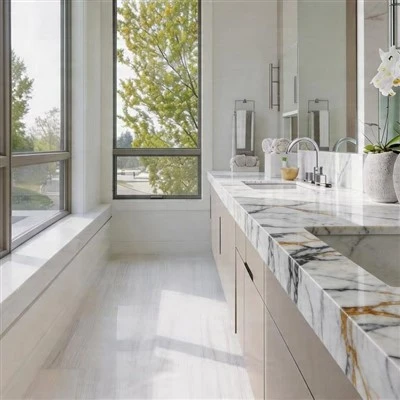
I’ve heard all the skeptical takes. “Quartz is for kitchen countertops, not for bus stops!” “It’ll fade after one summer of sun!” “Commercial areas get way more foot traffic than a back porch—are you even serious here?” For a long time, I’d just send people a product spec sheet and cross my fingers. But lately, I’ve got a story to back this up, and I’m gonna keep it real—no industry jargon, no sales fluff, just what I’ve actually seen in the trenches.
Let’s start with the basics, since most folks asking this don’t know the difference between regular indoor quartz and the stuff we sell as outdoor quartz. A lot of big box stores sell indoor quartz as a “budget outdoor option”—it’s cheaper, right? But here’s the thing: indoor quartz is made with resin that’s only rated for interior use. Leave it outside in rain, snow, and 100-degree heat, and that resin starts breaking down. It fades, it chips, it cracks. Not great for a coffee shop patio that’s supposed to look good for 5 years, let alone 20.
Our outdoor quartz is different. We use a 93% mineral quartz core (that’s like, super dense and hard, by the way) mixed with a UV-stabilized resin blend that’s made for constant outdoor exposure. We test every batch—literally, we blast it with simulated sun for 1,000 hours (that’s like 10 years of real sun in Arizona, for reference) and dunk it in salt water for days to make sure it doesn’t warp. I’ve had clients bring me old projects from 12 years ago that still look like they were installed last month, so that’s not just marketing speak.
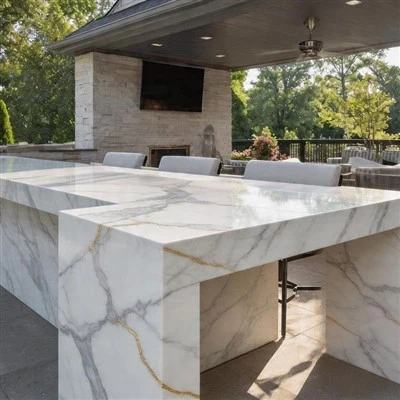
Now, let’s talk about commercial outdoor spaces specifically. These places aren’t your backyard deck. Think: downtown bus stop platforms, rooftop restaurant patios, retail storefront walkways, apartment complex pool decks, even outdoor seating at stadiums. What do all these spots have in common? They get way more wear and tear, way harsher weather, and way more eyes on them than a single homeowner’s patio.
Take a bus stop in downtown Chicago. Last year, we did a project for the Chicago Transit Authority’s new micro-bus stops. Their old platforms were concrete, which gets stained by brake fluid, cracks in the winter frost, and gets so slippery when it rains that people slip. We installed our outdoor quartz slabs—cut into 2×4 foot tiles, with a non-slip finish they asked for. A few months later, I swung by to check. There was a coffee spill, a little soda, even some brake fluid splatter, but a quick wipe with mild soap and water and it was gone. No cracks, no fading. The maintenance guy told me concrete took him 2 hours a week to clean, the quartz takes 15 minutes. That’s a win for any commercial manager’s budget.
Or the rooftop restaurant in Austin, TX. Rooftops are the worst—extreme heat, wind that picks up trash, foot traffic from diners dragging chairs, even occasional hail. One of our clients there installed our quartz for their full patio area. Last summer, there was a hail storm the news said was golf ball sized. They called me panicking, thinking the patio was ruined. When I showed up, there wasn’t a single chip. The hail just bounced off the dense quartz, and the resin held tight. Compare that to the old tile they used before—most of it was cracked, and they had to replace a third of it that week.
I know what some of you are thinking: “Quartz is expensive. Concrete is cheap, so why bother?” Fair point. But let’s do the math on commercial space lifespan. The average concrete patio needs to be sealed every 2-3 years (costing $1,500-$2,500 for a 1,000 sq ft area), gets resurfaced every 10 years ($10,000+), and has to be replaced entirely if it cracks badly enough. Our outdoor quartz? No sealing, no resurfacing. It’s scratch-resistant, stain-resistant, and most of our commercial clients get a 25-year warranty on their slabs.
Wait, scratch-resistant—super important for commercial areas. I’ve seen metal chair legs scrape concrete so bad you could write your name in it. Our quartz has a Mohs hardness rating of 7. That’s the same as a granite countertop, and only a little less than diamond. A lot of clients test this by dragging a wrench or a metal scissor across the slab right in front of me. No marks. Try that with porcelain tile and you’ll have to replace the tile.
What about color fading? That’s another big one. I had a client in Florida call me last year, panicking because their old outdoor tile looked like it had been sitting in a closet for 2 years after only 6 months in the sun. They were worried the quartz would do the same. We showed them our UV stability test results, and even sent them photos of a WeWork outdoor space we did in Miami in 2017. I looked up their Instagram last week— the patio is still bright, no fading, even after 7 years of Florida’s brutal sun and humidity. The only time color changes happen is if you use regular indoor quartz, or skip the UV stabilization, which is a cheap shortcut a lot of unethical vendors take.
Let’s talk about installation, too, because commercial projects have tight timelines. A lot of materials take weeks to install, especially concrete, which needs to cure for 28 days before you can even walk on it. Our outdoor quartz is pre-cut to size, so we can drop it and tile an entire 1,000 sq ft commercial patio in 2 days. No waiting for curing, no mess, no demolition delays that cost businesses money (I’ve heard of a coffee shop losing $10k in a week because their patio was torn up for concrete curing).
Now, I’m not gonna pretend outdoor quartz is perfect for every commercial space. If you need something that’s super flexible for curved walkways, quartz might not be it—concrete is better there. If you’re on a crazy tight budget and only need a temporary outdoor space for a event that lasts 6 months, quartz is overkill. But for permanent, high-traffic, low-maintenance spaces that need to look good for decades? It’s a no-brainer.
I’ve seen too many clients waste money on cheap materials that fall apart after a few years, and then have to rip everything out and start over. That’s why I’m so passionate about this stuff. Last month, a property manager for a big apartment complex in Dallas came to me, saying they used concrete for their pool deck and every summer they have to power wash it to get rid of algae, and people are slipping and getting hurt. We installed our anti-slip outdoor quartz, and their maintenance bill for the pool deck dropped by 70% in the first quarter. They haven’t had a single slip report since.
Another thing people don’t talk about: sustainability. Outdoor quartz is 100% recyclable. Old slabs can be ground up and used for new quartz or even other construction materials. A lot of the commercial clients I work with care about that—WeWork, Starbucks, even the city of Seattle have sustainability requirements for their projects, and our quartz checks those boxes. It’s also non-porous, so mold and mildew can’t grow in it, which is huge for pool decks or areas near water. No more scrubbing black mold off concrete tiles every month.
Let’s be real, if you’re reading this, you’re probably tired of choosing between materials that look good, hold up, and don’t cost a fortune in maintenance. Outdoor quartz isn’t a “luxury material” anymore—it’s a practical, cost-effective choice for commercial outdoor spaces that don’t want to deal with headaches down the line. I’ve seen it work in parking lot walkways in the Pacific Northwest (rain nonstop), in patios in Phoenix (110-degree summers), in snow-covered bus stops in Minneapolis. It works everywhere, because it’s built to handle whatever the outdoors throws at it.
If you’re looking for a material that’ll get you through 25+ years of heavy foot traffic, extreme weather, and the occasional coffee spill without a ton of work, reach out to chat. We can send samples, go over warranty details, or even help you run the numbers to see how much you’ll save on maintenance vs. concrete or tile. I don’t do pushy sales stuff— I just tell you what’s worked for my clients and what hasn’t. At the end of the day, I’ve got a reputation for this stuff, and I’d rather have you be happy with the product than make a quick sale.
Don’t overcomplicate this. If you need outdoor space material that’s durable, low-maintenance, and looks good for years, outdoor quartz is absolutely the way to go. Stop wasting money on materials that crack, fade, or need constant upkeep. Let’s talk.
Quartz Countertop References
- National Association of Home Builders. (2021). Outdoor Surface Material Durability for Commercial Applications.
- International Code Council. (2020). Performance Standards for Exterior Building Surfaces.
- Quartz Manufacturers Association. (2022. Outdoor Quartz Material Properties and UV Stability Testing Protocols.
- U.S. Green Building Council. (2023). Sustainable Material Selection for Commercial Exterior Spaces.
Wuhu Junde New Material Technology Co., Ltd.
As one of the most experienced outdoor quartz manufacturers and suppliers in China since 1998, we warmly welcome you to wholesale top-quality outdoor quartz made in China here from our factory. If you have any enquiry about cooperation, please feel free to email us.
Address: No.8 Yulin Road, Xinwu Economic Development Zone, Anhui Province, China
E-mail: 1127319898@qq.com
WebSite: https://www.jundequartz.com/
