Let’s cut to the chase—if you work in manufacturing, construction, or any industrial space, you know industrial fasteners are the unsung heroes holding everything together. But here’s the tea: they’re way from perfect. After years in the fastener game as a supplier, I’ve seen every headache these tiny parts cause, from a crane bolt that loosens mid-lift to a screw that snaps mid-install. This post is all about the real, common problems we face, and the solutions that actually work (no fancy corporate jargon, just straight-up what we’ve tested and what our clients swear by). Industrial Fasteners

First up: Loosening under vibration. You’d think a hex bolt tightened with a wrench would stay put, but nope—constant vibration from heavy machinery, delivery trucks, or even a factory’s conveyor belt is a fastener’s worst enemy. I had a client in the aerospace industry last year who kept missing production deadlines because bolts on their assembly line robots would rattle loose every 48 hours. They’d spent hundreds on standard lock washers, but those only worked for a week max. Turns out, vibration isn’t just “shaking”—it’s micro-movements between the fastener and the part it’s attached to, which slowly works the threads apart. The standard fix? Nylon insert lock nuts? Kind of, but only if the vibration isn’t extreme. For their robots, we switched to all-metal lock nuts with a distorted thread design that locks onto the bolt’s threads permanently, no nylon to wear out. That client’s downtime dropped by 90% in a month. Pro tip: if your application has constant, heavy vibration, skip the cheap lock washers—they’re a band-aid.
Next on the list: Corrosion. This is the silent killer of fasteners. I’ve seen outdoor construction projects fall behind because stainless steel bolts (which everyone thinks is corrosion-proof) rusted through in just 18 months. Wait, hold on—stainless steel isn’t indestructible, right? It just has a chromium oxide layer that forms to block rust, but if it’s exposed to saltwater (think coastal warehouses) or harsh chemicals (like paint, fertilizer, or cleaning solvents), that layer breaks down fast. I had a farmer client who had posts for their grain storage shed rust through after two seasons because they stored herbicide next to the bolts. The fix here isn’t just “buy stainless”—it’s matching the fastener material to the environment. For coastal or chemical-heavy spaces, we use hot-dip galvanized fasteners—they’re coated with a thick zinc layer that acts as a barrier, even if scratches happen. For extreme cases, like saltwater offshore platforms, we recommend duplex stainless steel, which is way more corrosion-resistant than standard 304 stainless. Another small win: anti-seize compound on the threads before installation. It prevents galling (when two metal parts fuse together) and adds an extra layer of protection against moisture. I know it’s an extra step, but trust me, it’s cheaper than replacing a whole shed’s bolts every year.
Third problem: Over-tightening or under-tightening. This is probably the most avoidable, but it’s everywhere. I’ve heard stories of maintenance guys tightening a bolt so hard they snap the head off, or so loose it falls off a week later. Why does this happen? A lot of workers use a regular wrench or even a drill to tighten bolts—no torque control. Torque is the amount of rotation force applied, and every fastener has a specific torque range to hold it without breaking. Last quarter, a construction client had a truss collapse at a job site because a carpenter used a power drill instead of a torque wrench and over-tightened the lag screws. The fix? Simple: train your team on torque specs, and invest in basic torque wrenches (they’re not as expensive as you think, and way cheaper than fixing a truss). For jobs that need speed, we also sell pre-torqued fasteners—they come from the factory set to the exact torque range for your application, so no guesswork. I had another client in the automotive industry that switched to these for their assembly line, and they cut their fastener-related errors by 75% in two months.
Fourth: Thread galling and seizing. This is when two metal fasteners (usually stainless steel or titanium) get stuck together so bad you can’t remove them without a torch or vice grips. I’ve been on a job site where a maintenance guy spent three hours trying to pull a bolt out of a machine, and it still broke—costing the client $10k in downtime alone. Galling happens when the metal’s surface starts to fuse under pressure, usually when no lubrication is used. The solution? Again, anti-seize compound, but not just any kind—make sure it’s rated for the metal combination you’re using. For stainless steel, we recommend a nickel-based anti-seize, which works way better than silicone or copper-based stuff. For high-temperature applications (like ovens or engine parts), we use a ceramic anti-seize that can handle temps up to 2,000°F, no breaking down or leaving residue. Another trick: if you’re working with titanium fasteners, never use a steel bolt with it—different metals have different friction rates, and that’s a recipe for galling. Match the fastener material to the parts it’s attaching to, and use the right lubricant, and you’ll avoid this headache.
Fifth: Wrong fastener size or type. This is the beginner mistake, but it’s way more common than you’d think. I had a small manufacturing client a year ago who used a standard wood screw to attach metal brackets to steel beams—big no-no. Wood screws have coarse threads that don’t grip steel, so the brackets fell off during a quality test, destroying $50k worth of product. The fix? It sounds obvious, but it’s worth repeating: match the fastener’s thread type, size, and material to the load and material it’s attaching. For metal to metal, use a machine screw with fine threads. For heavy loads, use a hex bolt instead of a lag screw. And never guess—check the load rating of the fastener. Every fastener has a tensile strength rating (how much pull it can handle) and shear strength (how much force it can take sideways). If you’re not sure, just hit us up as your supplier—we don’t care if it’s a single bolt for a weekend project or 10,000 bolts for a factory line, we’ll help you pick the right one.
Now, let’s talk about the stuff that’s not just the fastener itself—installation practices. I’ve seen clients buy top-of-the-line fasteners, but install them wrong, and then blame the product. For example, when drilling a hole for a fastener, make sure the hole size is right. If the hole is too big, the fastener can wiggle and loosen. If it’s too small, you’ll damage the threads when you tighten. Another big one: using washers correctly. A lot of people skip washers, but they distribute the pressure from the fastener, so it doesn’t dig into the part and damage it. Use a flat washer under the head of every fastener, and a lock washer if there’s vibration (but only if it’s the right type).
Here’s the thing: as a fastener supplier, we don’t just sell you parts. We’ve spent years testing what works and what doesn’t, because our reputation depends on your equipment staying together. If you’re dealing with any of these problems—loosening, corrosion, broken bolts, seizing, or wrong fasteners—we can help. We don’t push cheap, one-size-fits-all fasteners. We’ll work with you to figure out exactly what your application needs, whether that’s a custom bolt for a special machine, corrosion-resistant fasteners for a coastal site, or torque solutions for your team.
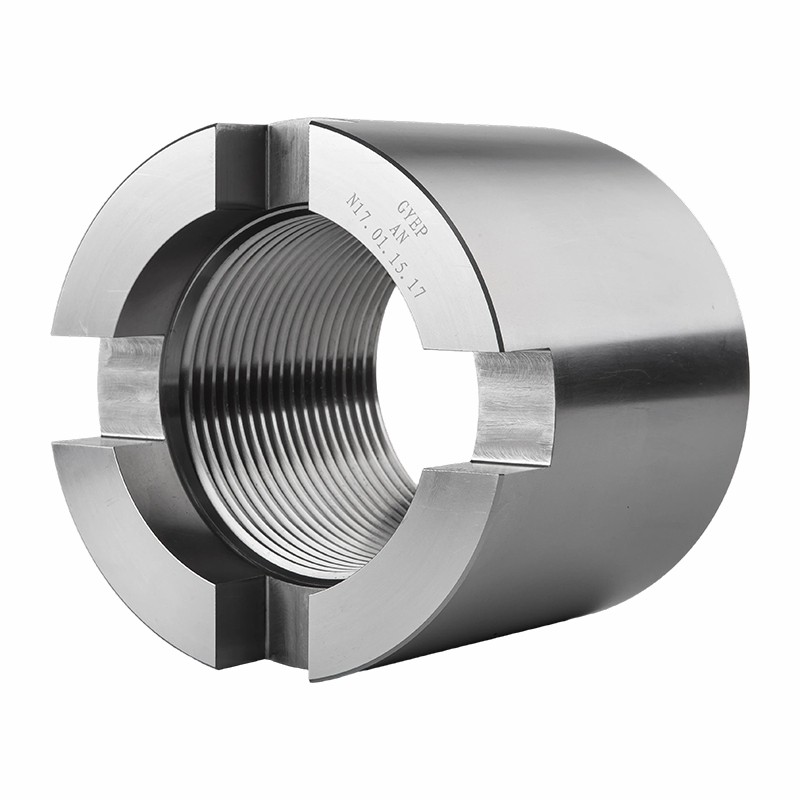
If you’re tired of fastener-related downtime, broken parts, or wasting money on replacements, hit us up to chat about your next project. We don’t do pushy sales pitches—we just give you the straight facts and the solutions that actually save you time and money.
Turbine Fasteners References
- VDI 2230: Systematic Calculation of High Duty Bolted Joints – Joints with One Cylindrical Bolt, Association of German Engineers, 2019.
- Stainless Steel Fasteners: Corrosion Resistance and Selection Guide, ASTM International, 2021.
- Thread Galling Prevention: Best Practices for Industrial Applications, Fastener Technology Association, 2020.
Hebei Guoyuan Electric Co., Ltd.
Address: No. 18 Tianshan Science and Technology Industrial Park, No. 319 Xiangjiang Road, Shijiazhuang High-tech Zone, Hebei Province, China
E-mail: turbine@goineep.com
WebSite: https://www.goineep.com/
