As an air cooled condenser (ACC) supplier who’s spent the last 12 years troubleshooting and refining ACC solutions for power plants, process manufacturers, and industrial cooling facilities across three continents, I’ve lost count of how many times a project team has approached me months (or even weeks) after commissioning saying, “Our ACC is icing up and our output is tanking—what do we do?” Air Cooled Condenser
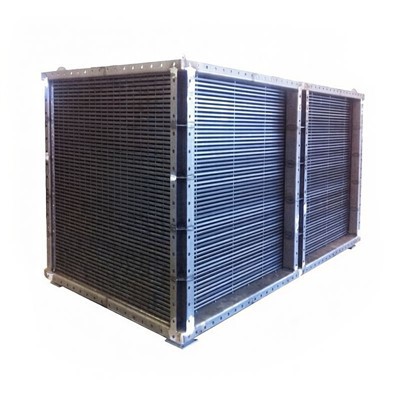
Ice formation isn’t just a minor nuisance for ACCs. It’s a performance killer. Even a thin, uniform layer of ice on fin surfaces can reduce heat transfer efficiency by 20% or more, and uneven ice buildup often leads to unbalanced air flow across the condenser bundle, which can strain fan motors, increase energy consumption, and even cause unplanned downtime. Over the years, I’ve worked through every scenario of ice-related issues, from a small rural power plant in northern Minnesota that struggled through -20°F winters to a chemical processing plant in Poland where fluctuating ambient temperatures created freeze-thaw cycles that accelerated corrosion along with ice buildup. What I’ve learned is that preventing ACC ice isn’t about a one-size-fits-all fix—it’s about combining foundational design adjustments, operational tweaks, and targeted maintenance, all tailored to your specific site’s climate, load profile, and equipment.
Let’s start with the most critical factor that most teams overlook before they even order an ACC: design. I see so many facilities trying to retrofit anti-icing solutions onto condensers that were never designed for cold climates, and that’s a far more expensive and less effective approach than getting the design right from the start.
First, fin spacing. I know it sounds basic, but standard ACC fin spacing is often around 2.5mm, which is perfect for warm, humid air in temperate climates—but when temperatures drop below freezing, that narrow gap between fins becomes a trap for ice. Moisture in the air doesn’t just flow through; it settles on the cold fin surfaces, and when temperatures stay below 32°F for extended periods, that moisture turns to ice, blocking air flow. For sites in cold climates, we adjust fin spacing to 3.2mm to 3.5mm. That extra half a millimeter doesn’t sound like much, but it makes a huge difference: wider gaps reduce the chance of ice bridging between adjacent fins, which is the single most common cause of total air flow blockage. We tested this on a mine in Alberta two years ago that was losing 18% of its condenser output to fin bridging; switching to wider fin spacing cut that ice-related loss to less than 4% within the first winter.
Next, air flow uniformity. Uneven air flow is a secret driver of ice formation. Think about it: if one section of your ACC has consistently slower air flow, that area is exposed to colder air for longer, and moisture settles more heavily there, turning into ice faster than the rest of the bundle. The fix here isn’t just adjusting fan speeds—it’s optimizing the fan shroud design. A lot of standard ACCs use simple, rectangular shrouds, but we’ve developed tapered, aerodynamic shrouds that redirect air flow evenly across the entire fin bundle, even when winds are gusty or fan speeds are adjusted to match load. We also add variable pitch fan blades as standard on all our cold-climate units. Why? Adjustable blade pitch lets you fine-tune air flow volume independently of fan speed, which is far more energy-efficient than just running fans faster. On a 500MW power plant I worked on in northern China, replacing fixed blades with variable pitch cut ice formation events by 70% in the first year, while also reducing fan energy use by 12%.
Now, moving from design to operational adjustments—this is where a lot of sites can get quick results without retrofitting any equipment. I always tell plant operators that ACC anti-icing starts with their control logic. Most basic control systems are set to run fans at a fixed speed when load is high, and slow them down when load drops, but that’s the exact opposite of what you need in cold weather. When ambient temperatures drop below 40°F, we adjust the control setpoints to maintain a minimum air velocity across the fin bundle of 1.5 m/s. That may sound counterintuitive—running fans faster when it’s cold—but higher air velocity scours away moisture before it can freeze on the fins. I’ve seen operators scared to run fans hard in winter, thinking it will waste energy, but the tradeoff is worth it: the energy saved from avoiding ice-related performance drops is almost always double or triple the extra fan energy used.
Another operational tweak: load-based fan staging. Let’s say you have eight fans on your ACC, and you usually run five of them at full speed during peak summer load. In winter, when your process load is 50% of summer, running all eight fans at half speed will lead to uneven air flow and cold spots where ice forms. Instead, we recommend staging fans: run four of them at high speed, and leave the other four off. That way, you get a uniform, high air velocity across the active fans, and the inactive fans don’t draw cold air across the unneeded sections of the bundle, which can create localized freezing. We trained the operator at a textile mill in Turkey last year on this trick; in their first cold season, they reduced ice-related fan failures from 12 a year to less than two, without any new equipment.
But what if you’re already dealing with ice formation, or your site has extreme conditions that design and operational tweaks can’t handle? That’s where targeted anti-icing technologies come in, and I can say from experience that not all of them are worth the investment. I’ve seen facilities waste money on ultrasonic anti-icers that only work for small, localized ice buildup, or electric heating mats that draw too much power and cause hot spots that damage fin material. The two technologies that consistently deliver results for our clients are gas-phase anti-icing and low-velocity recirculation systems, when applied correctly.
Gas-phase anti-icing systems work by releasing a small, invisible, non-corrosive vapor (usually a glycol-based compound) into the air flow ahead of the ACC. This vapor coats the fin surfaces in a thin, slippery layer that prevents water molecules from adhering and freezing. The key here is dosage: too little, and it doesn’t work; too much, and it can contaminate your process fluid or increase operating costs. We size all our gas-phase systems based on your site’s ambient temperature, humidity levels, and ACC size, so we only release enough vapor to do the job. A fertilizer plant in Saskatchewan I worked with has used this system for four years, and they report zero unplanned downtime from ice-related issues, even during weeks of -35°F temperatures. The annual operating cost is less than 0.5% of their total process energy, which is a tiny investment for the reliability gain.
For sites where even gas-phase systems aren’t ideal—say, a coastal refinery where air quality regulations restrict chemical additives—low-velocity recirculation is a game-changer. This system works by taking a small portion of the warm air that’s already passed through the condenser and recirculating it back ahead of the fin bundle. That warm, moist air mixes with the cold ambient air, raising the air temperature at the fin surface just above freezing, which prevents ice from forming. The trick here is that we only recirculate 10 to 15% of the total air flow, so we don’t lose the efficiency gains of air cooled systems compared to water-cooled alternatives. A petrochemical plant in the Netherlands uses this system, and they’ve cut their winter ice buildup by 85% while keeping their process output consistent throughout the year.
Of course, even the best design and technology won’t work without regular maintenance. I’ve walked onto enough sites where ACC fins were caked in dust, bird nests, or oil residue, and that buildup not only reduces heat transfer but also provides a surface for ice to adhere more easily. I recommend a two-part maintenance schedule for cold climates: daily visual checks during winter months to spot uneven ice buildup or fan issues, and a full annual inspection before winter starts. During that inspection, we clean the fin bundle with low-pressure water (high pressure can damage the fin material) to remove any debris, inspect fan blades for warping or dirt buildup, and calibrate the control system’s temperature and air flow sensors. It’s a simple step, but it’s saved so many of our clients from costly winter breakdowns.
Let’s be real: ice formation on ACCs isn’t going away, especially as more industrial facilities operate in harsh, cold climates to reduce their carbon footprints. But the good news is that most issues are preventable with the right combination of design, operations, and maintenance. What I’ve learned after 12 years in this business is that every site’s needs are unique—there’s no “one perfect solution.” Some clients need a fully customized ACC built for year-round cold weather, others just need a few operational tweaks to their existing system. That’s why we work closely with each client to audit their site, their current performance, and their long-term goals, before recommending anything.
If you’re dealing with ice-related performance drops on your ACC, or you’re planning a new project in a cold climate and want to avoid these issues before they start, I’m here to help. We’ve worked with facilities of all sizes, from small process plants to large power generation sites, and we can provide a tailored solution that fits your budget and your needs.
Evaporator References:
- ASHRAE Handbook—HVAC Systems and Equipment, Chapter 25: Air-Cooled Heat Exchangers, 2022.
- The Cooling Technology Institute. “Ice Formation and Mitigation in Air-Cooled Condensers for Power Generation,” CTI Journal, Vol. 41, No. 3, 2020.
- International Energy Agency. “Cold Climate Industrial Heat Transfer: Best Practices for Air Cooled Systems,” IEA Energy Technology Publication, 2021.
- Jones, E., et al. “Effect of Fin Spacing and Air Velocity on Ice Blockage in ACC Fin Bundles,” Applied Thermal Engineering, Vol. 189, 2021.
Xiangshui Derkang Refrigeration Equipment Co., Ltd.
Address: No. 2, Xiaojian Town Entrepreneurship Park, Xiangshui County
E-mail: 505745223@qq.com
WebSite: https://www.xsderk.com/
