As someone who’s spent the last 12 years running a structural timber supply business, I’ve seen firsthand how many builders, contractors, and even small construction teams mix up structural and non-structural timber. It’s not just a matter of semantics—confusing the two can lead to compromised building integrity, costly reworks, and in some cases, safety risks. I’ve lost count of the times a client has come to me with a “need for timber beams” only to realize they’ve been purchasing cheap, non-structural timber from a local hardware store, and it’s not going to hold up to the load their project requires. Today, I want to break down the key differences between these two types of timber, explain why it matters, and share what I’ve learned from helping hundreds of teams choose the right material for their jobs. Structural Timber
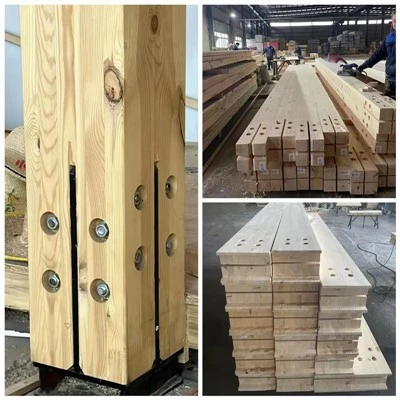
Let’s start with the basics. Structural timber is, as the name suggests, designed and tested to bear weight, resist forces like wind or seismic activity, and serve as a core component of a building’s load-bearing system. That includes things like floor joists, roof trusses, wall studs, and beams that hold up an entire structure. Non-structural timber, on the other hand, is made for decorative or secondary uses—think fascia boards, trim, fencing, shelving, or cladding. At first glance, they might look similar: both are cut from softwood or hardwood, both come in standard sizes, and both can be stained or painted. But look a little closer, and the differences are night and day.
The most critical difference is in how they’re manufactured and tested. Structural timber goes through a rigorous process that includes grading to ensure it meets strict strength, stiffness, and durability standards. In the U.S., for example, we use the National Grading Rule for Dimension Lumber, which categorizes structural timber into grades like Select Structural, No. 1, and No. 2. These grades are based on factors like the size and number of knots, the straightness of the grain, and the presence of defects like splits or warps. A knot in a structural beam isn’t just a cosmetic imperfection—it’s a weak point that can cause the wood to snap under pressure. That’s why structural timber is graded to limit these defects, so it can reliably support the loads it’s designed for.
Non-structural timber, by contrast, is graded for appearance and suitability for secondary uses, not strength. It might have larger knots, crooked grain, or minor splits that would make it useless for holding up a floor but are totally fine for a trim board that’s only there to look pretty. Some non-structural timber is even milled from smaller logs or lower-quality wood that would never pass structural grading. I’ve had clients try to use non-structural fence posts as support for a deck, and within a year, the posts twisted and leaned because they didn’t have the compression strength to hold up the deck’s weight. That’s the kind of mistake that only comes from not understanding the manufacturing difference.
Next, let’s talk about load capacity. Structural timber is engineered to meet specific load requirements, which are calculated by engineers and architects based on a building’s location, size, and purpose. For example, a roof truss made from structural timber has to support the weight of the roof, snow, and any additional materials like solar panels. The wood is kiln-dried to a precise moisture content (usually around 15% for most structural applications) to prevent warping or shrinking, which could throw off the load balance. Non-structural timber doesn’t undergo that precise drying process—its moisture content might fluctuate with the seasons, which is fine for a shelf that doesn’t move, but disastrous for a structural beam that has to stay rigid for decades.
Durability is another key distinction. Structural timber often undergoes treatments like pressure impregnation with preservatives to resist rot, insects, and moisture—especially if it’s going to be used in exterior applications. These treatments are tested to meet standards like the American Wood Protection Association (AWPA) guidelines, so the timber can withstand harsh conditions over time. Non-structural timber is rarely pressure-treated, and if it is, it’s for surface-level protection, not structural integrity. A friend of mine built a shed using non-structural timber studs, and within two years, the studs had rotted from moisture seeping in because there was no deep preservative treatment. If he’d used structural timber, the treatment would have protected the wood for way longer.
I also want to address a common misconception: price. A lot of people think non-structural timber is cheaper, so they cut corners, but that’s a false economy. When you factor in the cost of reworking a structural failure, or the safety risk to workers and residents, choosing the wrong timber is far more expensive in the long run. I’ve had a contractor come to me a year after trying to save money on non-structural beams for a residential addition. The beams had started to sag, and they had to tear out the entire addition to replace them—costing them 10 times what they would have spent on the right structural timber from the start. At the end of the day, structural timber is an investment in the safety and longevity of a building, while non-structural is a low-cost choice for cosmetic or secondary uses.
Let’s talk about real-world examples to make this clearer. If you’re building a new house, the floor joists that hold up the living areas, the wall studs that support the second floor, and the roof trusses that keep the roof intact all need to be structural timber. A mistake here can lead to floors that creak unevenly, walls that shift, or even roof collapse during a storm. But if you’re adding trim around the windows, building a fence, or making shelves for the garage, non-structural timber is perfect—it’s cheaper, easier to work with, and meets all the needs of those applications.
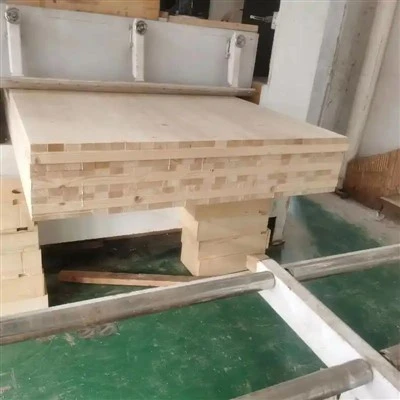
I’ve also noticed that more and more small builders are starting to use cross-laminated timber (CLT), a type of structural timber made by gluing layers of wood together. CLT is gaining popularity for mid-rise buildings because it’s lightweight, strong, and more sustainable than concrete or steel. Non-structural timber can’t be used for CLT—it has to meet the same structural grading standards as traditional timber beams and joists. That’s another example of how critical structural specifications are for modern construction.
So, how do you tell the difference if you’re not sure? Structural timber will have a grade stamp, usually from a recognized organization like the Forest Stewardship Council (FSC) or the American Lumber Standard Committee (ALSC). The stamp will tell you the grade, the moisture content, and that it’s been tested for strength. Non-structural timber won’t have that stamp, or it will have a stamp that only covers appearance. If you’re ever in doubt, don’t guess—ask your supplier. That’s why I built my business on being a trusted advisor, not just a seller. I don’t want a client to come back later with a problem because they chose the wrong timber.
At the end of the day, the choice between structural and non-structural timber comes down to what you’re building and what the timber needs to do. If it’s holding up weight, supporting the building, or withstanding environmental forces, structural timber is non-negotiable. If it’s for looks or secondary uses, non-structural is the right pick. If you’re working on a project and you’re not sure which type of timber you need, reach out. I’ve helped thousands of clients, from first-time homeowners to large construction firms, select the right structural timber for their jobs, and I’d be happy to help you too. Don’t risk your project’s safety or longevity by cutting corners on timber—let’s chat about your needs.
Structural Timber References
- American Lumber Standard Committee. (2022). National Grading Rule for Dimension Lumber.
- American Wood Protection Association. (2021). Standard for Wood Products: Pressure-Treated.
- Forest Stewardship Council. (2023). Structural Timber Certification Standards.
- International Code Council. (2022). Wood Construction Requirements for Structural Applications.
Zendekin Low-Carbon Technology Co., Ltd.
We are one of the most professional structural timber manufacturers and suppliers in China. With abundant experience, we warmly welcome you to wholesale customized structural timber from our factory. If you have any enquiry about quotation, please feel free to email us.
Address: Building 3, Yincheng INC Center, No.59 Tianyuan West Road, Jiangning District, Nanjing, Jiangsu, China.
E-mail: 13813916590@126.com
WebSite: https://www.zdqeco.com/
