When customers reach out to our ABS resin team, the first question most ask isn’t about chemical structure or molding cycles—it’s about impact strength. That makes sense: for manufacturers building motorcycle dashboards, power tool housings, or consumer electronics casings, impact strength isn’t just a technical spec—it’s the difference between a product that holds up to daily use and one that cracks after a single drop. As an ABS resin supplier, I’ve spent years walking customers through what impact strength actually means for their applications, not just the numbers on a data sheet. Let’s break this down without the jargon, because too often, impact strength gets reduced to a single value that doesn’t tell the full story. ABS Resin
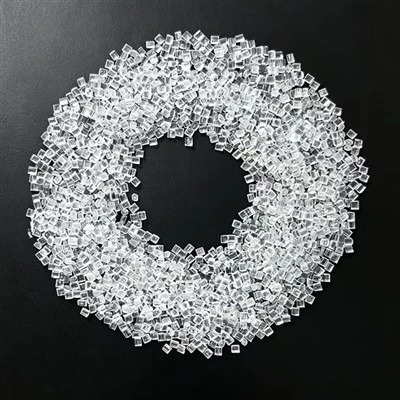
First, let’s define what impact strength of ABS resin is, in practical terms. ABS, short for Acrylonitrile Butadiene Styrene, is a terpolymer—three different monomers blended to get the best of each: acrylonitrile adds chemical resistance, styrene makes it rigid and easy to mold, and butadiene forms rubber-like domains that absorb shock. Those butadiene domains are the core of impact strength: when a force hits the resin, the rubber particles deform, spread out, and dissipate energy instead of letting it crack through the plastic matrix. That’s why ABS is far more impact-resistant than pure polystyrene, which is brittle, or pure polybutadiene, which is too soft for structural parts.
But here’s the catch: impact strength isn’t a single, fixed number. It changes based on how you test it, the conditions of the test, and even how the part is made. The most common tests used for ABS are the Izod impact test and the Charpy impact test, both of which measure the amount of energy needed to break a standardized notched sample. For standard-grade general-purpose ABS, typical Izod impact strength at room temperature is around 18–25 J/m (that’s joules per meter, the standard unit for notched Izod). But high-impact grades can hit 40 J/m or more, while low-rigidity, high-flow grades might be as low as 12 J/m. These numbers matter, but they’re only useful if they match the actual conditions your part will face.
Let’s talk about real-world variables that change how impact strength performs, because a number from a lab test won’t tell you what happens when your product sits on a loading dock in 100°F heat, or when it’s dropped in a snowstorm at 20°F. Temperature is the biggest one. Below the glass transition temperature (Tg) of the butadiene phase—around -20°F for most ABS—the rubber domains become rigid instead of elastic, so they can’t absorb shock. That means impact strength plummets. A standard ABS part that passes the Izod test at 70°F might crack at -40°F in a cold environment, like a truck grille for northern climates. Conversely, at high temperatures above 120°F, the styrene matrix softens, making the part more flexible, but reducing its ability to resist sharp impacts. That’s why a power tool housing used in a desert construction site needs a grade optimized for high-temperature impact, not just the general-purpose grade that works for indoor use.
Another factor is part thickness. Thicker ABS parts have higher measured impact strength, because there’s more material to absorb energy. A 1/4 inch thick dashboard part will have a higher Izod value than a 1/8 inch thick phone case, even if they’re made from the same resin. That’s a common mistake customers make: they pick a grade based on a lab sample of 1/8 inch, then thin the part to cut costs, only to find it breaks easily. We always walk customers through thickness adjustments, often suggesting a slightly higher impact grade if they need to reduce wall thickness, or a modified ABS with better flow to keep structural strength in thinner sections.
Not just test conditions, but processing methods also affect impact strength. If you overheat ABS during extrusion or injection molding, you can break down the butadiene rubber domains, which kills impact strength. If you don’t dry the resin properly before molding—ABS absorbs moisture from the air, even at low levels—you get surface defects like silver streaks that act as stress raisers, making the part far more likely to crack on impact. I’ve had customers come to us after their first molded batch failing impact tests, only to realize they didn’t dry their resin for the full recommended 4 hours at 175°F. A quick adjustment to processing, and their impact strength jumped back to spec. That’s why as a supplier, we don’t just sell resin—we share best practices for processing to make sure customers get the full impact strength they’re paying for.
Now, let’s get into the types of impact strength customers actually care about, beyond lab test numbers. There’s multiple impact strength: when a part gets hit multiple times, instead of one single force. ABS excels here, because the rubber domains can absorb repeated shocks without cracking, unlike brittle plastics that fracture after one hit. That’s why it’s the top choice for helmet shells, toy parts that get dropped hundreds of times, and appliance housings that get banged during delivery. There’s also low-velocity vs. high-velocity impact: a motorcycle fairway that hits a pothole at 30 mph needs high-velocity impact resistance, which is a different spec than a toy car that’s dropped from 3 feet. We carry specialized high-velocity impact grades for those heavy-duty applications, formulated with larger rubber particles to dissipate fast, concentrated energy.
A common question we get is: “How do I balance impact strength with other properties?” It’s a tradeoff, always. Higher impact usually means more butadiene, which makes the resin softer, reduces chemical resistance, and can make it harder to paint or glue. For example, a high-impact ABS for a toy might not stand up to gasoline spills, while a general-purpose ABS with 18 J/m impact will hold up to mild oils and cleaning solutions. That’s why we work with customers to prioritize what’s most important for their product: if impact is non-negotiable (like a medical device casing that gets dropped during use), we can adjust the formula to keep impact high without sacrificing too much stiffness. If chemical resistance is the top need (like an automotive fuel line component), we pair that with a medium-impact grade that balances both.
I want to share a recent example from a customer to make this concrete. Last quarter, a manufacturer of portable generators reached out to us because their generator housings were cracking during shipping. They were using a standard general-purpose ABS with 20 J/m impact, but the housings were thin (1/8 inch) and being dropped from 4 feet during freight. Their in-house impact test only measured notched Izod at room temp, which passed, but the real-world drops were unnotched and at colder winter temps. We recommended a high-flow, high-impact ABS grade with 35 J/m impact, specifically formulated to maintain strength at low temperatures. We also shared a tip to adjust their molding temperature to avoid rubber degradation, which helped them get consistent impact strength across all parts. After switching, their breakage rate dropped from 12% to less than 1%—that’s the difference between understanding impact strength as a spec and understanding it as a real-world performance factor.
Another point that’s often overlooked is UV resistance, because it directly impacts long-term impact strength. ABS itself degrades when exposed to sunlight over time: the butadiene domains react with UV rays, breaking down the rubber, so impact strength decreases after 2–3 years of outdoor use. For exterior applications like patio furniture or outdoor storage sheds, customers need UV-stabilized ABS, which has additives to slow that degradation. We tested a standard outdoor storage cabinet made with non-stabilized ABS and a stabilized grade: after 6 months of outdoor exposure in Arizona, the non-stabilized grade’s impact strength dropped by 40%, while the stabilized grade only dropped by 8%. That’s why we always ask customers if their product will be used indoors or outdoors, because it changes the impact strength requirements drastically.
As an ABS resin supplier, we don’t just provide a data sheet with impact strength numbers. We help customers interpret those numbers for their specific application. For example, if a customer is making a children’s tricycle, we’ll remind them that the tricycle will be used on concrete in all weather, so they need a grade that meets 30 J/m notched Izod at -20°F, not the 18 J/m for indoor use. If they’re making a computer mouse, which only gets occasional bumps and is used indoors, the standard 18–22 J/m grade works perfectly, and the higher-impact option would be a waste of material and cost.
I know it can be overwhelming to sift through all the variables: test types, temperature, processing, application, environment. That’s why our team is here to walk through it. Whether you’re a small business making custom parts or a large manufacturer scaling production, we can help you select the right ABS resin grade that delivers the impact strength you need, without paying for properties you don’t. We’ll also share processing tips to make sure your parts perform as expected, because a great resin is only as good as how it’s molded.

If you’re currently working on a project where impact strength is a concern, or you’ve had issues with part breakage that you think might be related to your resin’s impact performance, we’d welcome the chance to discuss your needs. You can reach out to our team to get a custom quote, ask questions about grade specifications, or request a sample of our high-impact or UV-stabilized ABS for testing. We’re here to make sure your parts hold up to whatever they face, whether that’s a drop, extreme temperature, or regular use.
PE Resin References:
- Modern Plastics Encyclopedia, 2022, "Engineering Thermoplastics: ABS Resins"
- Andrews, E.H., "Impact Resistance of Polymeric Materials", Journal of Materials Science, 1968, Vol. 3, No. 2, pp. 111–123
- National Institute of Standards and Technology (NIST), "Processing Effects on Polymer Impact Strength", 2019, NIST Technical Note 1987
- SAE International, "Automotive Applications of ABS Resins: Impact Performance Requirements", 2021, SAE International Standard J1927
Jiangsu Kingsder New Material Technology Co., Ltd.
Jiangsu Kingsder New Material Technology Co., Ltd. is one of the most experienced abs resin manufacturers and suppliers in China, also accepts customized orders. Please rest assured to wholesale UL recognized abs resin in stock here from our factory. If you have any enquiry about quotation and free sample, please feel free to email us.
Address: No.426-2 Kunjia Road, Kunshan Development Zone, Kunshan City, Suzhou City, Jiangsu Province, P.R.China
E-mail: chloe@kingsder.com
WebSite: https://www.kingsderplastic.com/
