Hey there, let’s cut to the chase: if you work in food logistics, you’ve probably dealt with broken crates, wasted space, and way too much time spent stacking or unpacking boxes. That’s where nestable food crates come in, and honestly? They’re the game-changer a lot of suppliers, restaurants, and farms have been sleeping on. I’ve been selling food crates for years now, and every week a customer tells me they had no clue these even exist—so let’s break ’em down like we would with a regular, no-jargon chat. Food Crates
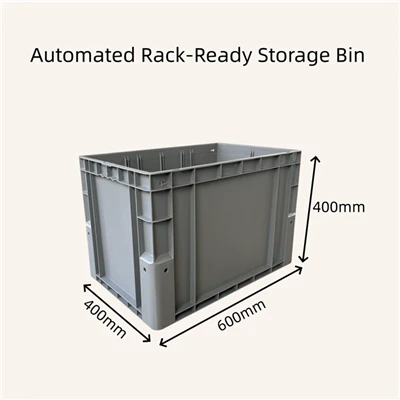
First, what even is a nestable food crate? Let’s start with the basics. It’s a heavy-duty plastic crate, designed specifically for moving fresh produce, dairy, baked goods, and other food-grade items, that collapses or “nests” down to a fraction of its full size when it’s empty. Wait, hold up—nesting means empty crates stack inside each other, right? Think of those plastic storage bins you have in your garage, except these are built for way more wear and tear, and they meet all FDA food safety rules. Regular rigid food crates (the ones that stay the same size even empty) take up so much room when they’re not in use. A nestable one? When it’s empty, you can fit four, five, even six of ’em in the space of one full crate. That’s a huge deal for anyone shipping or storing empty crates between runs.
Let’s get into why that matters for food operations specifically. Let’s say you’re a farm that ships berries to a grocery chain. You pick your fresh fruit, pack each crate full, drop it off, then you’ve got a bunch of empty crates to haul back. If you’re using rigid crates, you’ve got to rent a whole extra truck just to move empties, or park them on your lot taking up space that could be for new harvests. With nestable crates? You stack ’em all nested, fit twice as many in the same space, cut down on fuel costs, and save your storage area. And for restaurants that get daily deliveries? They can stack empty crates nested by their back door instead of leaning them against the wall, which keeps the kitchen walkway clear (super important for health inspections, by the way—clutter there is a no-no).
Now, let’s talk about the build, because this isn’t your flimsy supermarket takeout container. These crates are made from high-density polyethylene (HDPE), the same stuff used for milk jugs, but industrial grade. That means they’re BPA-free, food-safe, so nothing leaches into your apples, lettuce, or cheese—big must for anyone handling perishables. They have reinforced edges, right? No cracking when you drop ’em from a dolly, no splitting when you’re stacking a full crate on top of another. And the sides? Usually slotted, which lets air circulate. That’s key for fresh produce. If you’ve ever had a crate of spinach get moldy because it was packed tight with no airflow? Nestable crates solve that—those slots prevent moisture buildup, so your food stays fresher longer, less waste from spoilage. I’ve had a tomato farmer tell me they cut their produce loss by 12% just switching to these crates. That’s not a small number.
Wait, let’s clear up a common mix-up: nestable vs. collapsible crates. A lot of people use those terms interchangeably, but there’s a tiny difference. Some collapsible ones have removable sides, right? You have to unclip them to collapse. Nestable crates? They fold down flat or nest vertically without any extra steps. No messing with latches, no lost clips. That’s why they’re way faster to handle during busy delivery windows. When a truck drops off 50 full crates, the driver can flip empty ones right inside each other, stack ’em in the back, and be on their way in 2 minutes instead of fumbling with latches for 10. Time is money in logistics, that’s a fact.
What do people use these for, anyway? Let’s name specific use cases so it’s not just vague. Produce: strawberries, potatoes, carrots, all the stuff farms move. Dairy: milk crates, cheese blocks, yogurt pots—wait, no, the crates hold the dairy containers. Baked goods: bread loaves, pastries, bakeries use these to move batches from oven to shop. Even prepared foods, like pre-made salads for grocery stores, since they’re food-safe and easy to sanitize. Oh, and grocery stores use them to restock shelves—no more carrying flimsy cardboard boxes that tear mid-restock. Cardboard is still used, but it’s bad for the environment, and it can get soggy if there’s a spill. Nestable plastic crates? You can power wash ’em, sanitize with food-grade cleaners, reuse for 5+ years. That’s way more sustainable than cardboard, which gets thrown away after one use. I’ve had clients tell me they cut their packaging waste by 90% just switching to these.
Wait, let’s address a concern people have: can they hold the same amount as regular crates? Short answer: yes, and often more. Standard nestable food crates come in sizes like 12”x16”x10”, which is the same as a common rigid produce crate, so you don’t have to adjust your packaging or shelf space. Some are even stackable full-size, so you can put 3-4 full crates on a pallet without them tipping over. That’s another big win—stable pallets mean less broken crates during shipping, less spilled food, less injuries for warehouse workers who have to clean up messes. I’ve seen a warehouse switch from rigid crates to nestable, and their pallet-related damage dropped by 15% in the first quarter.
Now, let’s get into the actual nesting part, because that’s the whole point. When the crate is empty, the base is shaped so the corners of one crate fit exactly into the gaps of another. So instead of the whole crate taking up full volume, it collapses down, sides tucked in, so each empty crate is like a smaller version. Let me put numbers to it: a full-size nestable crate that’s 10” tall empty nests down to 2” tall. That means 5 empty crates fit into the space of 1 full crate. For a company that ships 100 empty crates a week, that’s cutting their shipping volume from 20 cubic feet to 4 cubic feet. Fuel costs? That’s a huge savings. And storage at the facility? If you have a 10×10 storage area, you can store 100 empty nestable crates, vs. 20 rigid ones. That’s a game-changer for small farms or small restaurant chains that don’t have a ton of extra space.
Wait, let’s talk about longevity, too. I’ve had nestable crates from my supplier that are 7 years old, still going strong. They don’t tear like cardboard, don’t crack if you drop ’em (I’ve watched a forklift driver accidentally run over one once, and it just bounced back—no damage). Cleaning them is easy: just spray with a hose, wipe with a cloth, or run through a power washer. No soggy cardboard to throw away, no pests getting into wet cardboard. Food safety is a big deal—local health inspectors love these because they’re non-porous, so bacteria can’t hide in the corners like they can in cardboard or flimsy plastic crates.
Now, what’s the catch? Because nothing is perfect, right? Some people think they’re more expensive upfront than cardboard or rigid plastic crates. But let’s do the math: a cardboard crate costs like $1 each, but you use it once. A rigid plastic crate is $15, lasts 2 years. A nestable crate is $18, lasts 5+ years, and you save so much on shipping, storage, and waste. Over 5 years, 100 nestable crates cost $1800. 100 rigid plastic crates: $1500, but after 2 years you have to replace them, so $3000 total. 100 cardboard crates: $100 a year, $500 total? Wait, but you have to factor in labor to pack and unpack, fuel to ship empties, waste disposal. Most of my customers say they break even on the cost difference in 6 months, and after that it’s pure savings. Plus, sustainability is a big selling point for a lot of brands now—grocery chains want to reduce their carbon footprint, so nestable crates check that box.
Let me throw in a quick story to make this real. A few months back, I worked with a local bakery that was using cardboard crates to move 50 loaves of sourdough from their commercial kitchen to 8 different cafes. Every week, they were going through 100 cardboard crates, spending $150 a week on packaging, and half the time a crate would tear on the way, loaves would get crushed, and they’d have to throw away $80 worth of bread. They switched to nestable food crates, and now they buy 20 crates (since they reuse them), spend $360 upfront, and no more bread waste from torn crates. They save about $400 a month, and they don’t have to haul all those cardboard boxes to the recycling center anymore. That’s the kind of win I love to see.
Another thing: customization. A lot of nestable food crates can have custom printing, or reinforced handles, or specific slot sizes for different foods. If you’re moving delicate berries, you can get crates with smaller slots to keep berries from falling through. If you’re moving heavy potatoes, you can get thicker reinforced walls. I work with a lot of small farms that want their crate printed with their farm logo, so when the grocery store gets the produce, they see the farm name right away—great for brand recognition.
Wait, let’s make sure we’re not missing anything. What about cold storage? If you’re storing crates in a walk-in fridge or freezer, nestable crates work there too. The plastic doesn’t get brittle in cold temps, so it won’t crack when you stack ’em. That’s perfect for dairy or frozen produce that needs to stay cold during transport and storage.
So to wrap this up, a nestable food crate is a food-grade, heavy-duty plastic container that nests when empty, designed to cut down on logistics costs, reduce food waste, and streamline operations for anyone moving food. It’s not just a “fancy plastic bin”—it’s built specifically for the unique needs of the food industry, from airflow for produce to easy sanitization for health codes.

If you’re a farm, restaurant, grocery chain, or any food business that’s tired of wasting money on cardboard, dealing with cluttered empty crate storage, or losing produce to spoilage, let’s chat. We can walk you through the sizes, options, and get you a quote tailored to how many crates you need. No pressure, just real talk about what will work for your operations.
Meat Crate References:
- U.S. Food and Drug Administration. (2022). Food-Grade Plastic Materials and Their Applications in Food Packaging and Transportation.
- Food Logistics Association. (2023). Reducing Carbon Footprint in Fresh Produce Distribution: The Role of Nestable Container Systems.
- National Restaurant Association. (2024). Operational Efficiency Tips for Food Service Suppliers: Storage and Shipping Solutions.
- Plastics Industry Association. (2021). HDPE Crate Durability and Reusability for Commercial Food Transport.
Ningbo Simple Trading Co., Ltd.
Ningbo Simple Trading Co., Ltd. is one of the most professional bread basket manufacturers and suppliers in China. With a professional production team, we are able to meet the needs of the majority of our customers. Please feel free to wholesale custom made bread basket from our factory.
Address: Room 908, Star International Office Building, No.1359, Tiantong South Road, Yinzhou District, Ningbo City, Zhejiang Province.
E-mail: Simpleexport@nbsimpletrading.com
WebSite: https://www.logisticsequipments.com/
