Hey everyone, let’s talk about something that’s been game-changing for our customers in the metal manufacturing world lately: low pressure die casting machines. I’m part of a die casting machine supply company, and I get asked this question all the time—especially by folks who’ve been using high pressure machines for years and are looking to level up their part quality or cut down on defects. So let’s break this down like we would over a coffee, no super jargon-heavy stuff, just real talk about what these machines actually do and why they matter for your shop. Die Casting Machine
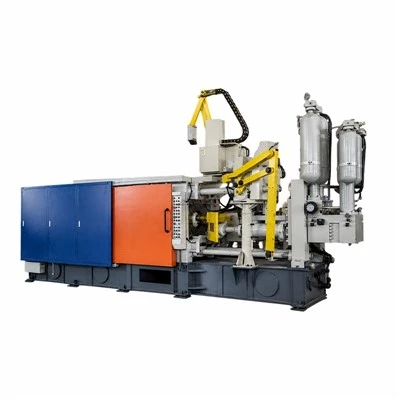
First off, let’s start with the basics: low pressure die casting (LPDC) is a metal casting process, right? But instead of forcing molten metal into a die at super high pressure like regular high pressure die casting (HPDC), we use low pressure—hence the name. Here’s how the process works step by step, simple version: you have a sealed crucible holding your molten metal (usually aluminum, magnesium, sometimes copper alloys), then you apply a controlled, low gas pressure (like 0.5 to 1 bar, that’s way less than HPDC’s 100+ bar) to the top of the metal. That pressure pushes the molten metal up a riser tube into the die cavity, slowly and evenly. Once the cavity is full, you maintain that pressure a little while so the metal solidifies under gentle compression—no gaps, no porosity from air bubbles getting trapped. Then you release the pressure, any leftover metal in the riser drains back into the crucible, you open the die, and pop out your finished part.
Wait, let’s pause on that pressure part because it’s the whole difference maker. High pressure die casting slams metal into dies fast, which is great for speed (think 1000 parts an hour) but can lead to tiny air pockets—porosity—that makes parts weaker, or even unusable for things that need to hold pressure, like automotive engine parts or aerospace components. LPDC’s low, steady pressure means metal fills the die without turbulence, so you get way cleaner parts. That’s why you see LPDC used a ton for wheels, engine blocks, transmission housings—parts where reliability is non-negotiable.
Now, why would a shop switch to an LPDC machine, instead of sticking with HPDC or another method like sand casting? Let’s run through the pros, because that’s what our customers care about most. First, part quality: like I said, minimal porosity, consistent density, better dimensional accuracy. I’ve seen our clients switch from HPDC parts that failed pressure tests at 5k PSI to LPDC parts that hit 8k+—that’s a huge difference for their end products. Then, material yield: sand casting can waste 30% or more of molten metal in gating and risers, and HPDC is bad too, but LPDC drains that leftover metal back into the crucible. We’re talking 90% yield sometimes, which adds up big over a year of production. If you’re running aluminum that costs $2 a pound, that’s real cash not going in the scrap bin.
Another big one: part complexity. LPDC works with reusable steel dies, same as HPDC, but because the metal flows slower, you can make parts with thinner walls and more intricate internal features without risking cold shuts (where two metal streams don’t mix properly) or porosity. Ever tried to cast a thin, delicate automotive bracket? HPDC might freeze before the metal gets all the way in, but LPDC’s slow fill gets it there evenly. Also, cleanup is easier—fewer burrs, less trimming work after casting, which cuts labor time.
But it’s not all perfect, right? No machine is. LPDC is slower than HPDC—we’re looking at 10 to 100 parts an hour, depending on part size. That means if you’re doing high-volume, low-complexity parts (like tiny engine covers), HPDC is still king. The dies for LPDC are also more expensive upfront because they’re built to handle the steady pressure and the slow metal fill, not the high impact of HPDC. And you can’t use LPDC for every alloy—some super hard metals don’t work as well with the low pressure flow, though most common industrial alloys (aluminum, magnesium, zinc) are totally fine.
Now, let’s talk about the parts you actually make with LPDC, because that’s what drives demand. Automotive is the biggest one by far—wheel rims, engine cylinder heads, transmission cases, suspension components. Those need to be strong, lightweight, and hold pressure, so LPDC is a no-brainer. Then aerospace parts: brackets, turbine components, even satellite parts—where weight and structural integrity are everything. We also sell LPDC machines to companies making electrical components, like aluminum heat sinks for EV batteries—they need thin walls and consistent conductivity, which LPDC delivers perfectly.
Wait, let’s clear up a common mix-up: low pressure die casting vs. gravity die casting. Gravity casting is when you just pour metal into the die, no pressure at all. So metal fills the die from top down, which can leave air trapped at the bottom and causes uneven solidification. LPDC is the middle ground—uses pressure to control the fill direction, so metal goes up, not down, pushing air out as it fills. That’s the key difference. I used to mix these two up when I first started in the industry, so I get why a lot of folks ask that.
Now, let’s talk about what to look for when you’re shopping for an LPDC machine, since that’s why you’d be here, right? As a supplier, we don’t just sell machines—we help you pick the right one for your production. First, crucible size: that’s how much metal you can hold at once. If you’re making small parts, a 500kg crucible is enough; if you’re doing big wheels, you need a 2000kg or larger one. Then, pressure control accuracy—you want a machine that can adjust the pressure smoothly, not jitter, because that’s what gives consistent part quality. If the pressure spikes mid-fill, you get turbulence; if it drops, you get incomplete fills. We’ve had customers who bought cheaper machines with bad pressure controls and wasted thousands in scrap, so that’s a big one.
Die compatibility too: make sure the machine can fit your existing dies, or that you can work with a die maker to design ones that fit your machine. Some LPDC machines are modular, which is great if you might expand your part line later. Also, automation—if you’re running a shop with multiple shifts, look for machines that can link to robot tenders for loading and unloading, so you don’t have to have a person standing there every cycle. We’ve installed a lot of semi-automated LPDC lines for small to medium shops, and full automated lines for big manufacturers like EV startups.
Another thing: maintenance. LPDC machines have a few moving parts, like the gas pressure regulators and the riser tube seals. You want a machine that uses standard parts, not some custom stuff that’s hard to replace. Our machines, for example, use off-the-shelf seals and regulators, so if you’re in a pinch, you can grab a part from a local hardware store or industrial supplier, no waiting weeks for a custom order. Also, the crucible lining—you need that to resist heat, so refractory lining is a must, and some machines let you replace the lining easily without tearing down the whole unit.
Let me throw in a real example from a client of ours to make this tangible. Last year, a mid-sized automotive parts manufacturer was using HPDC for brake caliper housings, but they were getting 8% scrap rate from porosity, and their yield was only 75%. They switched to our LPDC machine, and within six months, their scrap rate dropped to 1.2%, yield jumped to 91%, and they saved over $120k a year in material and labor costs. That’s the kind of ROI that makes LPDC worth the investment, even if the upfront machine cost is higher than a basic HPDC.
Wait, what about the eco angle? A lot of our customers care about sustainability these days, and LPDC checks a lot of boxes. Less scrap means less metal going to landfills, lower energy use than HPDC (since you don’t need that super high pressure system), and the parts are lighter, which is a big deal for EVs—every pound you take off a car adds range. That’s a huge selling point right now, as more automakers push for lighter, more efficient components.
Now, let’s address the common myths I hear all the time. Myth 1: LPDC is only for low-volume production. No, we have LPDC machines running 50,000 parts a month consistently, paired with automated handling. It’s just slower per cycle, so you scale with number of machines, not cycle speed. Myth 2: You can’t make large parts with LPDC. Wrong—we’ve supplied machines that make 100kg+ aluminum wheels, and even larger aerospace components. It’s all about the crucible size and die design. Myth 3: It’s too complicated to operate. Modern LPDC machines have touchscreen controls, pre-programmed part settings, and diagnostic tools that make it easy for a new operator to get up to speed in a day or two. We do on-site training for all our customers, so no one has to figure it out alone.
So, who is LPDC right for? If you’re making parts that need pressure integrity (brake parts, engine components), thin walls, or high strength with low weight, LPDC is probably a fit. If you’re doing high-volume, simple, low-stress parts, HPDC is still better. But as EV and aerospace demand grows, more shops are shifting to LPDC because those industries care way more about quality than speed for certain parts.
If you’re reading this and thinking, “Hey, I have questions about whether an LPDC machine makes sense for my shop,” that’s exactly why we’re here. As a die casting machine supplier, we don’t just push machines—we walk through your production needs, your budget, your part types, and help you pick the right setup. We can talk through crucible sizes, automation options, even die design tips to get the most out of your machine. No pressure, no sales pitch that’s too pushy—just honest advice.

If you’re ready to learn more, or want a quote, just reach out. We can send over case studies from similar shops, walk through machine specs, or schedule a call to go over your needs. Whether you’re a small startup looking to make your first wheel prototype, or a big manufacturer expanding your automotive line, we’ve got LPDC solutions that fit. Don’t waste money on a machine that doesn’t align with your goals—let’s make sure you get the right one for what you’re making.
Drive-Type Kneader Mixer Series References
- Campbell, J. (2015). Complete Casting Handbook: Metal Casting Processes, Metallurgy, Techniques and Design. Butterworth-Heinemann.
- American Foundry Society. (2022). Low Pressure Die Casting Guidelines for Industrial Applications. AFS Press.
- Diamond, R. (2021). “Low Pressure Die Casting for Automotive Lightweighting.” Journal of Manufacturing Processes, vol. 65, pp. 412-421.
Nantong Hengming Machinary Co., Ltd.
Address: B201, Rugao E-Commerce Industrial Park, No.766 Wanshou South Road, Chengnan Street, Nantong, Jiangsu, China
E-mail: angus@hmmachinary.com
WebSite: https://www.hmmachineries.com/
